
It’s Time to Treat News Like a Public Good
December 5, 2025
Journalism is essential democratic infrastructure. Media policy should reflect that.
The Roosevelt Rundown features our top stories of the week.
Justin Sullivan / Getty Images
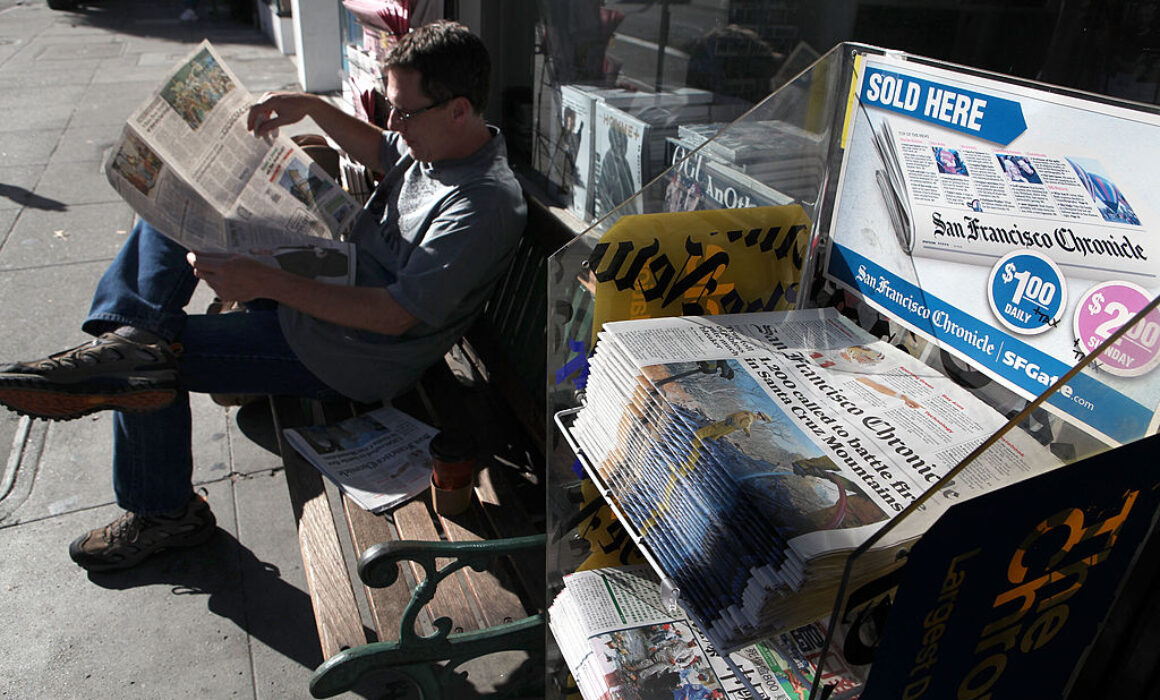
The Broken Media Economy Is Bad News for Democracy
The US media system is broken, and our democracy is worse for it. From the Trump administration defunding the Corporation for Public Broadcasting to ABC suspending Jimmy Kimmel to seemingly gain the favor of the Federal Communications Commission, we’re seeing more and more examples of the press’s growing inability to resist both state and corporate capture. Just today, Netflix announced its deal to buy Warner Bros., a move that would create further corporate concentration in an already unbalanced sector. A new Roosevelt report explains how we got here, and why the only way out is through serious policy transformation that restructures the media landscape.
The crises facing journalism today—mass layoffs and closures, corporate consolidation, collapsing public trust, and more—were not inevitable. They’re the direct result of a pro-corporate policy framework that has conflated deregulated markets with a free press and treats information as a commodity instead of a public good, as Roosevelt’s Bilal Baydoun, Shahrzad Shams, and preeminent media scholar Victor Pickard argue.
“[N]ewsrooms accountable first and foremost to investors will sell out their accountability function to survive,” the authors write in an essay for The Nation. “We must free journalism from the impossible mandate to turn a democratic obligation into a profitable business model.”
As today’s economic crises and political attacks worsen, the authors call for “public-service journalism and the media policy that sustains it” to be “recognized as core components of a redemocratization project.” Because without an informed citizenry and a media ecosystem dedicated to serving the public interest, authoritarianism will only grow stronger.
Read the report: The Political Economy of the US Media System: Excavating the Roots of the Present Crisis
What We’re Talking About
What We’re Reading
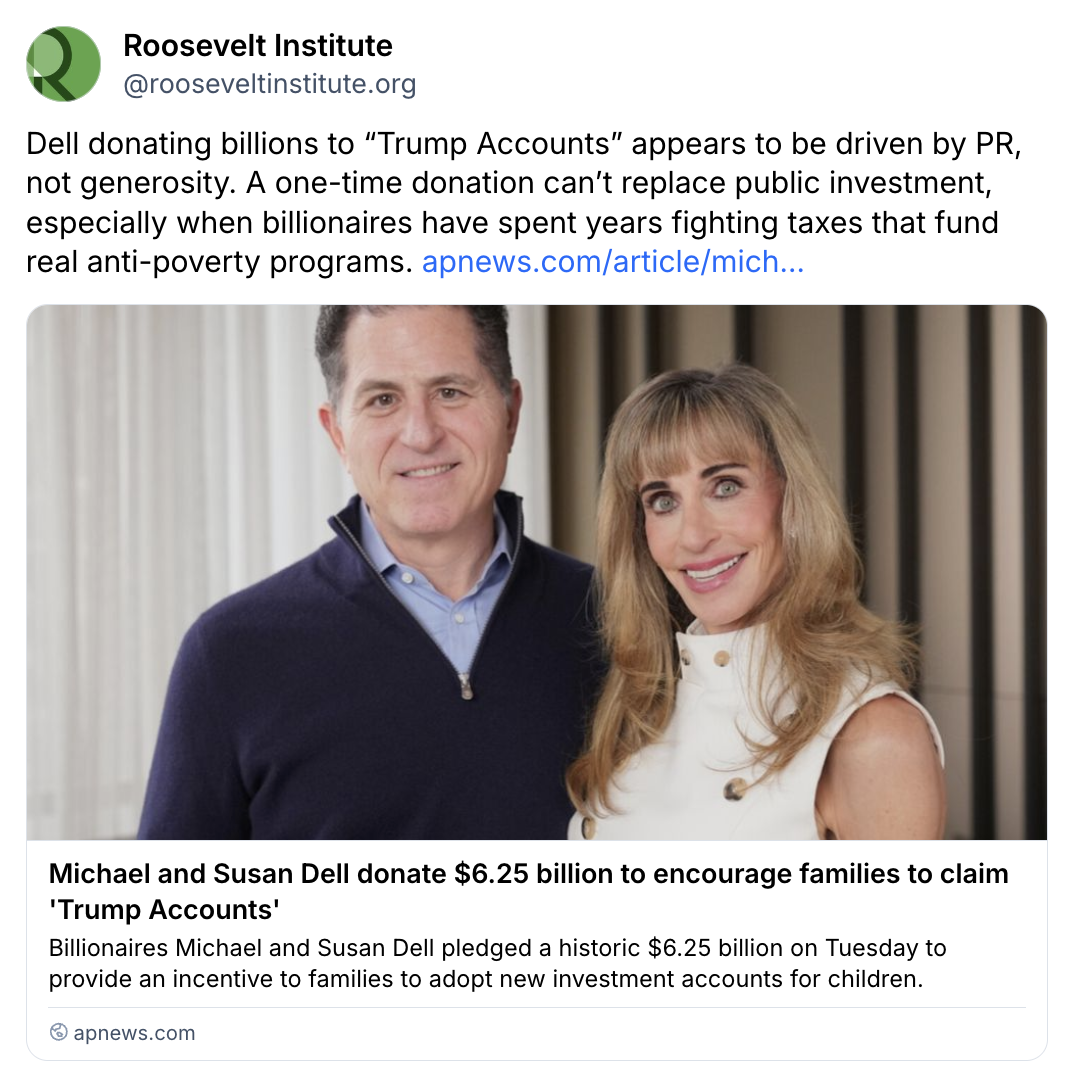
- On inflation and affordability: Roosevelt Principal Economist Michael Madowitz joined C-SPAN’s Washington Journal to discuss what’s behind rising prices. “High-income families are doing most of the spending in the economy at this point,” he said. “And high-income families are the ones who got the biggest tax cuts.”
- The latest edition of The American Prospect dives deep into how multiple aspects of today’s economy drive unaffordability, from surveillance pricing to climate change.
- On stalled labor rights: The National Labor Relations Board is currently operating without enough board members to resolve cases. “[F]or the better part of this year the NLRB has been unable to execute its highest and most fruitful functions,” Roosevelt’s Patrick Oakford told NOTUS. “The board is unable to fully enforce the rights of workers.”
The Roosevelt Rundown will return with our final issue of 2025 on December 19.