
Good Life Residents

The Good Life Residents Program is a new initiative designed to develop emerging leaders and generate people-centered ideas across the Roosevelt Institute’s key economic policy priorities, with initial focus areas on Social Security financing and the powers and independence of the Federal Reserve.

Over six months, residents will produce short, original policy essays and engage in structured dialogue with peers and senior advisors. Each program will culminate in a public event that amplifies these new ideas/voices and opens dialogue to discuss and debate various national and state-level policy options.

Social Security

A man in a dark suit, white shirt, and light blue tie stands outdoors in front of a modern building with white columns. He has short dark hair and is smiling at the camera. Green trees and a brick building are in the background.
Christian Flores

Christian Flores is a joint JD and master in public affairs candidate at Harvard Law School and Princeton University’s School of Public and International Affairs, where he works as a graduate research associate at the Julis-Rabinowitz Center for Public Policy & Finance. Flores was previously an economist with the National Domestic Workers Alliance, prior to which he served as a special adviser to the chief economist on the White House Council of Economic Advisers, where he managed industrial strategy and macroeconomic initiatives.

A woman with short brown hair wearing a floral dress and gold necklace stands outdoors, smiling at the camera. Green bushes and trees blur in the background.
Erin Lockwood

Erin Lockwood is an assistant professor of political science at the University of California, Irvine, where she has taught since 2017. Her work focuses on global financial markets and the international political economy of inequality.

Ethan Struby

Ethan Struby is an assistant professor of economics at Carleton College, where he has taught since 2017. His research spans macroeconomics and monetary economics, with a focus on macrofinance, Treasury markets, and applied macroeconometrics. He received his PhD in economics from Boston College, where his dissertation examined the role of information in macroeconomics and finance.

Federal Reserve

A man with short brown hair and a beard, wearing a dark suit, light gray shirt, and blue striped tie, smiling in front of a plain white background.
Tyler Bond

Tyler Bond is a senior fellow at the National Academy of Social Insurance. He previously served as the research director at the National Institute on Retirement Security and as program manager at the National Public Pension Coalition. Bond has more than a decade of experience directing national research efforts and a proven track record of translating complex social policy evidence into action for policymakers, advocates, and the public.

A man with short dark hair, wearing a blue suit jacket and light blue dress shirt, is smiling broadly in front of a plain dark gray background.
Jonathan Schwabish

Jonathan Schwabish is a senior fellow at the Urban Institute and founder of PolicyViz, a firm specializing in data visualization and presentation skills. At Urban, he works as a researcher in the Tax and Income Supports Division and works on data visualization on the Communication team. His research focuses on nutrition and disability policy, and he is widely recognized for advancing accessible and effective policy communication. Schwabish earned a PhD and MA in economics from Syracuse University and an MA in economics from Johns Hopkins University.

Black and white portrait of a young woman with straight, long hair, wearing a light-colored blouse and a necklace, looking at the camera with a slight smile. The background is softly blurred.
Lena Simet

Lena Simet is a senior advisor on social and economic policy at Human Rights Watch, where she leads work on social security and broader social protection systems. With more than 15 years of experience, she researches benefit adequacy, gender disparities in lifetime earnings, and the financing of social protection in the context of labor market transformation and inequality. She has authored numerous reports on retirement insecurity and labor precarity, and regularly consults on economic policy and global poverty reduction. She has a PhD in public and urban policy from The New School.

Graduate Humanities Internship

We are excited to offer the Roosevelt Institute Graduate Humanities Internship. This paid, remote, two-semester internship offers current graduate students in the humanities hands-on experience in key areas such as policy research, grant writing, and communications to create clear professional pathways for humanities students to launch meaningful future careers in public service.

This program, supported by the Mellon Foundation, is for students from a wide variety of humanities backgrounds who are eager to learn how to connect their diverse research skills to the world of public policy. Whatever you currently study—medieval art history, modern ethical theory, literary studies, etc.—if you have a sincere interest in pursuing public service work after graduate studies, we can help you identify and highlight the methodological research and writing skills that are an asset in this sector.

Applications are currently closed.

Internship Details

  • The internship will take place over two 12-week blocks in the fall and spring academic semesters. The interns will start the program in fall 2026 and complete the program in spring 2027.
  • Students will work and train for at least 10 hours/week and up to 16 hours/week, with a set stipend of $25/hour. Students will choose the number of hours that best suits their schools’ requirements for external funding and their own schedules.
  • The internship is remote, but a hybrid option is available for students who live in the DC or NYC metro areas. 
  • Their first semester will expose students to different departments of the Roosevelt Institute and engage them in work with our development, communications, government relations, and research teams. 
  • In their second semester, interns will work with Roosevelt staff to find connections between their own research interests and live policy questions. Guided by appropriate project mentors on Roosevelt’s staff, they will produce a policy brief or other formal project (such as a grant proposal, policy strategy document, or substantive press engagement plan) that builds off their new knowledge and contributes to active work at Roosevelt. 

Application Details

  • Applications open March 9, 2026, and close April 6, 2026, at 11:59 pm. Finalists will be contacted in mid-April for interviews, and final decisions will be made by mid-May.
  • Applicants will provide a CV, a transcript confirming they are currently enrolled in humanities graduate study at the master’s or doctoral level, a writing sample, and short written responses to 3 questions.

To be eligible for this opportunity, ALL of the following statements must be true:

  • I am at least 18 years old.
  • I am legally authorized to work in the United States.
  • I will not require employer visa sponsorship for employment in the U.S. now or for the duration of the internship.
  • I am a graduate student in good standing in the humanities at a U.S. based-institution.
  • I am eligible to be a part-time temporary employee concurrent with my graduate program.

2026 Graduate Humanities Interns
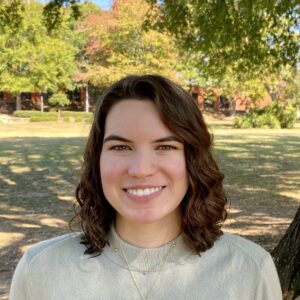
A woman with shoulder-length curly brown hair, wearing a light beige sweater and a gold necklace, smiles while standing outdoors in a park with trees and grass under daylight.
Nicole Adrian

Nicole Adrian is a doctoral candidate in history at University of Pennsylvania, where she studies twentieth-century U.S. political economy. Her dissertation examines how federal agricultural credit programs and farm debt reshaped inequality, land ownership, cooperative finance, and environmental outcomes across the twentieth century. By tracing the institutional and financial foundations of modern agriculture, her work illuminates the long-term consequences of public policy for rural communities and ecological systems.

Nicole is committed to understanding how historical policy decisions structure present-day inequalities. Before beginning her Ph.D., she worked for the Wisconsin state government and later served as a public sector consultant to the U.S. federal government.

A young woman with long brown hair stands outdoors on a sunny day, smiling slightly. She is in a grassy area with trees and a wooden building in the background. Sunlight filters through the branches.
Sarah Hastings

Sarah Hastings is a Ph.D. student in History at Boston University studying early twentieth-century agriculture and forestry in the United States, with research examining how natural resource use and economic power shaped land-use governance and environmental policy. Her work draws on years of professional experience working alongside ecologists, as well as in housing policy and farming, combining historical analysis with on-the-ground knowledge of environmental governance and rural landscapes. Before beginning her doctoral studies, Sarah contributed to interdisciplinary work on environmental inequity, zoning law, and historical geography.

Alongside her research, Sarah has spent more than a decade working in agriculture, managing farms, coordinating community-supported agriculture programs, and leading food-access initiatives across Massachusetts. Her work is driven by a commitment to understanding how historical decisions shape contemporary environmental outcomes and by a belief that effective policy must be grounded in lived experience as well as rigorous research.

Roosevelt Leadership Program

The Roosevelt Leadership Program brings together an exceptional group of mid-career leaders for a cohort program designed to keep them rooted in the work of governance, broaden their knowledge and skills, and deepen their networks. The program runs for six months and includes a mix of small group gatherings, professional skill-building, and networking opportunities.

More details to come about future opportunities.

Past fellows:

Viviann Anguiano
Taylor Barnes Lord
Mary Beech
Kayla Blado
Gracie Bouwer
Tonantzin Carmona
Keziah Clarke
Suzanna Fritzberg
Gregg Gelzinis
Rio Hart

Matthew Hayward
Zoe Jacobs
Jamie Keene
Maria Messick
Alejandro Molina
Asad Ramzanali
Cassandra Robertson
Sarah Scheinman
John Warner
Katelyn Walker Mooney

Sign up for Roosevelt Society program updates

Reimagine America Fellowship

The Roosevelt Society Reimagine America (RA) Fellowship brings together mid-career professionals in public policy, organizing, journalism, government, and advocacy to contribute to the public discourse about building a more democratic economic future. The RA Fellows will be in community with other people and organizations leading political economy work.


2025 Reimagine America Fellows
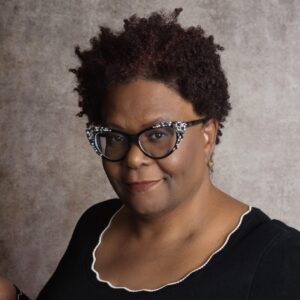
A woman with short curly hair, wearing patterned cat-eye glasses and a black top with a white scalloped neckline, smiles slightly while standing in front of a neutral, textured background.
Charly Carter

Charly Carter is a seasoned political strategist, advocate, and organizer with nearly three decades of experience driving change at the local, state, and national levels. A fierce advocate for democracy and economic advancement, Carter has dedicated her career to uplifting working families and communities of color. In 2018, Carter founded Step Up Maryland and Step Up to Lead, civics literacy and leadership development organizations.

A man wearing glasses and a blue suit poses thoughtfully with his hand on his chin, looking directly at the camera. He has short, styled hair and is wearing beaded bracelets on his wrist. The background is plain and light-colored.
Wisdom Cole

Wisdom O. Cole serves as the Senior National Director of Advocacy for the NAACP, leading efforts to advance civil rights through strategic campaigns, youth leadership development, and grassroots organizing. Previously, as National Director for the NAACP Youth & College Division, he oversaw over 700 youth councils and chapters nationwide, championing initiatives to empower young Black leaders in the fight for justice.

A woman with curly reddish-brown hair, wearing a black blazer over a white blouse, stands smiling in front of a colorful, textured abstract wall art.
Mara Heneghan

Mara Heneghan is Associate Director of the Health and Political Economy Project at the New School’s Institute on Race, Power and Political Economy, where she supports policy and programs to build an economy that enables health and dignity for all. As a Reimagine America Fellow, Heneghan will focus on elevating health as a pillar of a more just economic paradigm and exploring local government’s role in doing so.

A man in a brown textured suit, striped shirt, and patterned tie smiles at the camera, standing in front of dense green foliage.
Luke Herrine

Luke Herrine is an Assistant Professor at Alabama Law. His research focuses on household debt and how law does (and does not) police asymmetries of power through market governance. His work has influenced policymakers at the Department of Education, the FTC, the CFPB, the USDA, and beyond. He is a co-founder of the Debt Collective and former Managing Editor of the Law and Political Economy Blog.

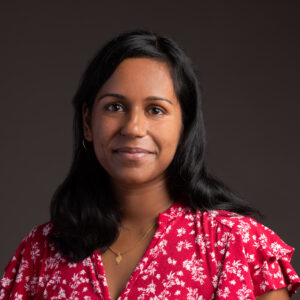
A woman with long black hair, wearing a red floral blouse and a gold necklace, smiles softly in front of a plain dark background.
Reshma Ramachandran

Reshma Ramachandran, MD, MPP, MHS is a family physician, health services researcher, and Assistant Professor within the Section of General Internal Medicine in the Department of Medicine at Yale University. She has published several peer-reviewed research articles and commentaries on the realignment of incentives for healthcare stakeholders— including pharmaceutical companies, hospitals, and universities towards prioritizing equitable patient access to safe, effective health technologies.

A woman with shoulder-length blonde hair, wearing a light blue blazer over a white top, stands outdoors in front of a blurred green background, looking at the camera with a neutral expression.
Rebecca Riddell

Rebecca Riddell is a human rights lawyer and the senior policy lead for economic and racial justice at Oxfam America. Riddell’s work focuses on addressing extreme inequality and advancing human rights and fiscal justice, in the US and globally

A smiling man with short blond hair, a reddish beard, and glasses. He is wearing a multicolored checked shirt and is posed against a plain light gray background.
Alan Smith

Alan Smith is the Manager of Community Leadership at Consumer Reports (CR), building consumer power by distributing leadership and investing in CR’s members as educators, organizers, storytellers and testers in their own right.

A person stands with arms crossed, wearing a T-shirt that reads National Domestic Workers Alliance against a plain background. They have short dark hair and a slight mustache, and they are looking confidently at the camera.
Alistair Stephenson

Alistair Stephenson is Chief Strategy and Impact Officer of the National Domestic Workers Alliance, an organization working to win respect, recognition, and rights for the estimated 2.2 million domestic workers living in the U.S. He is a strategist in social impact and builder of progressive institutions with extensive strategy, people operations and communications experience.