

“Somehow They’re Allowed to Buy All These Homes”: How Detroit Tenants Are Taking On Crypto-Backed Landlords
February 10, 2026
By Keyontay Humphries
More than 15 years removed from the Great Recession, many Detroit residents are still surviving against the backdrop of population loss, stagnation, and long-term housing instability. Today, hundreds of tenants across the city are at risk of losing homes they’ve lived in for years due to the self-interested behavior of absentee landlords and speculative real estate companies.
One of those companies is RealToken, a Florida-based, cryptocurrency-driven real estate firm that purchased hundreds of homes in Detroit and sold fractional shares to investors around the world. RealToken promised its investors steady returns, but failed on its promise to its tenants. Many of its homes have been left in severe disrepair, becoming hazards to the people living in them and a blight on the surrounding neighborhoods. Tenants have gone without heat and with damaged floors, doors, and windows, while the company owes more than $3.6 million in unpaid property taxes and has allowed over 140 Detroit homes to sit vacant.
Thanks to a groundswell of community activism, in July 2025, the city brought a lawsuit against RealToken for widespread neglect. In October, a judge temporarily blocked evictions but required all tenants to place rent into court-monitored escrow accounts so that RealToken could fund repairs. Though it’s unrealistic to expect tenants across roughly 700 distressed properties to independently track and comply with the ruling, those who failed to place rent into escrow were to be treated as squatters and could face eviction. Stacy Harper-Jones, a licensed birth worker and nonprofit founder, lives with her husband—a former bus driver now disabled after two strokes—in a RealToken home. “What happens if you miss a month or two in escrow?” she said. “The only income we have is my husband’s disability check, and with me being his caregiver, it’s hard for me to get work.”
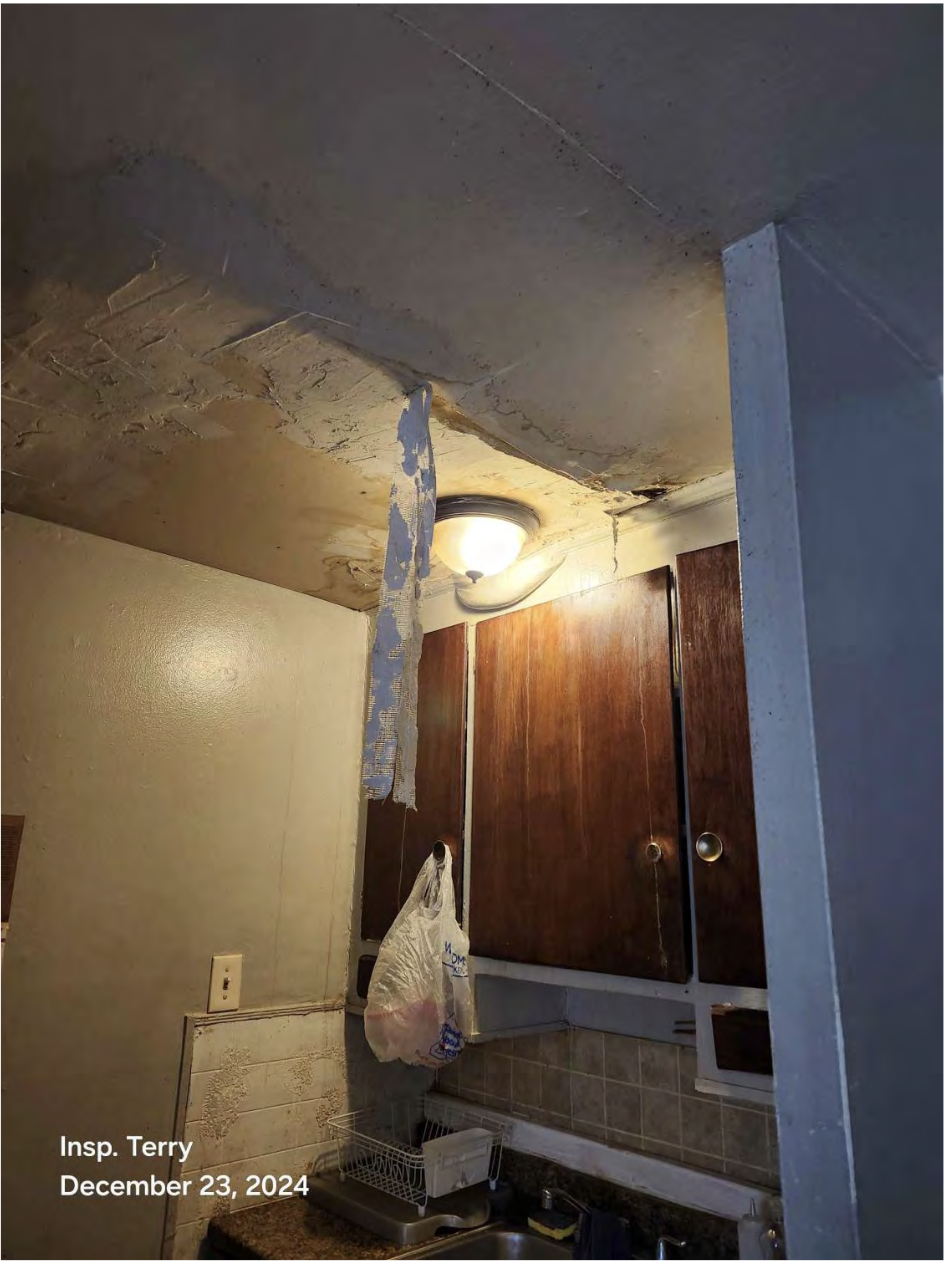
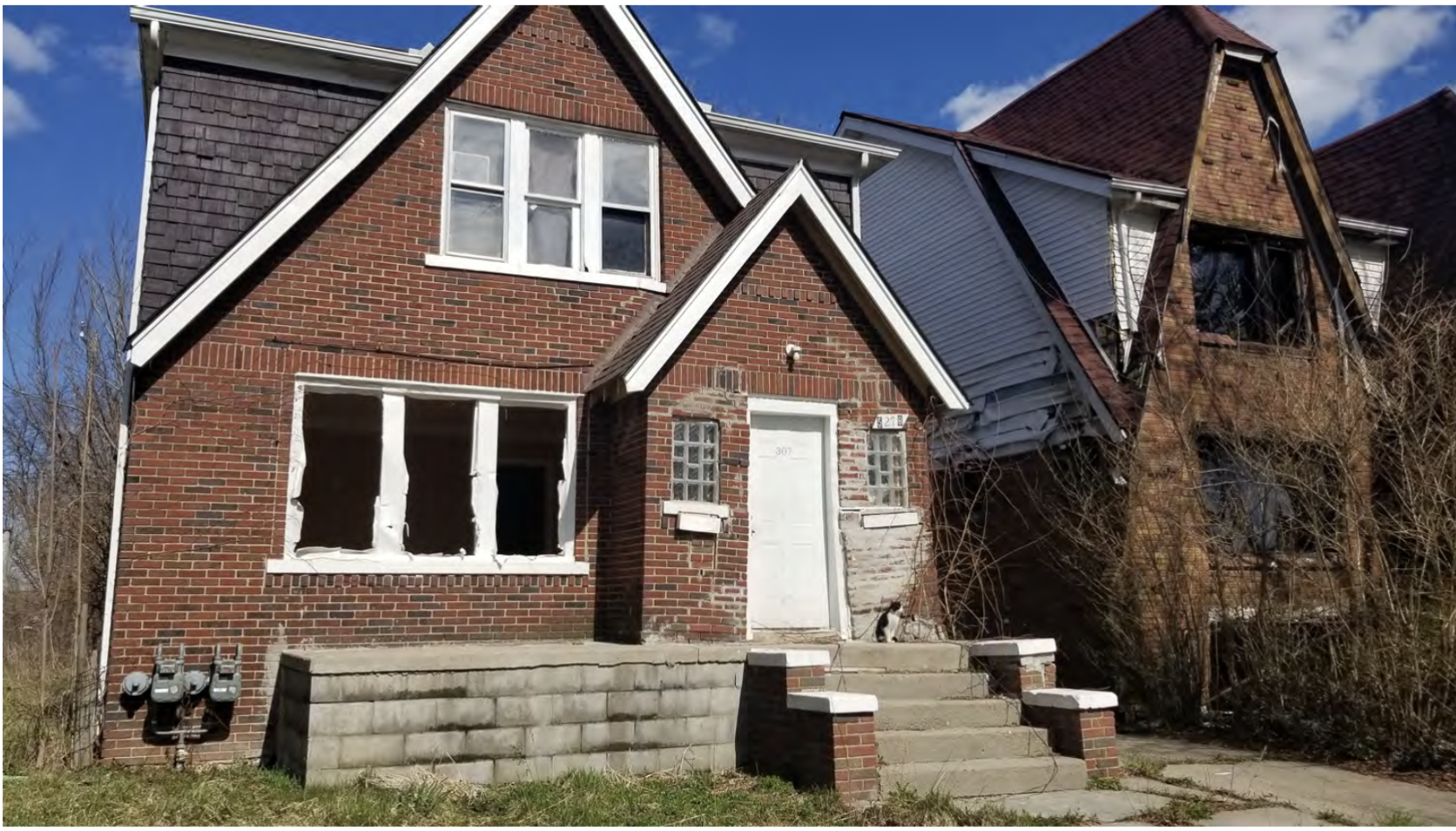
Images of dilapidated housing from the City of Detroit’s lawsuit against RealToken.
That’s where organizing has become so crucial. Over the past few months, I’ve joined neighbors knocking on doors to explain tenants their rights and help them sign up for escrow accounts. Community groups are meeting at churches in the city to connect residents with legal aid. Even impacted tenants themselves, many of whom are at risk of eviction, are going door to door to help one another stay housed.
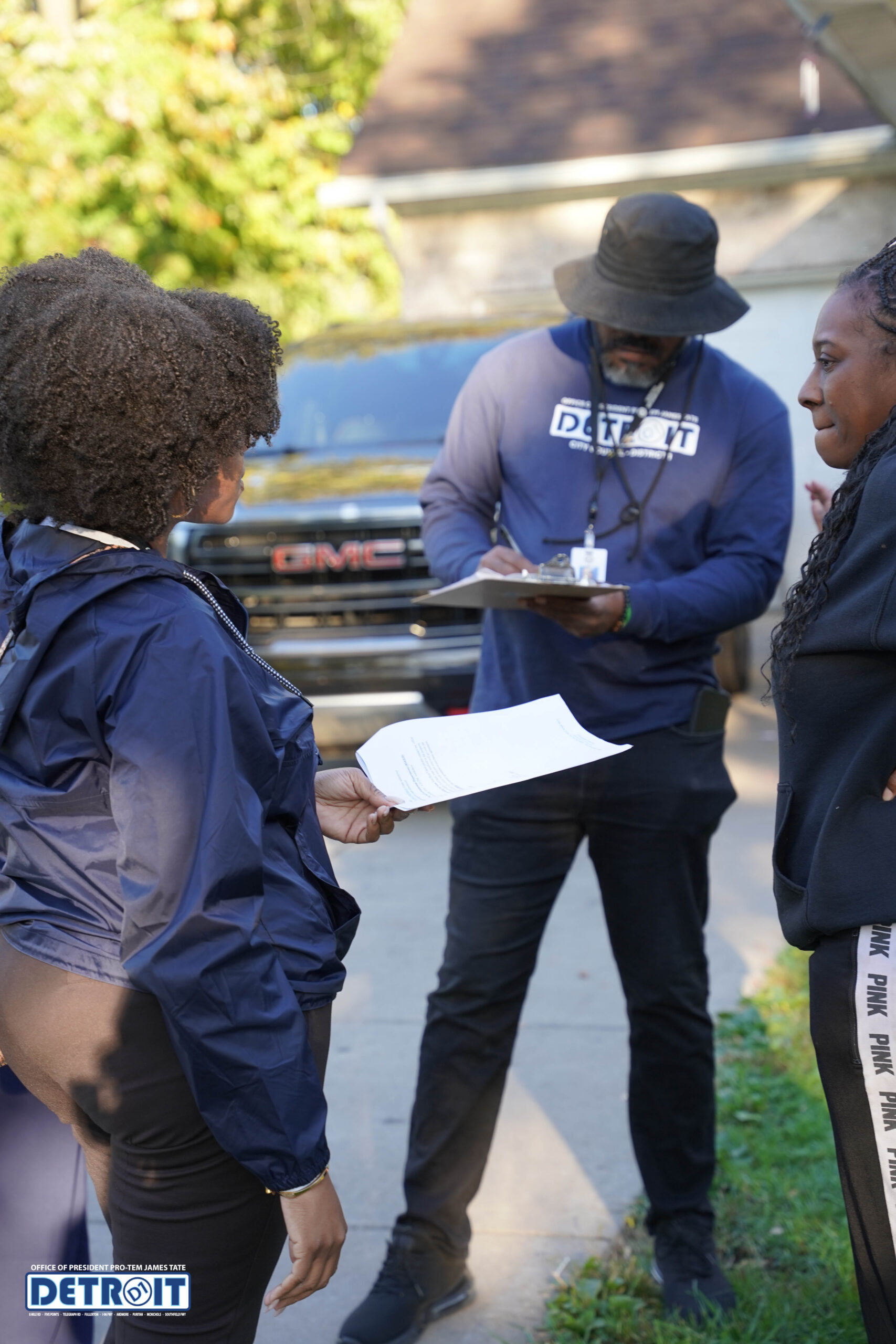
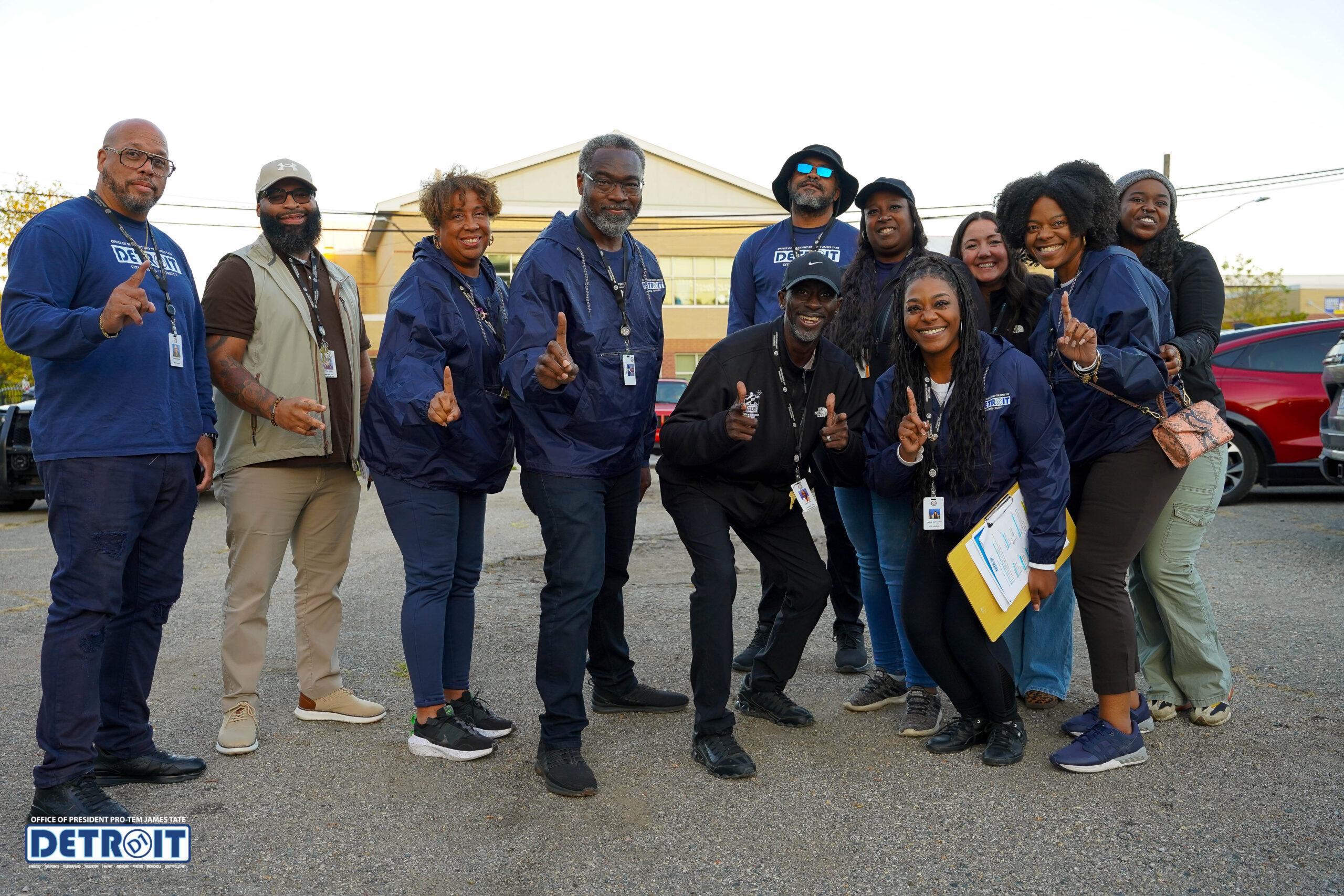
Community organizers helping inform tenants of RealToken houses about the City of Detroit’s lawsuit.
One of those tenants is Donielle Strong, a retiree who has lived in her neighborhood for over 20 years. When she entered her home 17 years ago into a land contract, she understood that her rent payments would count toward eventual ownership. But the previous owner sold her home behind her back to RealToken and now denies the original ownership agreement ever existed.
Over the years, Donielle has taken it upon herself to maintain her home entirely out of pocket because she still hopes to secure the ownership she was promised. But other residents in the roughly 40 affected households in the Brightmoor neighborhood haven’t had the means to do the same, living with extensive disrepair that the landlord was supposed to maintain: broken flooring, collapsing stairs, unusable porches, leaking roofs, unpainted walls, and furnaces that don’t work. Now, that disrepair is being used to claim the homes are out of compliance and justify eviction.
It’s a similar story for Stacy and her husband. After a water tank burst on a minus-30 degree day in Detroit in late January, they’ve been left without hot water.
“It has been really, really hard. We can’t wash certain clothes . . . we’re bathing out of buckets from boiling water on the stove . . . and it’s freezing outside,” Stacy said. “[These investors] live overseas and don’t even know about the homes or how many residents they have, [yet] somehow they’re allowed to buy all these homes.”
[These investors] live overseas and don’t even know about the homes or how many residents they have, [yet] somehow they’re allowed to buy all these homes.

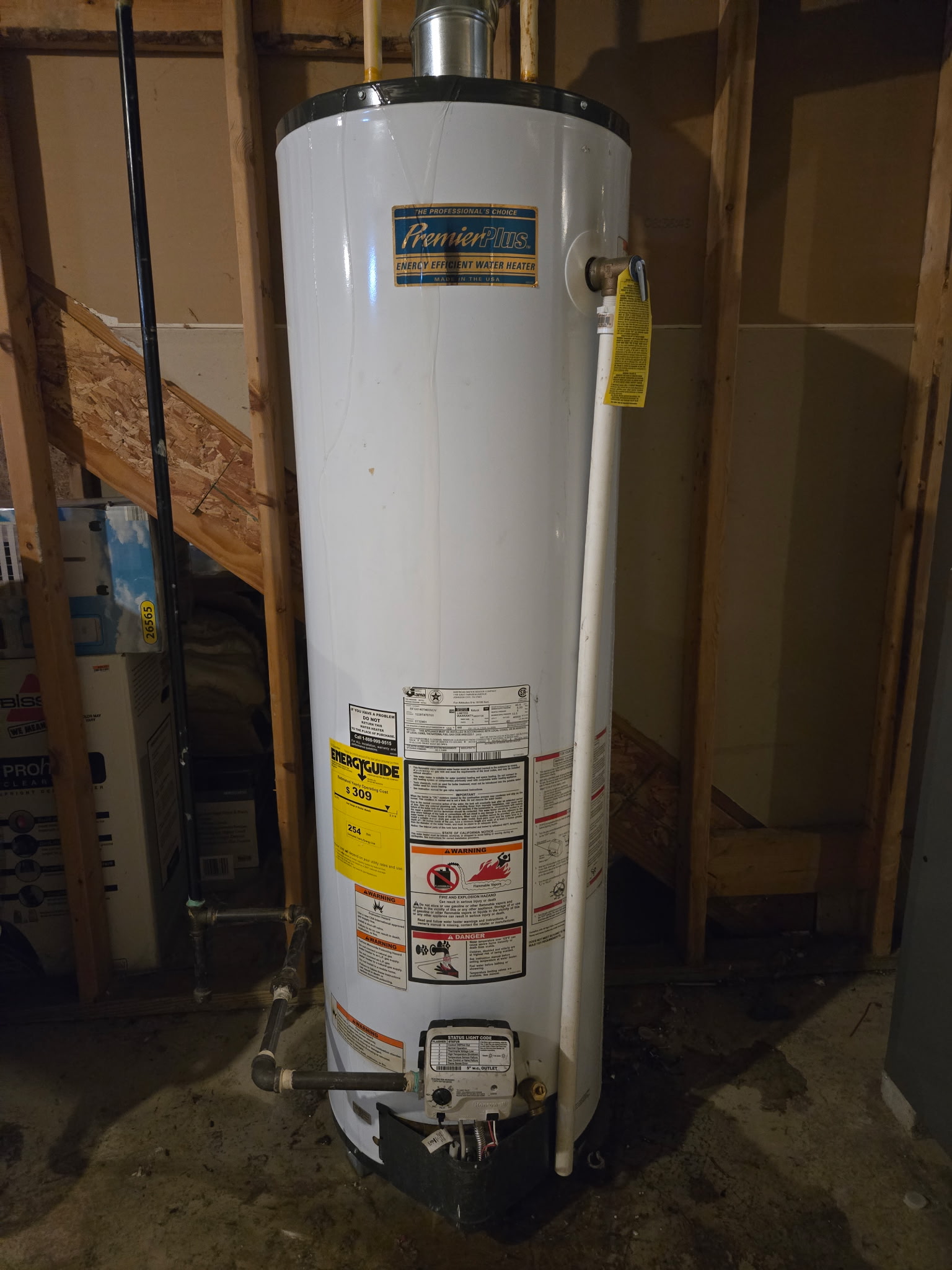
Stacy Harper-Jones and her husband, Michael. The water tank in their home, which burst during sub-zero temperatures in January 2026.
Today, residents like Donielle and Stacy are organizing to make their stories known in court, after years in which decisions about their homes were made without them.
RealToken is among the most egregious examples in Detroit, but it is far from the only one, locally or nationwide. Institutional investors and opaque financial structures have taken to acquiring single-family and low-income rental housing to turn a profit rather than provide a public good. The result has been rising costs as both the quantity and quality of housing decline.
Municipalities can push back on this—and Detroit’s lawsuit may be a real template for how cities can use existing housing and nuisance laws to hold these kinds of actors accountable. But as an organizer, I know that legal tools are only as effective as the extent to which people are able to understand and use them. Courts can issue injunctions and municipalities can enforce ordinances, yet what ultimately determines whether local policy action works is whether residents are at the table to press for changes their communities actually need. That’s the people-powered future in action.
Municipalities can push back on this—and Detroit’s lawsuit may be a real template for how cities can use existing housing and nuisance laws to hold these kinds of actors accountable.
And thanks to the work and courage of residents like Donielle, Stacy, and so many others, recent court orders now require RealToken to complete repairs on several properties, marking early progress that shows how organizing and legal action taken together can deliver tangible results. We’re also helping push for city-wide reforms, including an anti-speculative housing ordinance and rules requiring landlords to submit annual rent rolls for low-income properties.
This fight in Detroit is about more than one company. It’s about whether longtime residents can remain in the homes they’ve built their lives around, whether neighborhoods can stay intact, and whether decisions about housing will start with monied interests or with the people who live in it.
Learn more about Detroit’s landmark nuisance litigation against Real Token
Author