
How Did Universal Childcare Survive Attack?
June 10, 2026
By Josh Wallack

Key Takeaways
- Universal childcare in New York City became politically durable because families experienced its benefits directly and visibly. The program’s universality, ease of access, and public delivery helped transform childcare from a targeted service into a broadly recognized public good.
- The success in NYC stems from a policy design framework that shapes political outcomes. Programs that are visible, respectful, and easy to access are more likely to generate “policy feedback loops” that build lasting public support and organized constituencies.
- Public support is essential to sustaining progressive policy victories. NYC’s Pre-K for All survived budget cuts and political retrenchment because families, providers, advocates, and civic organizations mobilized to defend it.
- Childcare is a uniquely powerful political infrastructure because families experience its economic and social benefits immediately. Therefore, it should be treated as a leading governing priority for future progressive administrations.
- Policy victories require both strong program design and long-term organizing. Policy feedback loops can strengthen public support, but they do not replace the work of coalition building, advocacy, and political mobilization.
Executive Summary
Why do some progressive policies develop constituencies that successfully defend against attack and push for expansion, while others fail to do so? The mechanism by which some policies generate support for themselves as they are implemented has been termed a “policy feedback loop.” Examining policies that have generated such loops offers key insights into how to design future progressive policy and what issues lend themselves to building the kind of constituency that defends them. Unfortunately, while we have historical examples of progressive policies that have succeeded in “sticking,” such as Social Security and Medicare, we have relatively few recent examples.
This paper addresses the gap by examining the trajectory of “Pre-K for All”1 in New York City. The program faced a significant loss of support and funding after the transition from Mayor Bill de Blasio to Mayor Eric Adams, but it generated enough public support to survive and expand. This is in part because the program was designed to make positive policy feedback loops more likely.
Introduction: Why Do Some Programs “Stick”?
Why didn’t the Biden administration’s progressive policy victories prove durable or generate more public support?
To take two examples: The Inflation Reduction Act (IRA), widely heralded when passed, proved fragile; President Donald Trump and Congress rolled back key provisions, clawed back funding, and bore few political consequences for doing so (McPhillips 2025; Joselow 2025). This is not too surprising, given that few Americans even remembered what the IRA was a year after it passed (Romm 2023). A 2024 poll showed that, of the roughly one-third of voters who are “pro-climate,” only half of them said they were “familiar” with it (Carman et al. 2024).
Similarly, the expanded Child Tax Credit gave essential direct cash support to 39 million families during 2021 and 2022 and lifted 3.7 million children out of poverty. But it failed to gain the needed support for extension, and its one-year authorization was allowed to lapse (Booth 2022; Lowrey 2022) without significant public protest.
The policies and programs addressed such important concerns with such significant resources that their champions hoped that they would develop constituencies that would defend them against attack (Tucker and Malhotra 2022; Michener 2023). This is known as developing a “policy feedback loop” (Pierson 1993; Hacker and Pierson 2019; Michener 2019). A policy feedback loop occurs when “initial changes in public policy produce further changes in politics with implications for later policymaking” (Hertel-Fernandez 2020). For example, Social Security not only had a huge, salutary policy impact by reducing poverty among older people, but also had profound political impact by giving rise to a constituency that has defended the program against any effort to reduce or privatize it. In another example, Ronald Reagan’s decision to fire striking air traffic controllers in 1981 not only had the immediate impact of replacing thousands of workers and ending their struggle for fair wages and working conditions, but also acted as a demobilizing, credible threat against other unions, paving the way for more anti-worker actions across the country.
While we have many examples of progressive policies that failed to develop policy feedback loops in recent years, one of the relatively few recent examples of those that have succeeded is Pre-K for All in New York City. After a largely successful and popular initial launch, the program faced a loss of support and funding from the subsequent NYC mayoral administration. The policy feedback loop that the program had generated, however, fostered significant civic activity that pushed restoration of the program to the top of the public debate and governing agenda in New York and helped lead to a joint announcement by the new mayor and governor that New York state would build toward universal public childcare for children from birth to age five statewide.
This story demonstrates that childcare as a policy area is an especially good candidate for generating positive feedback loops. Leaders and administrations on the local, state, and national levels that believe that successful policy can shape the terrain on which further fights are waged should look at childcare as a “first 100 days” priority.
The design of the childcare program, however, is critical to building those loops. The key features of Pre-K for All and the ways those features generated policy feedback offer important clues about how to design future local, state, and national progressive policy to withstand attack.
Policy feedback loops can only make the policymaking and issue advocacy work easier; they cannot replace it. This account shows how organizers and advocates, through herculean efforts, protected the program and created new opportunities for expansion.
I approach this topic primarily as a practitioner: As the leader of the implementation efforts at the NYC Department of Education and then deputy chancellor for early childhood from 2014 through 2021, I was immersed in the details of implementing the early childhood programs described here. I also participated in many of the groups described here that worked to defend and expand the program between 2022 and 2026. To construct this account, I was fortunate to be able to interview several of the leading advocates and government administrators involved in the effort to build Pre-K for All and defend it against attack.
Designed to Last: Bill de Blasio’s Pre-K for All
New York City Mayor Bill de Blasio’s signature policy initiative—universal, free childcare for three- and four-year-olds—was largely regarded as a success and proved popular during his administration. From the launch of the program in 2014 to the end of his second term in 2021, over 500,000 three- and four-year-olds participated (Gossett 2024), the program met or surpassed many measures of program quality (Shapiro 2019), and it was a central part of the mayor’s campaign for a second term in 2017 (Shapiro 2017). De Blasio himself was so committed to the program that he continued expanding care for three-year-olds even during the COVID-19 pandemic, positioning the city to fulfill its promise of universal care for three-year-olds by the fall of 2022 (Zagare 2021).
The program reaches children across the city in every neighborhood. Based on enrollment data, the majority of four-year-olds born in New York City attended public prekindergarten from the time the program became universal through the onset of the COVID-19 pandemic (see Figure 1). Even during the pandemic, enrollment remained high; between school years 2020–21 and 2022–23, over 85 percent of the four-year-olds who would go on to attend public kindergarten also attended public pre-K (see Table 1). In addition, during the de Blasio administration, the team succeeded in enrolling children at the same income levels as those attending kindergarten. The majority of children who enrolled were in families from the lowest income quartile, and over 70 percent of children were in families from the lowest two income quartiles (Wallack 2023). So, even though this was a new, optional program, it still included those who needed access to free childcare the most.
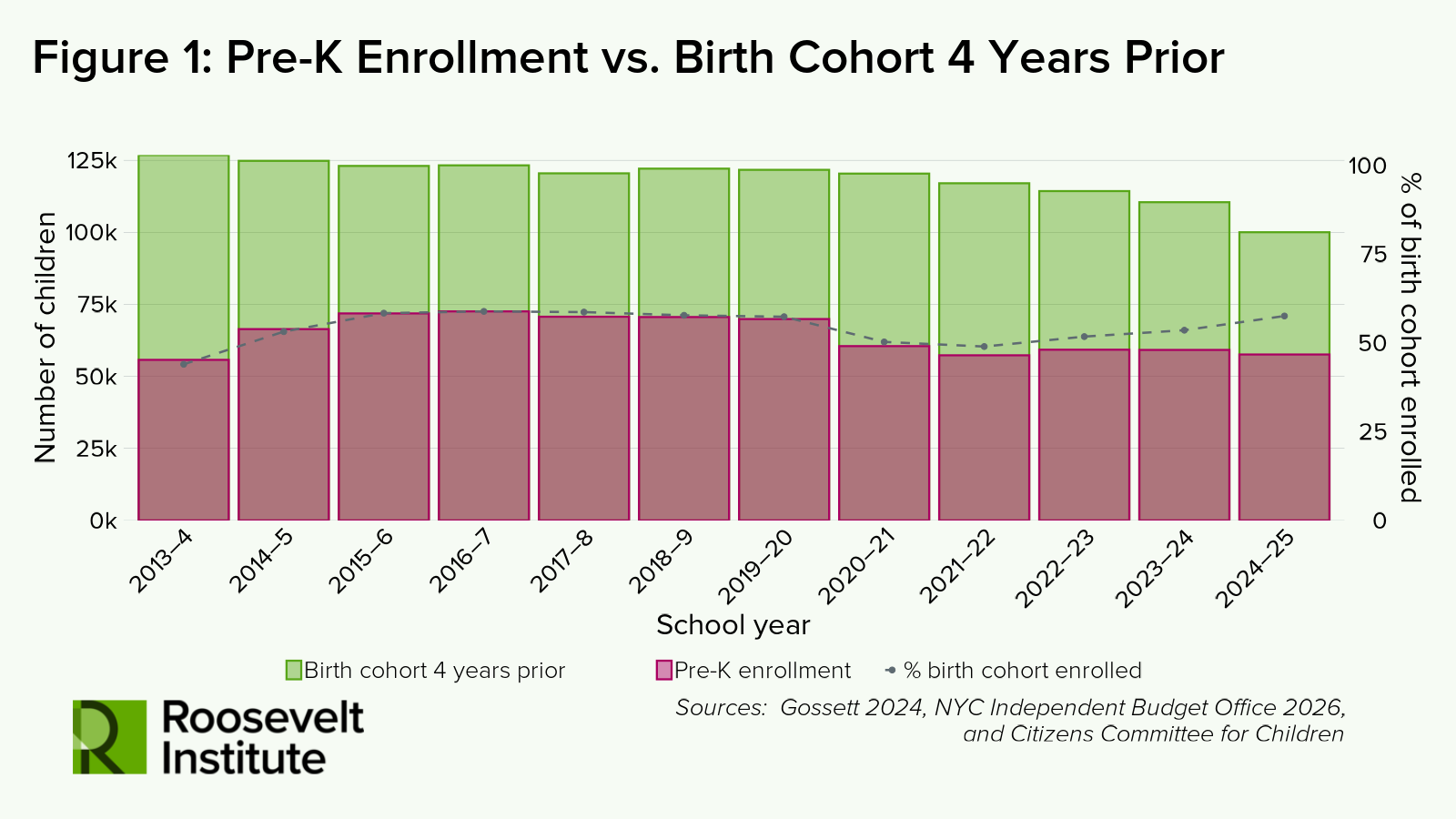
Table 1: Pre-K enrollment vs. Public K Enrollment 1 Year Later
| School Year | 2019–20 | 2020–21 | 2021–22 | 2022–23 | 2023–24 |
| Pre-K Enrollment | 69,894 | 60,501 | 57,315 | 59,255 | 59,182 |
| K Cohort 1 Year Later | 72,265 | 68,828 | 67,276 | 69,155 | 67,636 |
| % of K Cohort Enrolled | 97% | 88% | 85% | 86% | 88% |
The program has several key design features that proved critical to fostering positive feedback loops. Specifically, the program is:
- Universal. All families with three- and four-year-old children residing in NYC are accepted, without any other qualification such as means-testing.
- Free. The program is completely free, like public school.
- Publicly provided and based on a supply-side commitment. Rather than issuing vouchers to families and relying on the market to provide care like many other public childcare programs, New York City takes responsibility for providing all the program seats.
- Respectful of family choice. New York City provides those seats in a variety of venues: public schools, its own publicly run centers, and through contracts with multiple types of childcare programs, including Head Start centers, community-based childcare centers, home-based providers, and religious programs. Families apply by listing their top programs in order of preference and are automatically matched to the highest-ranked program with an opening.
- Nearby. The program aims to provide a seat to every family that wants one within walking distance of a child’s home. While this was not always possible, the team used data-mapping tools to make real-time adjustments in available seats to try to meet this goal (see Wallack 2023, Appendix A).
- Easy. Because of the program’s universal design, the application itself is simple. And NYC created an outreach and facilitated enrollment operation to help families learn about the program and enroll.
The program did have some serious flaws in its implementation, however: Community-based providers were not paid the same salaries as educators in public schools, an issue known as “pay parity”; the program struggled to serve students with delays and disabilities well; and gaps in certain measures of quality emerged between programs predominantly serving white and Black students. While these were serious issues, the program team was making progress in addressing them in 2020–21, and the program still enjoyed a strong public reputation overall.
A Negative Policy Feedback Loop: Universal Childcare under Mayor Eric Adams
Nonetheless, after taking office, Mayor Eric Adams and his administration halted the expansion of Pre-K for All and made five significant policy choices that ultimately produced a negative feedback loop:
- Abandoning commitment to universality. The Adams administration publicly backed off the promise of a universal program for three-year-olds, saying that it was unaffordable (Fitzsimmons 2022). Uncertainty about whether publicly provided care would be available led families to make other arrangements if they possibly could, forcing them in some cases to place nonrefundable deposits on private services, further undermining demand and support for the program.
- Cutting the budget. The Adams administration quickly and publicly cut close to $300 million from the budget, reducing resources for both services and program support. Subsequent years saw even further cuts (Gossett 2024).
- Failing to pay providers on time. When the Adams administration took over, the program had just implemented a new payment system and had fallen behind on paying contracted community-based providers. The administration failed to address this meaningfully during its four-year term, leaving some providers waiting weeks or even months for payments owed and further destabilizing the program (Gossett 2026)
- Disbanding outreach team. De Blasio’s childcare program relied on a large team of outreach workers that systematically engaged families each year and facilitated their enrollment into the program (Wallack 2023). This was especially important in reaching families who spoke a language other than English, unhoused families, immigrant families, children in foster care, and others that faced barriers to enrolling in early childhood services. The Adams administration reduced the size of this team and dispersed them through different departments with different managers.
- Reducing quality support. De Blasio’s program relied on a team of over 150 experienced early educators and social workers to coach program leaders and teachers and to design popular, research-based curricula. The program also maintained a team of program assessment staff that could administer several national measures of program quality so program leaders could identify teachers that potentially needed more support. The administration reassigned much of this team, and abandoned support for the curriculum (Akinnibi 2023).
In combination, these moves set up a vicious cycle of disinvestment in the program—a kind of negative policy feedback loop. As families were forced to seek out other care if they could afford it or care for their children themselves, demand for the service decreased, which the administration used to justify further cuts. In the meantime, late payments to providers forced many to close their doors, all while families scrambled and struggled to come up with the resources for care. Many early childhood advocates who had supported the mayor’s retreat from universality in the hope that he would invest more resources in services for the neediest families and address the flaws in the program instead saw enrollment, seats in the system, and the budget for the program decline.
Universal Childcare as “Sticky” Policy
As I explore in more detail below, a group of committed activists, providers, families, and former staff from the program, including the author, came together in 2022 to try to reverse this trend. Together, these efforts helped ensure that the childcare issue remained front and center in public discussion even during the cycle of disinvestment and declining support, leading to a historic announcement from the current administration that the city and state would build universal childcare statewide (Ashford 2026).
While the groups deserve most of the credit for saving universal childcare through their keen strategic sense and hard work, it is still fair to ask why groups sprang up in defense of this particular policy, and what characteristics the policy had that made it easier to organize the constituencies they targeted successfully.
Part of the reason why is that the program had design features that made it more likely that policy feedback loops would emerge. In a 2020 paper, political scientist Alexander Hertel-Fernandez proposed a checklist of features that he argued were likely to lead to feedback loops (see Table 2) (Hertel-Fernandez 2020).2
Table 2: Criteria for Positive Feedback Loops
| ✔️ | How visible, traceable, and meaningful are a policy’s costs/benefits and how easily can individuals connect the policy back to government? In particular, is the program delivered or administered in ways that make government’s role clear to individuals? |
| ✔️ | Are there trusted and accurate sources of information about the program, either from the government itself or intermediary groups? |
| ✔️ | Will the policy’s design and implementation convey respect or stigma toward targeted groups? |
| ✔️ | Do government agencies have the capacity necessary to implement the program, including financial resources, talent, and political clout? What does the program do to build linkages between civil society and government administrators? |
| ✔️ | How does the program foster supportive organized groups, like businesses, social movement organizations, or civic groups? Are those organized groups facilitating other feedback loops in turn? |
| ✔️ | How does the program address its opponents, especially private-sector businesses? Does it include mechanisms to help neutralize or convert those opponents into supporters? If necessary, does it include mechanisms for putting market pressure on private-sector opponents? |
| ✔️ | Above all, does the policy deepen political, social, and economic inclusion for historically marginalized groups? |
Pre-K for All met most, if not all, the criteria on the checklist. By tracing this congruence through each of the criteria, we can see why the program was more likely to be “sticky” than other programs—even other childcare programs—with different designs. This made the program more likely to generate the political action that ultimately saved the program and set New York state on a course for free childcare for all.
- How visible, traceable, and meaningful are a policy’s costs/benefits and how easily can individuals connect the policy back to government? In particular, is the program delivered or administered in ways that make government’s role clear to individuals?
A universal, publicly provided childcare system like de Blasio’s Pre-K for All was especially well-suited to making the role of government visible because families throughout the city saw tangible results within two years: their children in government-provided care, and savings in their pockets. Importantly, the effects are visible in neighborhoods throughout the city, as noted above.
In addition, the administration widely publicized the program as a public service, using banners in parks and at each program site, bus shelter and subway ads, social media, and community events (Wallack and Liss 2023).
Finally, the de Blasio administration orchestrated a constant drumbeat of earned media about the program, making the benefit highly visible throughout the city. For example, it made an annual mayoral event out of “offer day,” the day families received word about which program their child was accepted into, by inviting a family to receive their offer directly from the mayor himself. One year, to ensure the press, including TV, would cover it widely, the administration found a family with quadruplets (Gonzalez 2015).
Rebecca Bailin, a longtime organizer and the executive director of New Yorkers United for Child Care (NYUC), a new group formed in 2023 to defend against cuts to childcare, told me in an interview that, because the universal design of the program was so visible, families came to see childcare not just as another government service, but as a public good and a new “right” to which they they were now entitled. This made it easier to organize families when that public good was threatened, because, according to Bailin, families had come to count on 3-K and Pre-K the way they count on K-12 school. This suggests that designing a new program as a universal entitlement makes it more likely to become visible and meaningful in ways that generate positive feedback.
- Are there trusted and accurate sources of information about the program, either from the government itself or intermediary groups?
NYC’s team took great pains to ensure that families had access to accurate, up-to-date information about the program. They designed the website MySchools.nyc, accessible in the major languages of NYC, which displays the location of every provider in the city and information about the site.
During the de Blasio administration, the website allowed families to notify an outreach worker if they needed assistance, and they would receive a call back within one business day. The outreach team partnered with trusted groups to reach families that were especially hard to reach. For example, the team contracted with one of the leading immigrant rights and services groups to reach out to immigrant families and worked closely with colleagues at the NYC homeless services agency to reach out to families living in shelters.
- Will the policy’s design and implementation convey respect or stigma toward targeted groups?
The application for subsidized childcare in many states, including New York, is notoriously long, cumbersome, and frustrating. It requires a family to navigate several layers of bureaucracy, answer intrusive questions, and produce evidence that they qualify. Even once a family completes the process, they must endure long waitlists and periodic “recertification” processes that force them to reapply (McLogan 2026). Like the cash welfare programs with which it is linked, the process of applying for subsidized childcare often conveys suspicion, stigma, and division between “deserving” and “undeserving” low-income families (Katz 1990).
The city’s universal program, by contrast, offers an easy application and facilitated enrollment for all, conveying equal respect for everyone who applies. Tara Gardner, the executive director of the Day Care Council of New York, which represents 4,000 employees and directors of childcare centers, told me the lack of means-testing makes a “world of difference” (Gardner 2026). Means-testing “is not easy for folks, and people get defeated by the system. If it becomes too hard to access the free thing, then I’m not going to access the free thing.” The fact that families could choose the program that was the best fit for their child also signaled that their judgment would be taken seriously.
- Do government agencies have the capacity necessary to implement the program, including financial resources, talent, and political clout? What does the program do to build linkages between civil society and government administrators?
Mayor de Blasio made the program a priority for his administration, which in turn attracted talent and resources to it. But perhaps more important was the emphasis that he and the team placed on building strong ties between government and civil society. This took two different forms:
First, the promise to provide a seat nearby to every family that wanted one, and the subsequent ability to do so, created a loyal constituency for the program. Once the service was in place and families could see the promise was real, it was easier to mobilize them when the service became threatened because, as Rebecca Bailin put it, “it was something that they [now] thought they were entitled to and was a given.”
Second, the decision to use community-based providers as well as schools and city-run centers to provide the service meant that the city and nongovernmental organizations were partners. While this partnership was not always easy, over time the government team made efforts to foster even more participation from providers in the governance of the program, which helped garner some support when the program was threatened (Wallack 2023). For example, the team worked with providers to create a council of provider leaders that met with senior staff regularly to give feedback on implementation and share in decision-making. When the pandemic hit, the council was instrumental in ensuring that the city honored its contract with providers, which guaranteed 75 percent payment of the contract amount regardless of enrollment, at a time when enrollment was plummeting and the city was suspending many contracts because of its fiscal crisis.
- How does the program foster supportive organized groups, like businesses, social movement organizations, or civic groups? Are those organized groups facilitating other feedback loops in turn?
Although the city team did not foster new organized groups during the de Blasio administration, once the program was threatened under the Adams administration, former staff members worked with Rebecca Bailin to start New Yorkers United for Child Care, as well as with Grace Rauh, the executive director of a local think tank and civic group called the 5BORO Institute, to organize business and civic leaders. As discussed below, those groups do work to create other positive feedback loops.
In addition, as noted above, the city decided to partner with civil society groups to reach families that faced barriers to enrollment, expanding the constituency for the program and building stronger relationships between the city team and the communities they hoped to serve.
- How does the program address its opponents, especially private-sector businesses? Does it include mechanisms to help neutralize or convert those opponents into supporters? If necessary, does it include mechanisms for putting market pressure on private-sector opponents?
Supporters launched efforts to organize private-sector businesses around universal care as a measure that would help them recruit and retain a high-quality workforce. Emmy Liss, who was the chief operating officer for the early childhood program under Mayor de Blasio and now serves as the executive director for the Mayor’s Office of Child Care under Mayor Zohran Mamdani, and Grace Rauh led this effort. As Liss pointed out, more business leaders came to recognize “the scale of the economic impact our broken childcare infrastructure was having” (Liss 2026). Liss and Rauh also identified leaders who themselves were part of dual-income households that struggled with the cost of care, and mobilized them to organize others.
Some private childcare providers were also initially opposed to the program, concerned that it would put them out of business by attracting families into the public system. The program team set out to offer competitive rates for service that would draw these providers into the program, and negotiated each contract individually in order to take into account factors like the different real estate costs across the city and the seniority of a program’s teachers. In addition, the pace of expansion meant that, most years, the team ran several procurements, giving providers multiple chances to join the public program. This had the impact of reducing the intensity of the opposition. The issue of late provider payments continues, rightfully, to be a source of ire.
- Above all, does the policy deepen political, social, and economic inclusion for historically marginalized groups?
The universal design and delivery of the program meant that New Yorkers across race and class came into the program, and the targeted outreach efforts made it more likely that those facing higher social, political, and economic barriers also benefited. Although work remains to be done, the program serves tens of thousands of children in families that could not otherwise access high-quality care (NYC Independent Budget Office 2024).
That said, part of the reason the program was able to survive attack was precisely because it developed a constituency that included less marginalized people with existing public power. As Tara Gardner put it, “the skyrocketing costs of childcare over the last several years has made it a salient issue for New Yorkers across the economic spectrum . . . Now that it’s an issue for middle-class and affluent families, it seems to have ‘stuck’ as an issue” (Gardner 2026). As Jamila Michener emphasized in her 2023 paper on feedback loops, in designing policies and programs to endure, policymakers must also attend to the power the target population wields in political processes (Michener 2023). While policymakers should favor policies that deepen inclusion, it is not clear that this alone builds positive feedback loops, unless those groups have organized to build political power. And there is nothing automatic about that; on the contrary, organizing to build power often takes years of hard work.
Feedback Loops in Action: A New Campaign for Childcare
While the design of Pre-K for All fostered positive feedback loops, these loops alone do not guarantee success. It takes extraordinary effort to take advantage of the opportunities they create to build durable public support and issue advocacy coalitions that can change the terrain for future struggles. Several key people and organizations came together in this case, taking a range of approaches that ensured that the program survived.
- Family organizing. NYUC joined with several existing groups to organize a base of families to protest the Adams administration’s cuts and advocate for universal childcare in New York City and state. By 2026, NYUC had engaged 11,000 New Yorkers on their issues. Critically, Bailin decided to organize middle-class and more affluent families as well as low-income families.
- Press campaign. NYUC and other groups worked assiduously to shape the narrative around the cuts to childcare and the potential of universal care, framing the lack of childcare as a key “affordability” issue. For example, the New York Times featured their work and highlighted childcare as a key to affordability in several pieces between 2022 and 2025 (Shapiro 2023, 2025; Bosman 2024)
- Business organizing. The 5BORO Institute took up the challenge of organizing business leaders, first to push back on the cuts to Pre-K for All and later to build toward universal childcare (Rauh 2026). Grace Rauh proved a canny organizer, ultimately hosting a summit of business leaders with Governor Kathy Hochul to call for universal childcare. Her work offers three broad lessons:
- First, find a way in. Initially, business leaders were interested in childcare as a possible way to fill in vacant storefronts post-COVID. Rauh used that frame to pull people into conversation and build relationships.
- Second, broaden the conversation. Leading out from the topic of post-COVID recovery to a discussion of the city’s overall economic health, Rauh drew the connection between childcare and the city’s ability to provide a place families could build lives and thrive. She was undaunted by some leaders’ initial opposition to what was perceived as a costly program. She took as an example the successful campaign for congestion pricing in NYC, which business leaders initially opposed because of its cost but came to support because they were convinced it would benefit the region’s economy.
- Finally, set a big goal and watch for opportunities. Rauh set universal childcare as the “north star” but admitted it would have sounded “a little insane” to propose it initially, given that the Adams administration had cut funding for 3-K and there was little support for such an ambitious proposal among her constituents. Instead, she began with more achievable reforms and brought a critical mass of business leaders along, so when the overall public conversation shifted, it was easier for the leaders she had been in conversation with to be supportive.
While this initial effort proved successful, much work remained to be done in organizing business and civic leaders. Ultimately, a universal childcare system for New York City and state will require new revenue to sustain it. As of 2026, there is not yet a broad consensus on raising revenue to pay for the program, and the governor has not yet committed to do so.
- Policy dissemination. Emmy Liss played a key role, not only as an organizer but by developing several key policy pieces: a road map to universal childcare in New York State for NYUC (Liss n.d.), the report for 5BORO identifying practical, lower-cost system reforms while pointing toward the long-term horizon of universal care, and a report for Tara Gardner’s Day Care Council laying out the challenges for the workforce that needed to be overcome during any expansion. By playing this critical behind-the-scenes role for several different constituencies—families, providers, and businesses—she helped to crystallize the policy case for universal childcare and bring important constituencies along.
- Influencing elected officials. NYUC-educated elected officials and demonstrated the power of the issue through their actions and press stories (Bamberger 2025).
At the same time, providers organized along their own lines. As Emmy Liss noted, not all providers felt comfortable rallying against the administration’s cuts or behind a universal system, because they feared they would be asked to “do more without the resources to do it well” (Liss 2026). Instead, they focused on rectifying other issues in the system.
For example, a movement group of independent, home-based providers and parents called ECE on the Move identified several issues that they believed needed to be addressed before childcare services could be expanded successfully (ECE on the Move 2026):
- Equal pay for equally qualified early educators, regardless of setting, along a defined career ladder;
- Pay that reflects the true cost of care.
- Access to benefits such as health care, pensions, vacation, and sick time;
- More stable and timely payment for services;
- Aligned, non-duplicative oversight and more helpful, meaningful support to improve quality; and
- An end to the waiting list for childcare vouchers.
ECE on the Move became a powerful force in the state legislature because of its extensive network of home-based providers and passionate appeals for change. Organizers believed they were able to recruit and retain providers in the campaign because of their shared experience of the system as economically unsustainable. As ECE on the Move leaders put it, “only a provider truly understands the life of another provider.”
Tara Gardner laid out a related set of issues for center-based providers, including reliable payment on time, cost escalators in contracts to help centers keep up with rising costs such as rent and insurance, and pay parity, including parity in benefits and longevity increases.
Groups such as NYUC and 5BORO incorporated versions of many of those demands into their plans, noting that a successful universal program would address those issues. The emphasis of the various campaigns was different, but the overall effect was to raise awareness of a “childcare crisis” that required public action, bolstering the case for the program and its expansion.
Lessons for Policy Design
Pre-K for All meets the criteria proposed by Alexander Hertel-Fernandez and therefore was, according to his argument, more likely to generate positive policy feedback loops. The people largely credited with the program’s defense also agree that these factors made the program easier to protect and expand. Pre-K for All therefore offers a recent example of resilient policy, validation for Hertel-Fernandez’s framework, and some potential lessons for policymakers when designing progressive programs.
The story of Pre-K for All in NYC bolsters the argument that policies with the following characteristics are more likely to generate positive feedback loops that will make them easier to defend and build on:
- Universal. Universal programs—even those that predominantly benefit marginalized groups—are more likely to foster constituencies with the power to sustain the program.
- Visible. Policies and programs that deliver a needed good or service quickly in ways that people can see clearly are more likely to endure. This requires approaching the issue from the supply side, rather than just subsidizing demand.
- Respectful. By removing the means-testing process and creating the outreach program to facilitate enrollment, Pre-K for All signals respect for all families. The program also allows families to choose to some extent the program that best fits their needs, which shows the power of choice—even limited choice—in fostering this sense of respect. Programs that avoid the humiliating process of means-testing, or any other bureaucratic, invasive process of determining eligibility, are more likely to survive.
- Easy. Keeping the application and enrollment process simple means relatively few families experience the frustrations that many families applying for means-tested subsidized childcare endure. Also, because the program is completely free, it does not need to build a process to charge families and collect payment (which also would require means-testing if the fee was levied progressively). All this makes the program easy to access, which engenders support and lowers barriers to entry for families facing the most barriers. Program design and implementation teams should design enrollment processes to be as simple as possible.
- Participatory. Though the process remained incomplete at the end of the de Blasio administration, efforts to involve providers and families in the governance of the program created some sense of common cause when the program came under attack. Programs and policies that involve stakeholders meaningfully and regularly in governance are more likely to endure.
Conclusion: Building the Next Feedback Loop
As of this writing, Mayor Zohran Mamdani and Governor Kathy Hochul are moving ahead with plans to implement universal childcare in New York state. Bill de Blasio’s Pre-K for All can be judged a success, therefore, in an important sense: It created a positive policy feedback loop that allowed it not only to survive attack but to lead toward further progress on the issue.
This story has three important lessons for progressives thinking about how to secure durable policy victories when the next opportunity arises. First, childcare is a strong candidate for a leading priority for any local, state, or national administration. Few other topics create the opportunity to demonstrate that government can deliver something that makes such a dramatic material difference in people’s lives in ways they can see and feel quickly.
Second, the design of these programs matters. Making Pre-K for All universal, approaching it from the supply side, and ensuring that people knew about it and made use of it were all critical—not only for the initial success of the program, but in creating the feedback loops that saved it. These features also run contrary to many progressive proposals today, which tend to favor either targeted, demand-side interventions (often buried in the tax code, with complex, stigmatizing enrollment procedures) or supply-side interventions with very long lead times, delivery through the private market, and broad but marginal impacts. Progressives should change course—or at the very least no longer be surprised when those approaches do not shift the terrain in their favor.
Finally, policy feedback loops offer no shortcuts. It will always be important to fund and support organizations that are building the public support and issue advocacy coalitions needed to win and maintain policy victories. Still, policymakers can help those groups succeed by choosing their marquee policies wisely and designing them to last.
Acknowledgments
The author would like to thank Rebecca Bailin, Shanita Bowen, Tara Gardner, Emma Gossett, Doris Irizarry, Gladys Jones, Emmy Liss, Katherine De Chant, and Oskar Dye-Furstenberg for their insights and contributions to this paper. Any errors, omissions, or other inaccuracies are the author’s alone.
Footnotes
- NYC offers free prekindergarten to both three- and four-year olds. Although the program for three-year-olds is called “3-K,” I use the term “Pre-K for All” to refer to both programs for simplicity. ↩︎
- Jamila Michener expanded on these criteria in several key respects, discussed below (Michener 2023). ↩︎
References
Akinnibi, Fola. 2023. “Eric Adams Is Starving New York City’s Universal Pre-K Program.” Bloomberg, 15 May, https://bloomberg.com/news/features/2023-05-15/eric-adams-starves-nyc-s-universal-pre-k-program.
Ashford, Grace. 2026. “Hochul and Mamdani Announce Plan to Make N.Y. Child Care Universal.” New York Times, 12 January, https://nytimes.com/2026/01/08/nyregion/mamdani-hochul-child-care.html.
Bailin, Rebecca (executive director, New Yorkers United for Child Care), in discussion with the author, February 2026.
Bamberger, Cayla. 2025. “Young NYC Parents Squeezed by Child Care Costs Playing Crucial Role in the Mayoral Race.” New York Daily News, 27 September, https://nydailynews.com/2025/09/27/young-nyc-parents-squeezed-by-child-care-costs-playing-crucial-role-in-the-mayoral-race.
Booth, Rachel C. 2022. “The Expanded Tax Credit Kept 4 Million Kids out of Poverty. Can It Come Back?” Vox, 30 August, https://vox.com/policy-and-politics/2022/8/30/23317834/child-tax-credit-ctc-ira.
Bosman, Julie. 2024. “Child Care Costs Are Swallowing Their Paychecks, and These Voters Want Solutions.” New York Times, 4 November, https://nytimes.com/2024/11/04/us/child-care-costs-election.html.
Carman, Jennifer, et al. 2024. “Understanding Pro-climate Voters in the United States.” Climate Change Communication, 27 June, https://climatecommunication.yale.edu/publications/understanding-pro-climate-voters.
ECE on the Move, in discussion with the author, February 2026.
Fitzsimmons, Emma G. 2022. “3-K for All? Adams Retreats From Expanding N.Y.C. Preschool Program.” New York Times, 22 September, https://nytimes.com/2022/09/22/nyregion/prekindergarten-adams-nyc-3k.html.
Gardner, Tara (executive director, Day Care Council of New York), in discussion with the author, March 2026.
Gonzalez, Sarah. 2015. “70 Percent of Families Get Top Pre-K School Choice.” WNYC, 8 June, https://wnyc.org/story/70-percent-families-get-top-pre-k-school-choice.
Gossett, Emma. 2024. “Drifting from the Plan: Changes to Early Childhood Budgets.” NYC Independent Budget Office, 20 February, https://ibo.nyc.gov/content/publications/2024-february-drifting-from-the-plan-changes-to-early-childhood-budgets.
_____ 2025. “Utilization Up, Capacity Down: A Look at 3-K and Pre-K Trends in New York City – NYC Independent Budget Office.” NYC Independent Budget Office, 12 May, https://ibo.nyc.gov/content/publications/2025-may-utilization-up-capacity-down-a-look-at-3k-and-prek-trends-in-nyc.
_____ 2026. “Testimony on Payments to Early Childhood Care and Education Providers.” NYC Independent Budget Office, 30 January, https://ibo.nyc.gov/content/publications/2026-january-testimony-payments-early-childhood-care-education-providers.
Hacker, Jacob S., and Paul Pierson. 2019. “Policy Feedback in an Age of Polarization.” The Annals of the American Academy of Political and Social Science 685, no. 1: 8–28, https://doi.org/10.1177/0002716219871222.
Hertel-Fernandez, Alexander. 2020. “How Policymakers Can Craft Measures That Endure and Build Political Power.” Roosevelt Institute, 17 June, https://rooseveltinstitute.org/publications/how-policymakers-can-craft-measures-that-endure-and-build-political-power.
Joselow, Maxine. 2025. “E.P.A. Moves to Cancel $7 Billion in Grants for Solar Energy.” New York Times, 5 August, https://nytimes.com/2025/08/05/climate/epa-cancels-solar-energy-grants.html.
Katz, Michael B. 1990. The Undeserving Poor: From the War on Poverty to the War on Welfare (Pantheon Books).
Liss, Emmy. n.d. “A Five Year Roadmap for Universal Public Child Care.” New Yorkers United for Child Care, accessed 16 February 2026. https://united4childcare.org/upcny.
Liss, Emmy (executive director, Mayor’s Office of Child Care), in discussion with the author, February 2026.
Lowrey, Annie. 2022. “The Child Tax Credit Was a Little Too Subtle.” The Atlantic, 22 December, https://theatlantic.com/ideas/archive/2022/12/child-tax-credit-democrats-inflation-postmaterialism/672543.
McLogan, Elle. 2026. “Thousands Waiting for Help from NYC’s Child Care Assistance Program.” CBS News, 19 January, https://cbsnews.com/newyork/video/thousands-waiting-for-help-from-nycs-child-care-assistance-program.
McPhillips, Tim. 2025. “WATCH: Trump Rolled Back Energy Tax Credits for Homeowners and Developers. Here’s What That Means for You.” PBS, 11 July, https://pbs.org/newshour/nation/watch-trump-rolled-back-energy-tax-credits-for-homeowners-and-developers-heres-what-that-means-for-you.
Michener, Jamila. 2019. “Policy Feedback in a Racialized Polity.” Policy Studies Journal 47, no. 2: 423–450, https://doi.org/10.1111/psj.12328.
_____ 2023. “Policy Feedback in the Pandemic: Lessons from Three Key Policies.” Roosevelt Institute, 19 October, https://rooseveltinstitute.org/publications/policy-feedback-in-the-pandemic.
NYC Independent Budget Office. 2024. “Freeze Tag: A Snapshot Of Pre-K and 3-K Students in NYC.” 28 March, https://ibo.nyc.gov/content/publications/2024-march-freeze-frame-a-snapshot-of-pre-k-and3-k-students-in-nyc.
_____ 2026. Email correspondence with Emma Gossett.
Pierson, Paul. 1993. “When Effect Becomes Cause: Policy Feedback and Political Change.” World Politics 45, no. 4: 595–628, https://doi.org/10.2307/2950710.
Rauh, Grace (executive director, Citizens Union), in discussion with the author, February 2026.
Romm, Tony, et al. 2023. “Most Disapprove of Biden’s Handling of Climate Change, Post-UMD Poll Finds.” Washington Post, 7 August, https://washingtonpost.com/climate-environment/2023/08/07/biden-white-house-climate-policy.
Shapiro, Eliza. 2017. “De Blasio’s Win on Pre-K Is Making an Easy Campaign Even Easier.” Politico, 17 October, https://politico.com/states/new-york/city-hall/story/2017/10/17/de-blasios-win-on-pre-k-is-making-an-easy-campaign-even-easier-115084.
_____ 2019. “Bright Spot for N.Y.’s Struggling Schools: Pre-K.” New York Times, 1 January, https://nytimes.com/2019/01/01/nyregion/deblasio-pre-k-program-nyc.html.
_____ 2023. “How Child Care in New York City Became Unaffordable for Nearly Everyone.” New York Times, 12 September 2023, https://nytimes.com/2023/09/11/nyregion/child-care-nyc.html.
_____ 2025. “The Child Care Crisis Is Motivating These New York City Voters.” New York Times, 17 April, https://nytimes.com/2025/04/17/nyregion/nyc-child-care-voters.html.
Tucker, Todd N., and Sunny Malhotra. 2022. “The Unprecedented Green Industrial Policy Wins in the Inflation Reduction Act.” Roosevelt Institute, 5 August, https://rooseveltinstitute.org/blog/unprecedented-green-industrial-policy-wins-in-the-inflation-reduction-act.
Wallack, Josh. 2023. “Childcare as Industrial Policy Blueprint: Lessons from New York City’s Pre-K for All Implementation.” Roosevelt Institute, 21 June 2023, https://rooseveltinstitute.org/publications/childcare-as-industrial-policy.
Wallack, Josh, and Emmy Liss. 2023. “Family Outreach for Early Education Enrollment: A Powerful Programmatic and Political Tool.” New America, 16 October, https://newamerica.org/new-practice-lab/briefs/family-outreach-for-early-education-enrollment.
Zagare, Liena. 2021. “3-K Expanded to All School Districts!” Bklyner., 24 March, https://bklyner.com/3-k-expanded-to-all-school-districts.
Suggested Citation
Wallack, Josh. 2026. “How Did Universal Childcare Survive Attack?” Roosevelt Institute, June 10.