

Testimony of Elizabeth Wilkins Before the Congressional Progressive Caucus Corporate Greed Task Force
April 21, 2026
By Elizabeth Wilkins
Below is an excerpt from Elizabeth Wilkin’s testimony before the Congressional Progressive Caucus Corporate Greed Task Force: “Visions of an Affordable Life: Taxing Corporate Greed” on April 21, 2026.
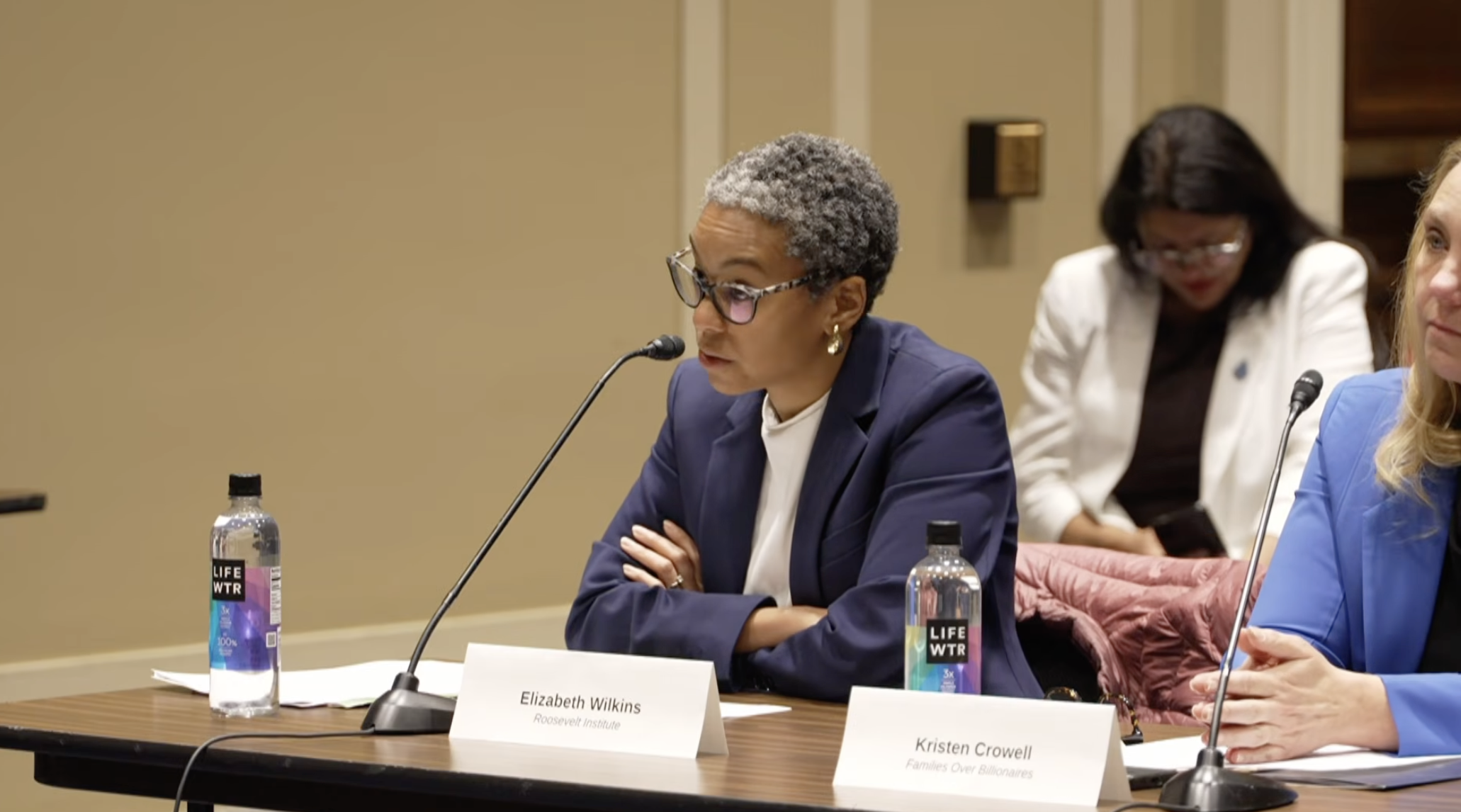
Tax policy should be doing at least three things at once. First, it should raise the revenue we need to fund the public goods that underpin good lives: housing, health care, childcare, and education. Second, it should prevent extreme concentrations of wealth from distorting our economy and our democracy. And third, it should strengthen the bond between people and their government by making the system feel honest and responsive.
That third point deserves more attention than it gets. Consider Direct File, the IRS’s free e-filing program launched in 2024. It was simple, it was free, it saved families real money and time, and over 90 percent of users rated their experience as positive. It was a moment when the government showed up in people’s lives, made something easier, and in so doing treated its people with respect. But the Trump administration killed it, funneling taxpayers back to a private industry that profits from making taxes complicated. Direct File should be a model for the standard we set: tax policy designed so that people can see and feel that the system is working for them, not against them.
At Roosevelt, we’re developing what we call a “good life agenda,” and a fair and progressive tax code is a key component. A large share of corporate profits today are excess profits gained through market power, not innovation or competition. One estimate suggests American households pay $5,000 more per year in higher costs, lower wages, and lost growth than they would if markets were as competitive as they were before 1980. A pro-competition corporate tax system would claw back that revenue to both incentivize true dynamism and innovation rather than extraction, and to put excess profits to better use.
Read More
US Tax Policy Opens in new windowAuthor