
It’s Not a “Golden Age” for Working Families
February 27, 2026
For many Americans, a good life is still out of reach.
The Roosevelt Rundown features our top stories of the week.
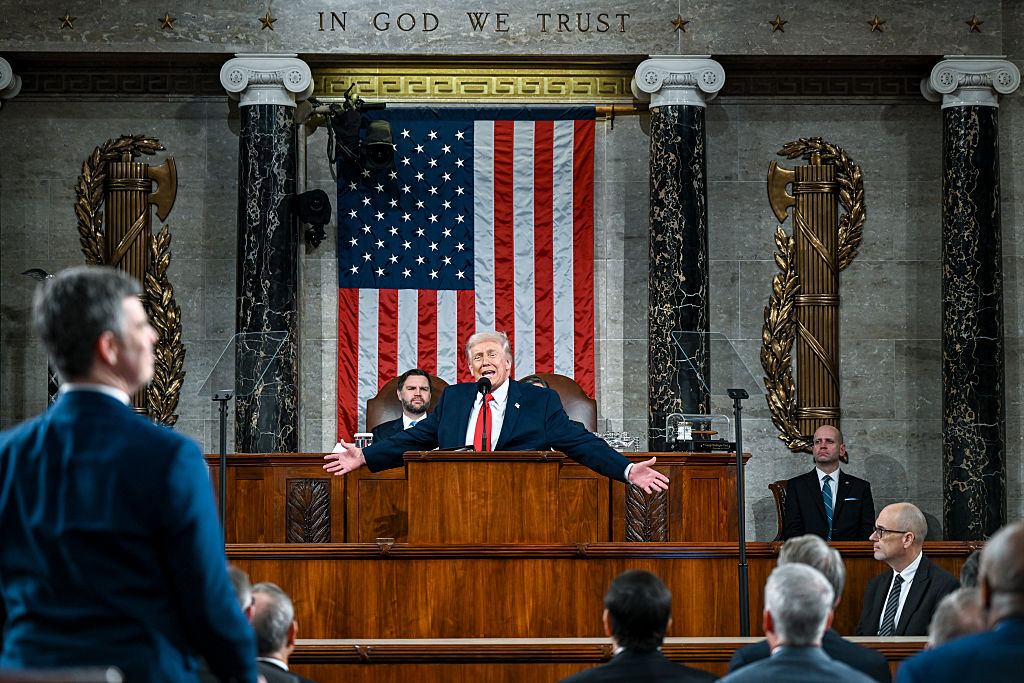
Our Take on the State of the Union
In his annual address, the president pointed to headline economic indicators and market highs as proof that the economy is “roaring.” But reality suggests otherwise, Roosevelt Chief Strategy Officer Allison Zelman argues in a new blog post—and the administration’s policies are failing to make life better for the working class.
- On major regular expenses like health care, the Trump administration has used the language of affordability while pushing only minor policy tweaks. Its signature spending bill directly raises costs of essentials through sweeping cuts to SNAP and ACA subsidies. Real economic transformation, as Roosevelt has argued, requires addressing the structural problems with markets and deploying serious public investment.
- On Bluesky, Roosevelt Principal Economist Michael Madowitz shared insights from the data on President Trump’s economy—like the stagnant job market that added barely over 180,000 jobs in 2025. “ So if opportunities dried up,” Madowitz says, “it’s not your imagination.”
- More than half of Americans describe getting health care, taking a one-week vacation, and buying a new car as “unaffordable,” according to a new Washington Post-ABC News-Ipsos poll.
“If we want a strong economy to have meaning, it has to show up as stability in people’s lives,” Zelman writes. “That means housing costs that don’t consume the future, care that isn’t a monthly budgeting crisis, and health coverage that prevents debt instead of creating it.”
Read the blog post: Rhetoric Isn’t Reform: The Good Life Can’t Be an Applause Line
What We’re Talking About: “Humanity Is the Point”
What We’re Reading
- “People simply wanted to know that their water was safe.” The federal rulemaking process is not designed to be easily accessible to everyday people. It’s much better at collecting inputs from corporations and their lobbyists, making the fight for consumer, environmental, and public health feel like an uphill battle. In a new blog post, consumer advocate and 2025 Roosevelt Institute Reimagine America Fellow Alan Smith tells the story of the movement to ban PFAS and argues that we need a more democratic regulatory system.
- “To meet this moment,” Smith writes, “we must build a functioning democracy that—far beyond the ballot box—values people’s participation in rulemaking more than that of profit-hungry corporations.”
- For more ideas for transforming the government to make it more effective and responsive, read Roosevelt’s October report compiling lessons from former public officials.
- A lesser-known jobs revision is coming our way: Updated population data will help economists understand the impact of declining net migration on jobs numbers, Roosevelt Principal Economist Michael Madowitz explains in a new blog post.
- Oligarchic media control → democratic disaster. Roosevelt Fellow Victor Pickard joined WNYC’s On the Media this week to discuss how market concentration weakens a free press.
- The strongest democracies in the world tend to also have the best-funded public broadcasting systems, Pickard noted. This “puts to rest this deeply American fear that if government gets involved in funding our media, we’re on some kind of slippery slope toward totalitarianism.”
- Roosevelt’s Bilal Baydoun wrote last year about how despite a crisis of trust in journalism, a majority of Americans actually trust public media. This is partly because “commercial outlets are built to maximize profit,” Baydoun writes, “not to safeguard democratic accountability.”
- Trump reportedly wants banks to crack down on undocumented immigrants. Requiring banks to collect detailed citizenship information from their customers could push people toward less-regulated and higher-cost financial services, Roosevelt Fellow Jeremy Kress warned. As he told the Washington Post, “this is a way to weaponize the banking system to achieve political ends.”
- Rental ripoff hearings are underway in NYC: “The mood was that of a boisterous science fair,” The City reports on the Mamdani administration’s first community engagement event focused on holding bad landlords accountable. Tenants spoke one-on-one with local officials, and their experiences are expected to help inform recommendations on the city’s housing crisis.