

The AI Job-Pocalypse Hasn’t Happened, but the Youth Unemployment Crisis Is Already Here
June 29, 2026
By Michael Madowitz
About a year ago, the narrative that AI was destroying jobs en masse was everywhere—or at least everywhere except in academic economics. Driven in part by gleeful pronouncements of job destruction from AI CEOs and tech industry leaders, used to justify layoffs in other sectors, and buttressed by a job market that was unusually weak for the kinds of well-educated professionals that AI threatens, the AI job killer narrative was one of the only rationalizations on offer for the state of the labor market.
Last summer, we drilled down on seasonal teen hiring as a straightforward way to demonstrate the broad slowing of the economy in even the most AI-unaffected sectors. The slowdown was very strong in the kinds of seasonal, labor-intensive jobs teens work in the summer—despite a dearth of AI lifeguards. This year, the job market has started to look more normal, particularly in May, when hiring vastly outperformed expectations—though it will be important to watch local governments and tourism jobs this month to see if this was more about the calendar declaring an early start to summer than a stronger job market.
But even if the culprit of a weak job market for younger workers turned out not to be AI, the problem people sought to explain with an AI job-pocalypse was real: Education has long been one of the only forms of job insurance in the US economy, but higher education isn’t providing the same protections for young workers as it used to.
Age and education explain a lot of variation in unemployment rates. Below, I’ve indexed the unemployment rates to February 2022 (following a break in the data), so these lines are moving up and down relative to that value. These series break out unemployment rates by 10-year age bands and degree status. The sample sizes are small, so they’re noisy and not seasonally adjusted, but the overall trend is pretty clear—more school means, on average, lower unemployment, with some variation between the 45–54 and 55–64 cohorts.
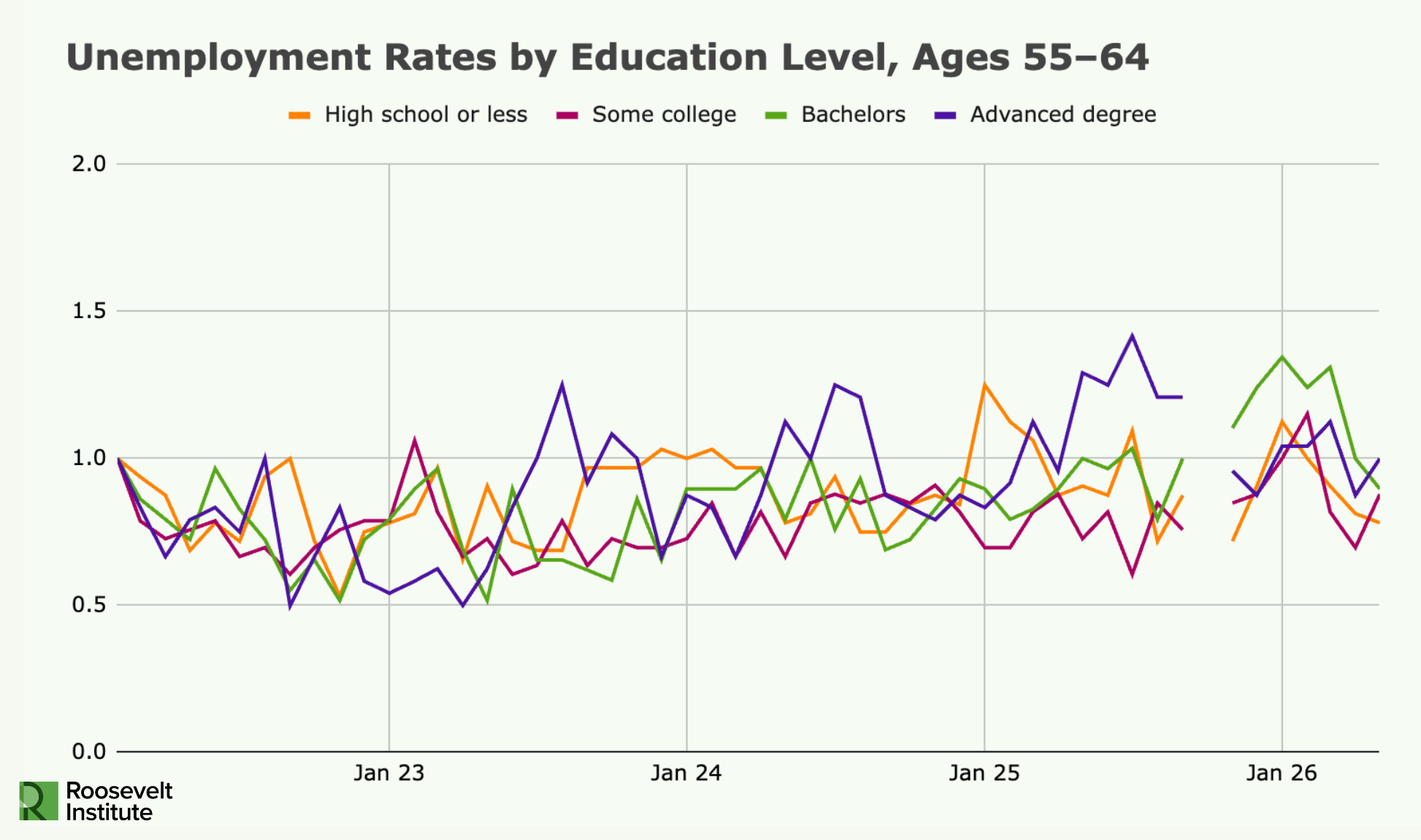
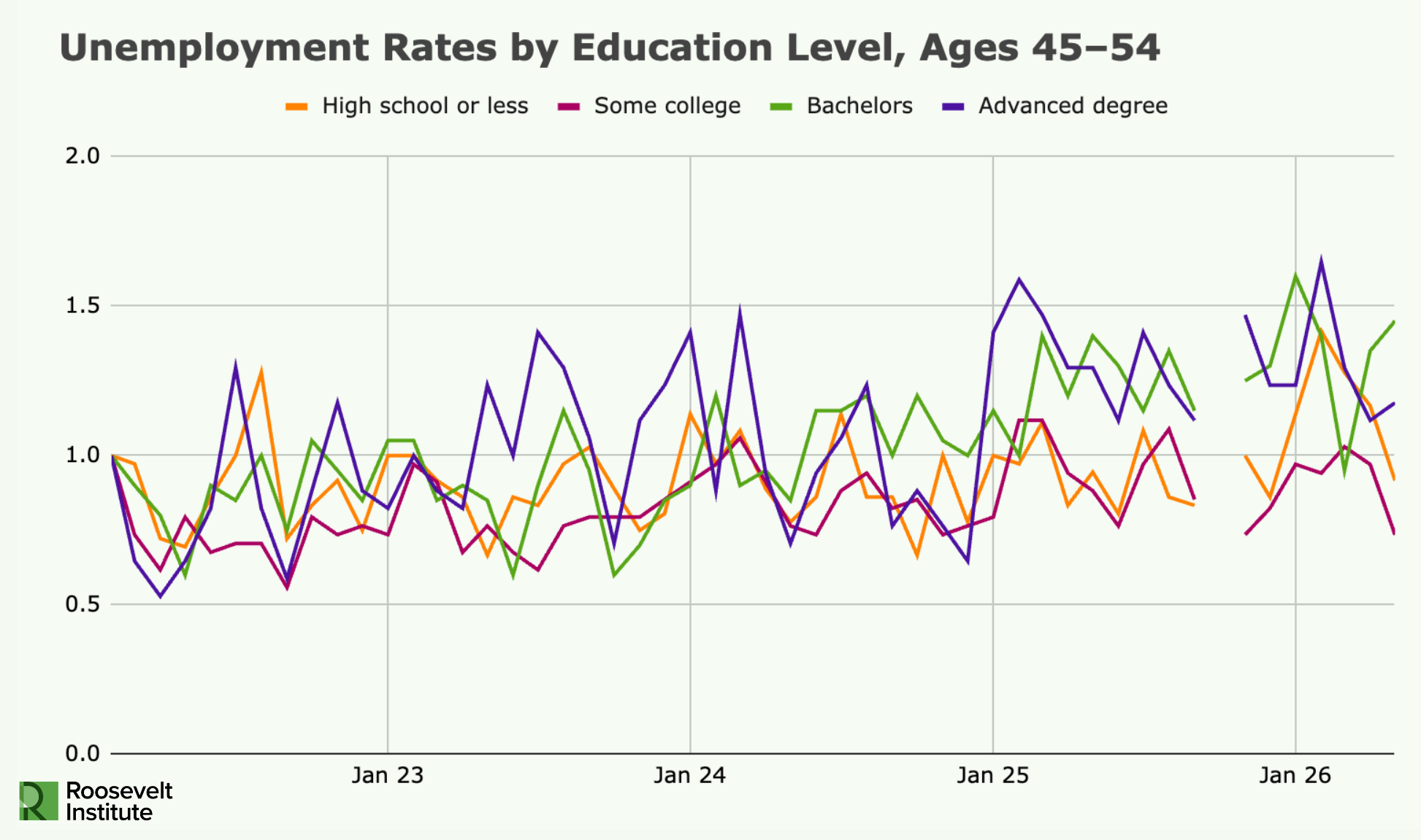
But job security really did shift over the last few years, especially for the youngest, most-educated workers. These are unemployment rates, so they may reflect longer and more intense job searches, pandemic overhiring of workers for the wrong jobs, or other trends—federal hiring freezes and grant delays at science agencies like NIH and NOAA would be a bigger deal for most new PhDs than layoffs at Meta, for instance. But whatever the reason, one of these charts is not like the others: The unemployment rate for the youngest advanced degree holders has jumped from early 2022 levels in ways it hasn’t for any other age-education group.
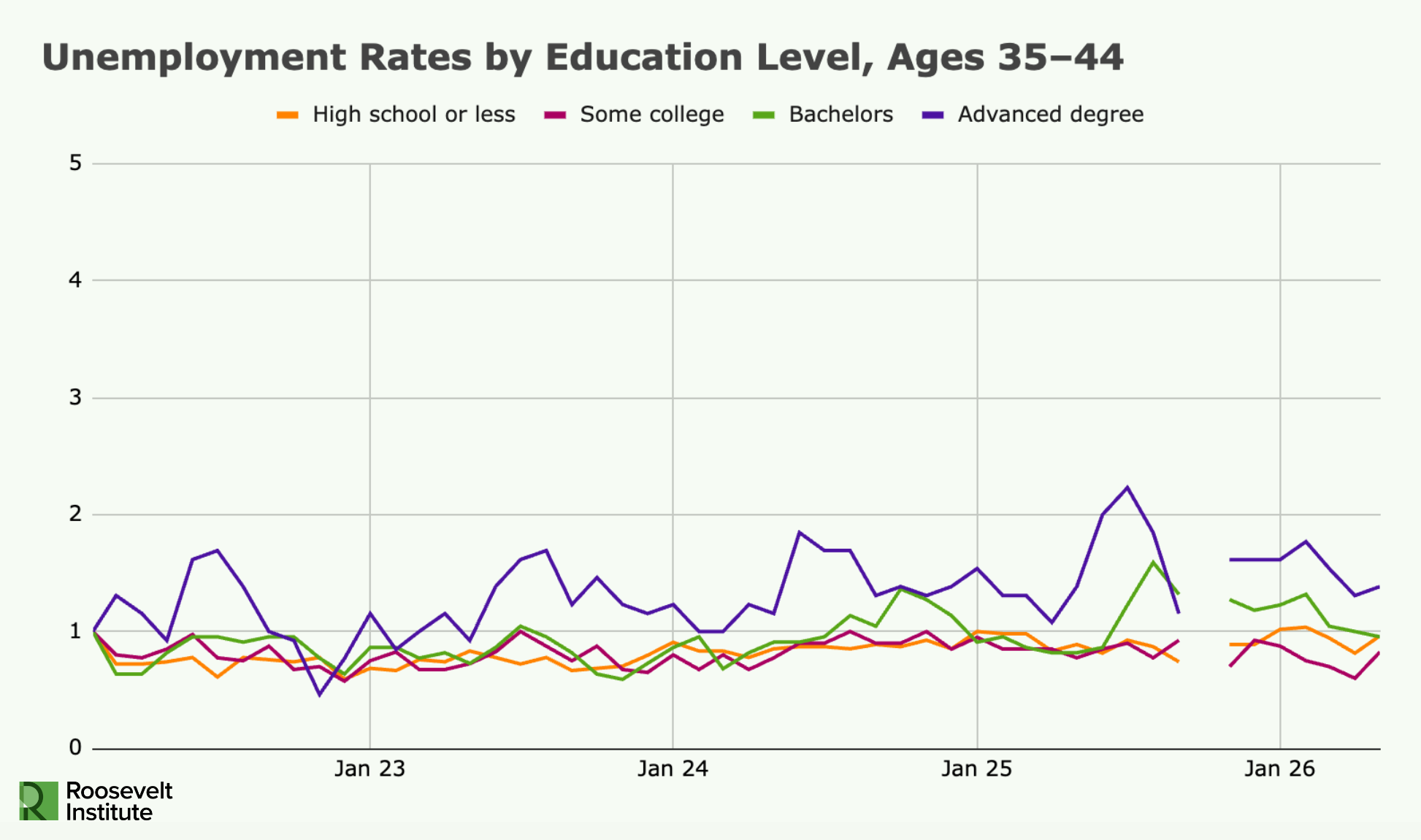
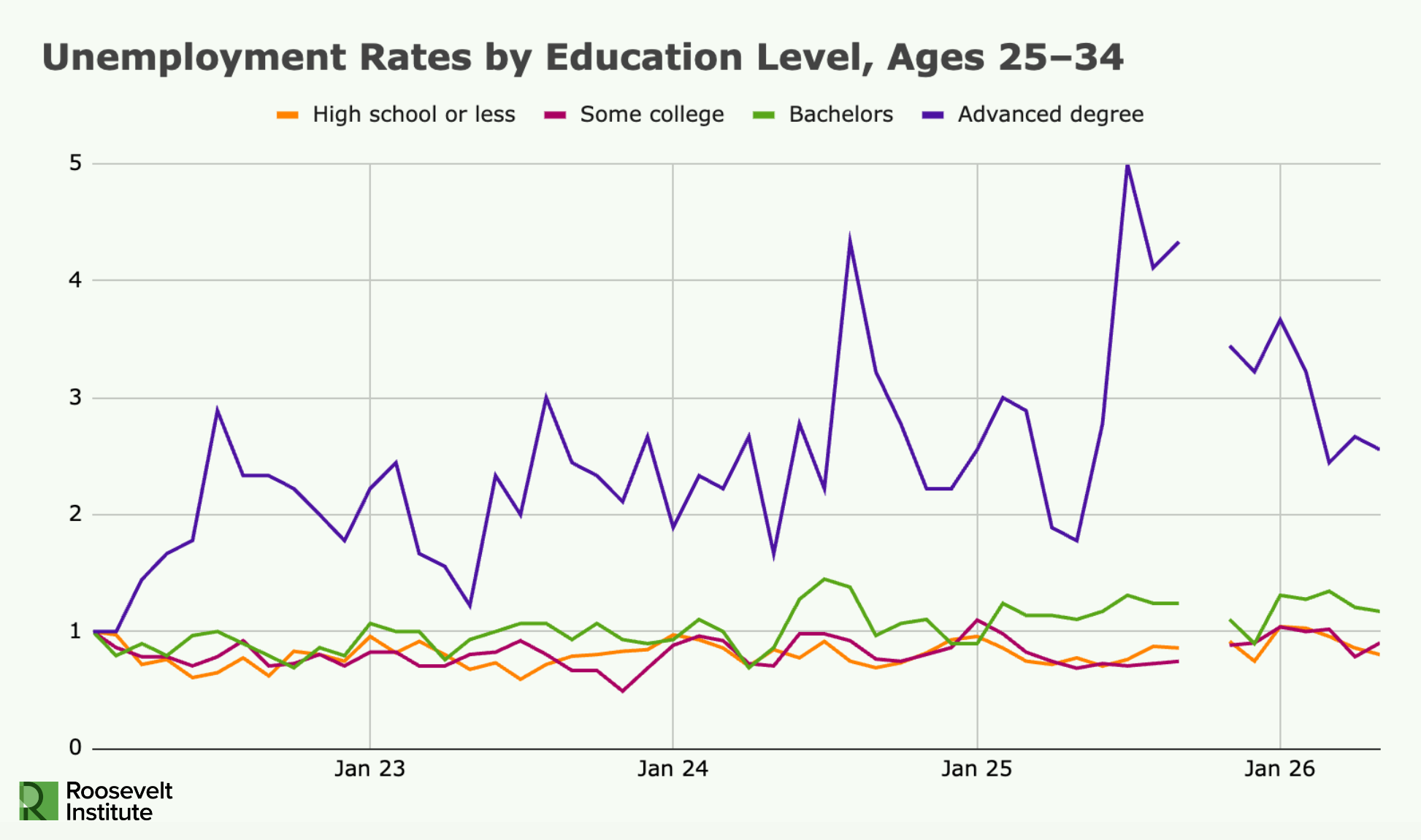
There was good reason to doubt the AI booster claims last year. While the sector is obviously booming and represents the only real growth narrative right now, the economy is large and has many moving parts and people. Overall job growth was especially weak in 2025—weaker than real-time data suggested—and it’s clear that a lot of what was claimed as an AI productivity boom threatening jobs was just a mediocre economy.
Things look like they’re starting to improve for the youngest, most-educated Americans. A new class is graduating into a better hiring market than last year. But a real concern for government is that years of overhyped AI job losses could create even more policy inertia: Just because an AI boom isn’t the cause of weak hiring in 2025 doesn’t mean we should ignore its potential effects on hiring in 2035.
Author