
Our 250th Birthday Wish? Tax the Ultrarich
July 3, 2026
Wealth concentration has corrupted our democracy.
The Roosevelt Rundown features our top stories of the week.
Our democracy needs tax reform
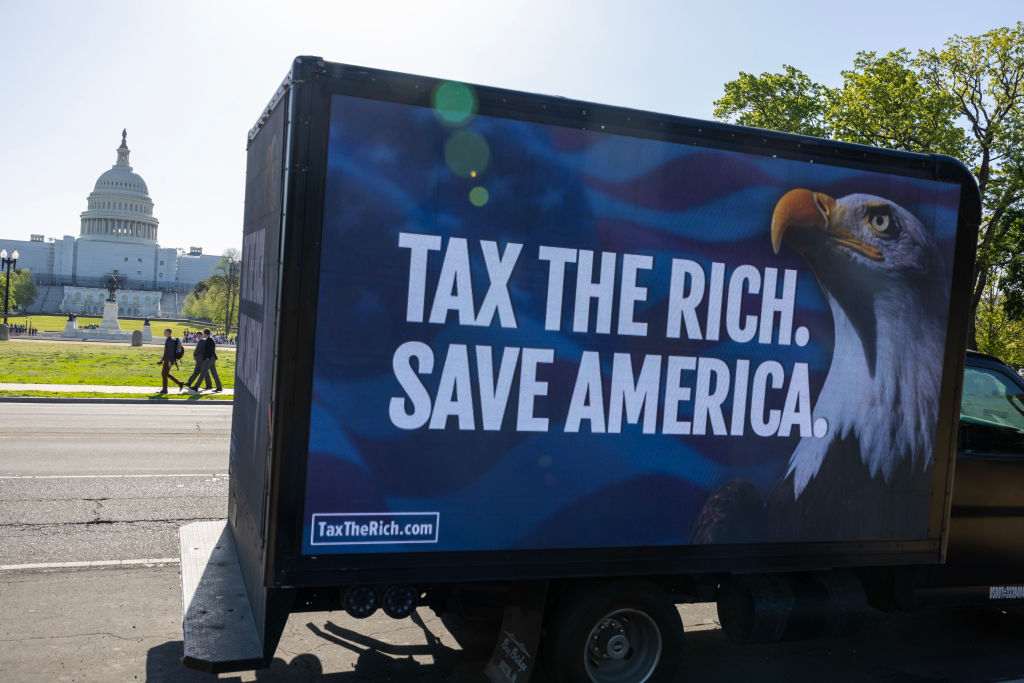
This week marks 250 years since the Declaration of Independence launched the American experiment with democracy. And one year ago this week, President Trump’s so-called One Big Beautiful Bill Act reminded us why, without an extreme overhaul, our tax code is a threat to that democracy.
In a new blog post, Roosevelt’s Noa Rosinplotz explains how the OBBBA enriched an ultra-wealthy few while slashing essential services for the many. It’s the “latest tax cut in a 50-year destructive cycle: tax cuts for the rich fueling increasing wealth concentration, enabling them to lobby for yet more tax cuts.”
Wealth concentration has only increased since then—Elon Musk is now the world’s first trillionaire—and that wealth, through massive election spending and other means, continues to allow the ultrarich outsize influence over our hard-fought-for democracy.
“The OBBBA is a case study in what unchecked wealth concentration looks like as policy,” Roosevelt President and CEO Elizabeth Wilkins said this week. “A tax system that funds public goods, checks concentrated wealth, and binds us to one another. . . . is the foundation a functioning democracy requires.”
Rosinplotz agrees: “Our country’s first 250 years have shown us that when we deploy [the tax code] in service of these goals, our democracy is stronger. If we want that democracy to survive another 250, we need to change course.”
Read the blog post: One Year Later: How the OBBBA’s Tax Cuts for the Rich Have Weakened Democracy
What else we’re up to
- SCOTUS protects the Fed’s Lisa Cook, but leaves other agencies to the president’s political whims. “The Court breaks with Trump only when it suits Wall Street,” Elizabeth Wilkins said. “Government institutions—from the Court to the Fed—should be accountable to the interests of the American people, not to the president’s whims or the financial industry.”
- In the wake of the Trump v. Slaughter decision to allow the president’s FTC firings, what will really protect the working class is serious judicial reform, Wilkins argues in a piece coauthored by the American Economic Liberties Project’s Nidhi Hegde and Protect Borrowers’ Mike Pierce.
- Could rent regulation help prevent the next financial crisis? In a new brief, Roosevelt Fellow Anisha Steephen writes about regulating rents both as a method of controlling costs for tenants and as a powerful, largely untapped tool of financial regulation in the housing market:
- “Speculative finance does not directly cause landlords to charge higher rents,” they write, “but it leads them to create business plans that can only succeed if rents rise faster than current tenants can sustain.”
- Read the brief: Rent Regulation as Financial Regulation
- The AI job-pocalypse hasn’t happened, but youth unemployment is real. Roosevelt Principal Economist Michael Madowitz explores the labor market in his latest piece:
- While AI hasn’t replaced white-collar jobs as CEOs promised, the unemployment rate for workers ages 25–34 with more than a bachelor’s degree has been remarkably high for the past several years.
- Here are the four pillars of a successful green transition. Our government’s ability to manage a transition from fossil fuels to clean energy relies on more effective institutions, macrofinancial capacity, production and innovation, and social protection, Roosevelt Fellow Dan Driscoll argues in a new brief.
- “Every historic economic transition has involved states taking an active role in economic affairs,” he writes. “The green transition, in short, requires capable states.”
- Join us July 8 at 11 am ET for a Disability Economic Policy Research Consortium webinar. The DOJ’s recent memo targeting Olmstead v. LC is raising concerns about disabled peoples’ right to live and receive services in their communities. Join Roosevelt and the National Academy of Social Insurance for a conversation about what this does and does not mean in the short and long term.
What we’re talking about