
Our Economy Runs On Invisible Care Labor
June 26, 2026
Plus, tips for implementing a childcare program.
The Roosevelt Rundown features our top stories of the week.
The cascade effect of broken care infrastructure
“When care workers go unseen, the care they perform can seem to happen as if by magic.”
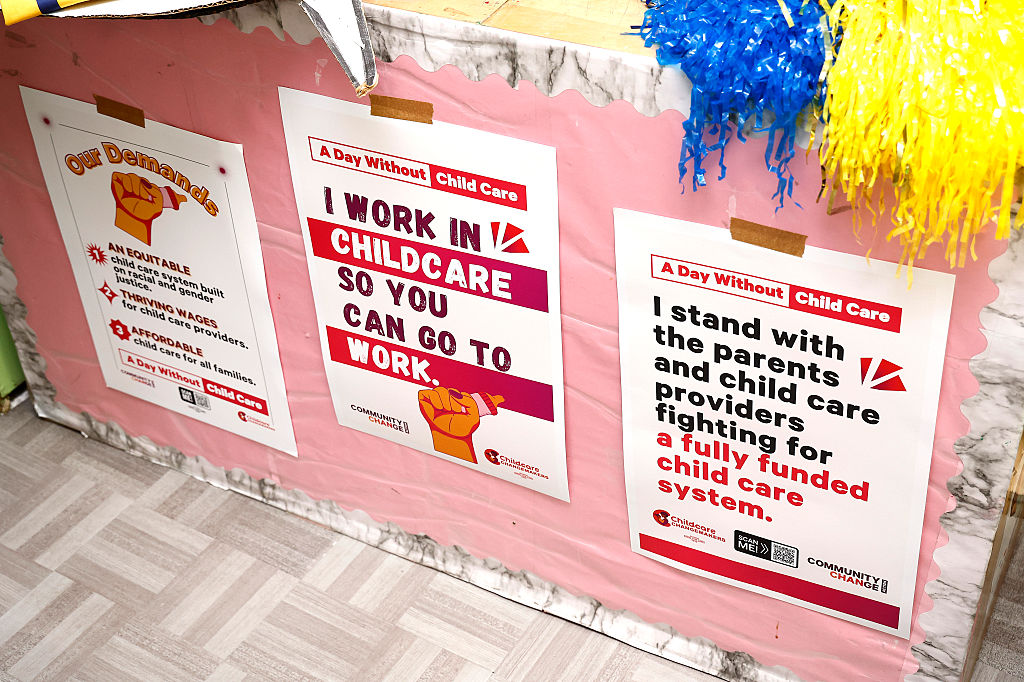
In a new brief, Roosevelt Fellow Jessica Calarco illustrates how the childcare, eldercare, and healthcare responsibilities that keep our economy running are pushed downstream—from men to women, and from privileged women to those less privileged—and what this “care cascade” of undervalued labor obscures.
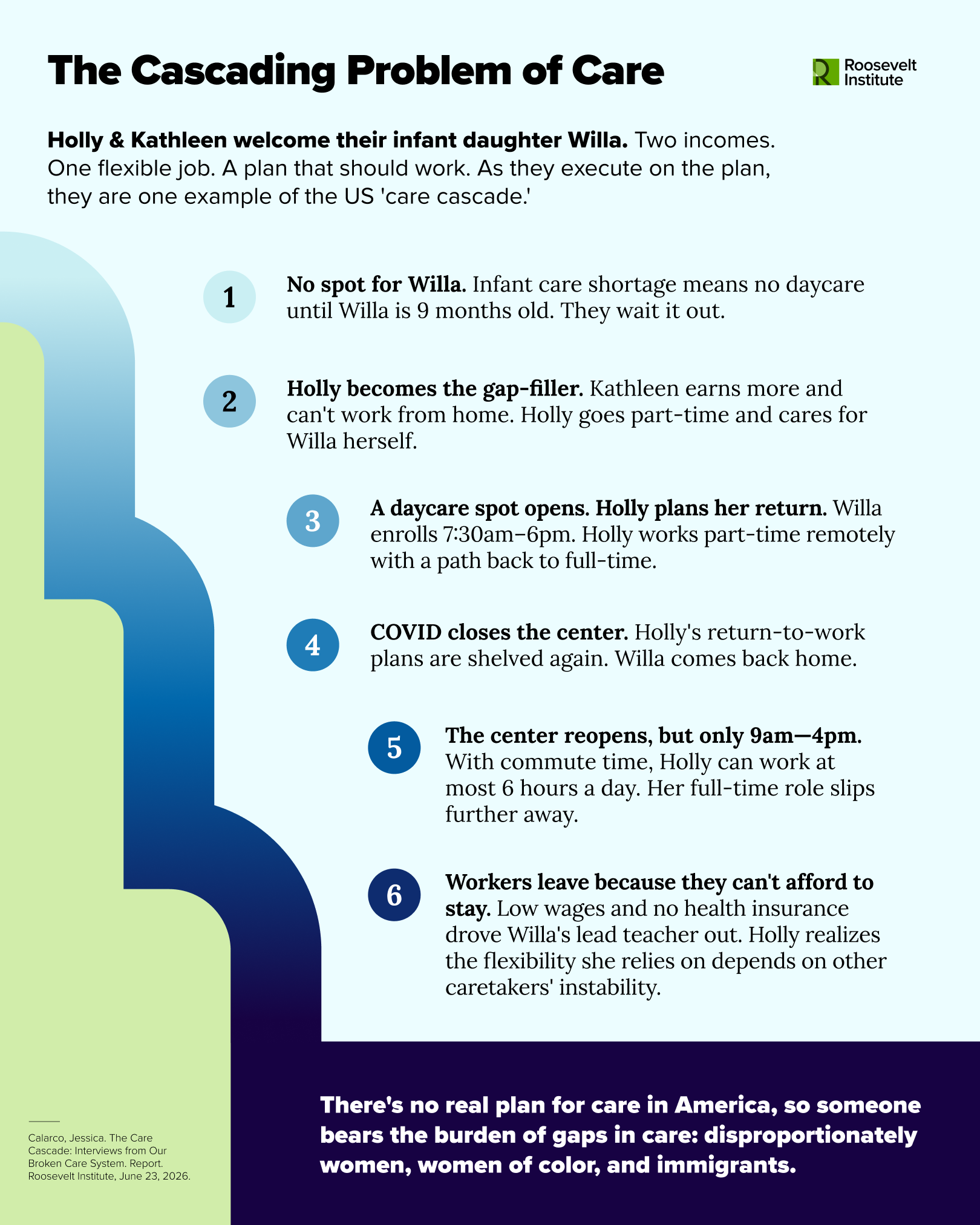
Through interviews, Calarco shows how workers and families are navigating this broken system. One couple, who struggled to manage when their daycare center closed during the pandemic, faced a new obstacle once it reopened: Their daughter’s teacher had left for another job—“not having health insurance had left her with substantial medical debt.”
Calarco reminds us that stories like these are the result of policy choices: “US policymakers have had plenty of opportunities to take care out of the market,” she writes. “Instead, they opted time and again for a DIY ‘solution’ to capitalism’s problem of care—telling Americans to find a way to get their needs met, despite the high costs and hurdles involved.”
Read the brief: The Care Cascade: Interviews from Our Broken Care System
Universal childcare: the nuts and bolts of implementation
Ensuring universal access to childcare is an ambitious goal—but ambitious does not mean impossible. In a new series, Roosevelt’s Lena Bilik interviews experts about what it takes to make a public childcare system work.
In the first installment, out this week, Bilik speaks with Kristin Spanos, CEO of First 5 Alameda:
“It’s one thing to have the legislation pass,” Spanos said. “But neoliberal economic thought has been very successful in dismantling or obscuring the role of public infrastructure in what comes next—why you need that infrastructure, why you need administrative staff, why you need sociological thinking combined with an economic analysis to implement something that’s going to be responsive to communities and families.”
Dig into the nitty-gritty of Alameda’s county-level childcare programming: How Childcare Happens—Applying a “Surgical Rigor” to Policy Implementation
What else we’re up to
- Elite bias—and therefore, income inequality—is baked into US institutions. Passing legislation in the US is uniquely difficult thanks to our system’s filibuster rule, almost-impossible-to-amend constitution, unrepresentative Senate, and array of veto players. A new report from political scientists Nate Kelly and Jana Morgan examines the mutually reinforcing relationship between policy stagnation and economic inequality.
- “Those who wish to reshape the American economy in ways that would produce more broadly shared prosperity must also consider fundamental reform of US policymaking institutions as a core part of their agenda,” Kelly and Morgan write. “In other words, policy gridlock today acts as a shield for the rich while hurting the rest of us.”
- Taxing the ultrarich should be a top priority. Roosevelt Senior Fellow Brian Galle is in Democracy Journal explaining his tax proposal—outlined in the Roosevelt report How to Tax the Ultrarich—and how it would navigate common legal and practical obstacles to implementation.
- “When billionaires wield the outsized political power they command today,” Galle writes, “it is hard to defend a system in which they pay among the lowest of tax rates.”
What we’re talking about