

How Colorado Tailored Its Childcare Plan to Serve Its Families
October 15, 2026
By Lena Bilik
Ensuring universal access to childcare is an ambitious policy goal. But ambitious does not mean impossible. Public access to high-quality, affordable childcare is a necessary part of a good life for American families. In this interview series, we speak with childcare implementers and system builders around the country to help shed light on what it takes to make a public childcare system work—not just the concept of it, but the nuts and bolts. You can read the other installments here.
In this fourth installment, Roosevelt Senior Program Manager Lena Bilik speaks with Steffanie Clothier of Gary Community Ventures.
Although Colorado passed legislation in 2024 to cap childcare costs at 7 percent of income for families making $49,000 to $80,000 for a family of three, state lawmakers delayed the affordability and providers payment provisions until 2028. They cite the state’s $1.5 billion deficit as the reason. Still, the fight for childcare in Colorado continues.
Gary Community Ventures is an impermanent philanthropic organization committed to using all of its resources by 2035 to transform systems and build wealth for Colorado kids and families. It uses tools ranging from catalytic grantmaking, impact investments, policy and advocacy, and new ventures to tackle complex challenges, and partners with leaders across early childhood, education and workforce development, housing, benefits, and more. Gary Community Ventures is deeply involved in statewide advocacy for expanded public childcare, and serves as a convener of stakeholder conversations to design a statewide childcare policy that is co-built with partners, providers, and parents.
Lena Bilik: Can you tell me a little about yourself and your organization, and what you do on childcare?
Steffanie Clothier: I am the director of school readiness at Gary Community Ventures, where I’ve been for 11 years. I’ve spent most of my career doing work at the state level, starting with environmental campaigns, followed by work on welfare reform in Colorado and then supporting states on early childhood issues at the National Conference of State Legislatures and the Alliance for Early Success.
Gary has an unusual structure. On the philanthropy side, we make grants focused on building and changing systems. We have been leaders in impact investing when that is the right approach, and we are very involved in policy work with a policy team. We also offer grants to advocacy organizations and do active work on ballot measures. We’re unique in having a ventures team that can incubate and pilot potential solutions. One example is the development of My Friend Ben, a digital tool that allows families to see what public benefits they could be eligible for and how to apply. We’re also sunsetting, which creates an urgency to be as strategic as we can be in the time we have.
Lena: How would you describe the state of public childcare in Colorado as it is today?
Steffanie: We are coming to the end of Governor Polis’s second term, and he’s been an early childhood champion. We really benefitted from his leadership. He started with expanding funding to cover full-day kindergarten, then in 2020 we won universal preschool (UPK), funded by a tobacco and nicotine tax. That funding allowed Colorado to fund part-day preschool for all 4-year-olds, with the lowest-income families having access to more preschool hours.
But we have yet to finish the job on childcare. The biggest gap now is to fund childcare affordability and access. We have very little funding to help make childcare affordable for families and a huge shortage of licensed care for infants and toddlers. The combination of the expiration of COVID stimulus funds, budget shortfalls, and unfunded federal mandates has meant Colorado counties have had to stop taking applications for our childcare subsidy program and put families on waitlists. That is strangling providers who have been providing care for low-income families, and hurting families who have no options for help with childcare costs.
This all means we needed to really think creatively about how to fund childcare. So we’re doing a lot of work to get there. Implementation of UPK has been a major focus, but at the same time, in the fall of 2023 we started to convene community stakeholders around a childcare campaign. We needed to figure out potential revenue sources that could increase affordability while also addressing teacher compensation and the supply of childcare. We gathered input on what the policy design should be, and what infrastructure would be needed to make the current fragmented system work better. We’ve been spending the last several years on those questions.
Lena: Could you talk more about that policy design process?
Steffanie: We dedicated resources to figuring out all of the open questions on the design side in collaboration with childcare providers, families, and other systems leaders—especially around the challenges and gaps in our existing systems. The policy work has benefitted from learning on the ground about the current systems. Gary piloted system solutions by partnering with a leading county in Colorado, Adams County, that brought together their teams that administer childcare subsidies, support families in applying for UPK, and manage their local Head Start funding to work on a unified application.
One example of what we learned: After investigating the completion rate of parents who enter the childcare benefits system and try to apply, we found that 70 percent of families were getting lost because it was so complicated. Working with county frontline workers and walking through the whole process, we found multiple challenges for families and the caseworkers trying to facilitate the application process. Families with incomplete applications received messages to redo the application or submit a paper application, and often after multiple tries, they would give up. This is what led us to designing a prototype of a better childcare subsidy application. It is so important to learn about how to improve a system from the people actually using the system.
It is so important to learn about how to improve a system from the people actually using the system.
We’ve also gotten to a good place with the policy design process for how we could address affordability and access. Most other states took the road of augmenting their existing subsidy systems. But partners in Colorado have decided if we do a major expansion, we want to design our own system. We have state-designed preschool, and we would have state-designed childcare, rather than an expansion of the federal subsidy program. The key will be doing the hard work of braiding funding streams and creating a unified system for families.
Given the high cost of childcare, we know we would have a hard time getting to a fully free system in Colorado. So at the starting line here, initially, we think the right policy design is a targeted universal tuition credit. This is a concept built on Denver’s universal preschool system, in which all families can get cost relief, with lowest-income families getting the highest benefit. And then the tuition credit decreases as income increases. We believe this will go further given the reality of our state resources, and allow flexibility for how families can use those funds. We also know that the policy design must address teacher compensation, supply-building efforts, and funding to communities to address their own urgent needs. We have codesigned these policy solutions with all kinds of partners across the state, including input from parents and providers.
We’ve also been able to move forward the narrative work to build public support for expanded investments in childcare affordability and access. We launched a campaign to use narrative change to build durable childcare supporters, and to push childcare higher on the list of things people hear about, to start to move people toward action. Through a mix of grants across the state, we’ve seen, for example, journalists cover stories in new ways, with perspectives from people you don’t normally expect such as fathers and people without children. Families have contributed hundreds of stories that are being featured through media and social media outlets. It’s been an incredible way to bring childcare issues to life.
Lena: Colorado has implemented some significant workforce investments to shore up the childcare system, including tax credits for childcare providers and investments in programs for professional credentials. Can you talk about this work in Colorado, the importance of these kinds of policies, and why they’re needed to increase the supply of programs?
Steffanie: Supply-building is a really big implementation problem for childcare. We have already made good progress on supporting the workforce in Colorado. The workforce is a priority for our state Department of Early Childhood, with our recent work funded by an Early Educator Investment Collaborative grant, which has accelerated our state’s ability to test different approaches to teacher compensation and benefits and to work with partners across the state on potential solutions.
Workforce compensation is the future of this sector. We want early childhood education to be a career that you would recommend to a family member, which means salaries, benefits, and working conditions need to be much better. We see this as a critical investment as we implement childcare expansion in the state. Colorado has taken a lot of steps to build the workforce system including implementing our credentialing approach, supporting apprenticeships, and offering a mix of pathways for teachers to enter the profession. Now we are shifting to answering questions like: Is the system ready for expanded demand, and what is the plan for when that comes? We’ll have more on that soon.
Workforce compensation is the future of this sector. We want early childhood education to be a career that you would recommend to a family member.
Lena: Colorado state law allows localities to create special local taxing districts, or Early Childhood Development Special Districts. These districts can get voter approval for property and sales taxes and use those revenues for early childhood services from birth to age eight. Can you talk a bit about this approach to raising public revenue for early childhood services, and how it’s going?
Steffanie: What is interesting is that all states do have this special taxing district flexibility, which allows you to fund a service across multiple geographic areas for things like wildfire control, or water and sanitation. In 2019 Colorado passed a bill to create a similar special district authority for early childhood education—adding it to the list of potential purposes for these multiple-geographic-area public funding districts. We had heard from mountain, metro, and rural communities that given where people live/work, and geography constraints, being able to raise taxes across multiple communities would allow for a coordinated approach to raising local revenue for childcare.
Communities in the Roaring Fork Valley in Colorado were the first to put this structure on the ballot. They were working on a local revenue option for years, and had done a lot of beautiful work to engage families, providers, and community members and develop really thoughtful, well-informed local design. They were able to raise revenue across multiple communities through a sales tax, passed in 2025, and they’re currently working on an implementation plan for the coming year that would support providers and launch their subsidies to families. A new entity was created to govern and administer that funding across all of the communities it touches. This is a great tool that could work for rural, mountain, and urban counties that want to raise public revenue to solve their regional childcare issues.
Lena: As a part of the philanthropy space and the advocacy space, what would you say is needed from philanthropy to help resource state-level childcare systems change?
Steffanie: There are so many ways philanthropy can support these efforts. For one, philanthropy could be helpful in giving community stakeholders space to think about what they really want for an ideal childcare system, rather than tweaking an existing system that’s not working for families or providers. Philanthropy can convene partners, families, providers, community leaders to have real blue-sky conversations about what the system should look like, so that that system is built with and by the people who will use it.
Funders can and do fund advocacy and policy work—passing legislation or ballot measures takes significant investment. But once passed, implementation is critical, and often where there is less attention or adequate resources. Funders can work with their partners in the community and in government to ensure there is adequate funding to follow through on implementation. Foundations can fund where there are gaps in that process. What we see is that often when programs are being developed or new systems implemented, there’s a lack of resources and time spent designing with end users. Philanthropy could step in and fund that part of the work with their government partners.
So you have lots of roles for philanthropy—helping to draw out the vision; supporting the advocacy needed to win; ensuring smart design by engaging with families, teachers, and system actors; and funding the system actors once the work turns toward implementation.
Lena: In your experience, what are the limits of having to do this at the state level with state resources—and how does that make you think about the need for a national solution to the childcare crisis?
Steffanie: I would say that our childcare solutions will require investment from every level of government, as well as support from the business community. We know in Colorado the childcare investment is really a billion-dollar challenge and to get there we will need federal, state, and local commitment. We’ve made meaningful state investments already and need significantly more. Communities in Colorado are stepping up, raising sales taxes and lodging taxes to try to meet their local needs—and there’s a huge role the federal government could play.
RELATED RESOURCES
Author
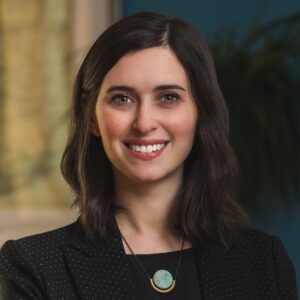
Lena Bilik
Senior Program ManagerAs senior program manager, Lena supports think tank staff and fellows with research and project management.