
How NYC Policymakers Are Becoming More Responsive to the People (with Sam Levine)
March 31, 2026
By Elizabeth Wilkins
When New York City Mayor Zohran Mamdani first announced that Sam Levine would lead the NYC Department of Consumer and Worker Protection (DCWP), I knew the administration was serious about defending working people against corporate exploitation. And I wasn’t surprised to learn in Sam’s New York Times profile that he’d prepared an eight-page memo of his priorities heading into the department.
I know Sam from when we both worked at the Federal Trade Commission (FTC), and I’m thrilled to see what he’s already doing with this innovative mayoral administration. Sam embodies the kind of governance we want to see for working people. He is urgent about the problems people face. He wants to hear from them to understand not just what box a problem might fit into but the fullness of the challenges people face—and what government might be able to do for them. And he knows that the way we govern can create opportunities for people to come together, build power, and hold government accountable for delivering.
Better yet, Sam is a Roosevelter! He was a founding member of the Washington University in St. Louis chapter of the Roosevelt Network.
Read on for our conversation about how he’s approaching pro-worker governance.
This conversation has been condensed and edited for clarity.
Elizabeth Wilkins: I want to take you back to the moment you accepted this job and thought, “okay, X number of weeks until Inauguration Day, and I’ve got a mayor who’s given us a mandate to do things differently.” Can you talk about what it felt like to take on this mantle, and how you prepared to hit the ground running on Day 1?
Sam Levine: I wasn’t sure I wanted this job [at first]. I was fairly new to New York, I didn’t know the mayor, and I didn’t know a lot of people in New York. I had a lot of conversations with Lina Khan about this. And even before I was offered the job, I thought, “well, at a minimum, whoever the commissioner is going to be, I’ll be a thorn in their side about the things they should be doing.” My initial thought wasn’t that I was going to be the commissioner, it was that I was going to annoy the commissioner from the outside.
These hearings shift the pressure to policymakers: Now you’ve heard from the people of New York directly—how are you going to deliver?
What I started doing was very straightforward. I learned this from Rohit Chopra: You just have to look at the authorities. I started looking up New York administrative code, the charter for the agency, and some of the rules the agency had put forward. What was apparent when I did that digging—and again, this isn’t some hunt for hidden treasure, this is on the internet—was the really broad authority that the department had to improve the economic lives of New Yorkers.
I thought about what the mayor was saying on the campaign trail, about his commitment to being a mayor for workers, a mayor for consumers, a mayor to make the economy more fair. I started reading about his goals, I thought, well, these are things DCWP can advance. I looked at the set of tools that DCWP had at its disposal and realized that this agency, which has flown under the radar for far too long, should be the tip of the spear driving the economic justice agenda forward.
Over time, I thought, “You know what? Maybe I could do this.” It took a little bit of cajoling and convincing, but eventually I applied. I talked to the mayor about what I thought we could do together, and I guess the rest is history.
Elizabeth: I’m a huge fan of Mayor Mamdani’s rental ripoff hearings. Could you tell me about the purpose of those, and how they’ve been going?
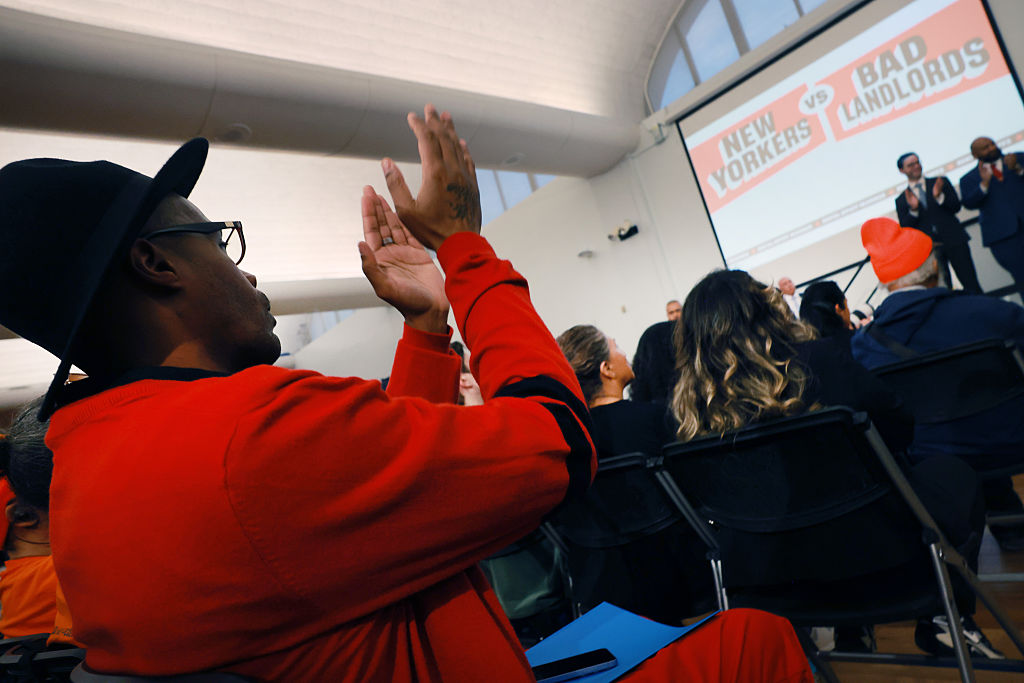
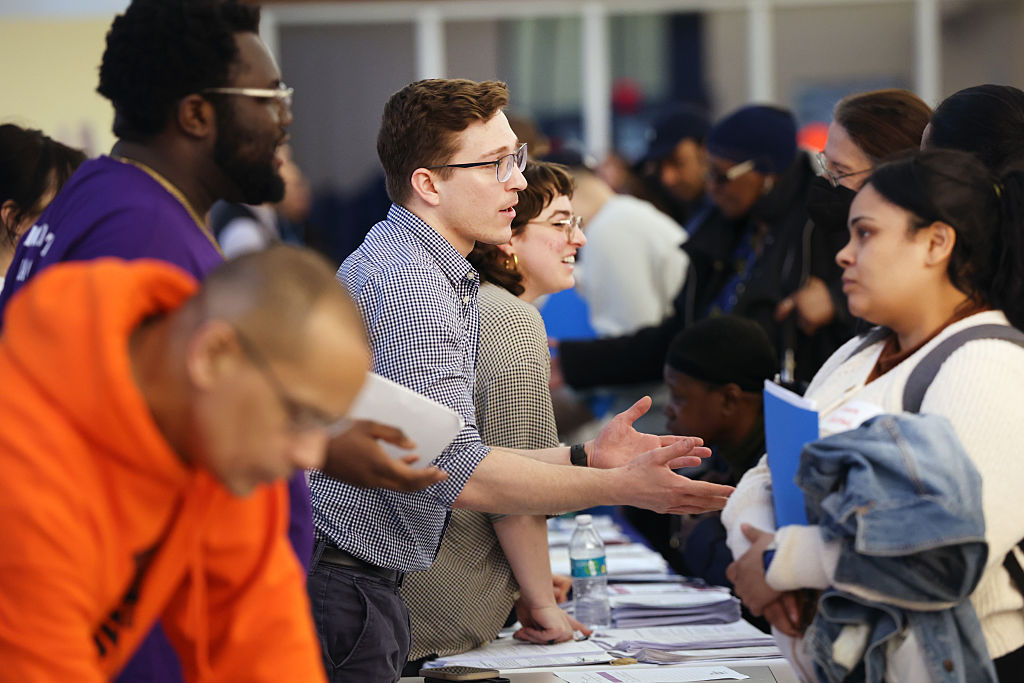
Sam: If you live in New York and you’re a renter, you are getting ripped off. I can say that from personal experience. The administration has organized one hearing in each borough. Anyone in New York City is invited to come in, register, and meet with pretty high-ranking city officials. This was not the official sitting behind a desk up front and people coming up with the mic, Parks and Rec style. We were sitting across the table from renters. Three minutes each, hearing what’s going on in the actual lives of New Yorkers, connecting them with resources, and using the information we were getting to build up policy. We had note-takers, we were writing everything down.
If you want progressivism to succeed, if you want democracy to succeed, people need to believe that their government has their back.
The original goal was just to ask how we can improve housing policy in New York City: What better way to improve housing policy than to hear directly from the people who are experiencing the struggles of housing affordability in New York City? Instead of just having—no offense—a white paper out of a think tank in DC, let’s hear from people in the Bronx about what they’re dealing with in their buildings, in the worst winter in years in New York City. That’s number one.
Number two, it’s providing resources to folks. All the different agencies came with resources. We set up a booth at the rental ripoff hearings and told people: Here are your rights as workers. Here are your rights as renters. Here’s how you file a complaint against your landlord. Here’s how you apply for public benefits.
The third and most important goal was showing what the government can actually do for ordinary people. So many of the people I spoke to might have been skeptical that they were actually going to get answers. And we were honest with them: We can’t snap our fingers and get the heat back on. We can’t snap our fingers and get the elevator fixed. But the idea that city officials would take time out of their days to have conversations with actual New Yorkers about what they’re experiencing in housing really meant a lot to people. If you want progressivism to succeed, if you want democracy to succeed, people need to believe that their government has their back.
People said to me, “Thank you for listening.” They knew that there weren’t going to be immediate solutions, that it’s a journey. But for so many years, the pressure and the angst has been on the tenants who have to deal with not being able to afford the rent, not being able to get heat, and not being able to have a stove. These hearings shift the pressure to policymakers: Now you’ve heard from the people of New York directly—how are you going to deliver? They’re an incredibly powerful vehicle not only to shape housing policy but to demonstrate the kind of governance style that we ought to see nationwide.
Elizabeth: I heard two transformative things in that answer: First, you described what it means for people to truly feel like they are being listened to, in a way that the government might actually respond. Second, you spoke about a transformation in government, in how creating that level of interaction and accountability, in some ways, put pressure on you guys to do work.
Could you talk more about not just creating the possibility for trust on the part of citizens, but creating a level of accountability, of urgency, for policymakers?
Sam: My biggest worry going into these hearings is “how are we actually going to follow up and deliver?” But the mistake that too many politicians and policymakers make is that they use that question as a reason not to do something. So-called expectations management is a very common refrain in government.
But what are we here for, what are we being paid for, if not to solve big problems? I’ve now looked people in the eyes and told them I’m listening and I’m going to think about how to solve their problems. The pressure that I, my colleagues, and our staff now feel to actually deliver—every public official should be feeling that pressure. Not only because serving your constituents is the right thing to do, but because I think it’s a really powerful antidote to the kinds of pressure we ordinarily feel.
When you’re in government, you hear all the time from lobbyists in very nice suits who come with white papers and slide decks and their wish list, who will tell you why your minimum pay bill is going to hurt the city economy. You don’t hear often from ordinary people—the people you’re actually supposed to serve.
These hearings place a pressure on all of us to be accountable not to the plutocrats who know how to open doors, but to ordinary New Yorkers who have never sat across the table from someone with real power to make their lives better. That’s exactly the kind of pressure I think all of us—especially in local government, but across different levels—ought to be feeling. Because at the end of the day, what we’re here to do is make people’s lives better.
These hearings place a pressure on all of us to be accountable not to the plutocrats who know how to open doors, but to ordinary New Yorkers who have never sat across the table from someone with real power to make their lives better. That’s exactly the kind of pressure I think all of us—especially in local government, but across different levels—ought to be feeling.
Elizabeth: Could you give us some more examples of ways in which you’re doing business differently than usual?
Sam: We’re going to enforce the law aggressively. One of the things others have observed about the new administration is that we’re taking a much harder line on corporate law-breaking. I’ve been out there very clearly doing something that used to be taboo in Washington, which is actually naming names of companies that are ripping people off. We issued a report early in my tenure that said Uber and DoorDash are using design tricks to drive people’s wages down. So part of it is calling people out.
But the bigger part of it is that when you have a responsive government—and this is something I’m really seeing firsthand—it builds worker power. It creates a feedback loop where worker organizations can organize saying, “Look at the connections we have in city government. Look at Mayor Mamdani showing up at a little storefront in Brooklyn to make announcements. Look at the kind of power and influence we are wielding.” That draws more workers into the movement and builds more power for the organization.
I think there was a view, for example, when we were at the FTC, that we’re supposed to be neutral observers of our economy. No! I mean, the FTC was one of the crowning achievements of the Progressive Era, and it was founded to be a check on corporate power and monopolies. The idea that the FTC was supposed to be some neutral bystander was a Reagan-era fiction.
When you have a responsive government—and this is something I’m really seeing firsthand—it builds worker power.
At DCWP here in New York City, we’re applying that lesson directly. Not only are we not a neutral bystander, but we’re saying, “This is the Department of Consumer and Worker Protection.”
That is our job, that is our mission, and everything we do is about empowering workers, empowering the people of the city. We’re not just going to sit there pretending like we’re neutral. We have a dog in this fight!
The key lesson here is it’s not just about doing the work of government. It’s recognizing that government can support worker power and consumer organizing by actually being a good partner. That’s how you actually move the ball forward for economic justice.
Elizabeth: I have one last question, which is maybe a bit more personal. One of the things we think about a lot at Roosevelt is how we need a different kind of policymaker. Most of the people in our policymaking ecosystem, wherever we started from, are the products of elite institutions. You went to Harvard Law, I went to Yale Law. And for many of us, the elite institutions and the status quo worked for us: We’re here, we’re successful. We made it by following the instructions, coloring within the lines, and getting ahead.
That produces a set of people who, regardless of their intents and beliefs, think, “Well, even though I have a certain set of values, maybe the system works out okay, or maybe coloring within the lines is the right thing to do. This is the way it’s always been done. Maybe my general counsel tells me I can’t do this, or maybe an economist says that’s not the way that the market works. Maybe I should be deferential, because it’s worked out for me to respect the authorities around me.”
My question to you Sam: What made you this way? How should we think about investing in current and future leaders, supporting not only their policy ideas but also their attitude toward governance, their inclination toward action, and their urgency around the challenges that people face? What advice would you give about how to help people see the world the way you do, but more importantly, to act in the world the way that you do?
Sam: When I started law school in 2009, we were in the depths of the financial crisis, and I got involved in an organization called Project No One Leaves. We went to every single home in Boston facing foreclosure and said, “You should go to this tenant-organizing meeting. Learn about your rights. Learn about how you can fight back against what’s happening.”
It was an eye-opening experience for me. I had a very normal suburban childhood. But when I was in Dorchester and Roxbury and other parts of Boston in those years, it was a catastrophe. Every other home, sometimes multiple homes on a block, was facing foreclosure.
In my second year I joined a legal clinic, and I actually had the opportunity to represent people in court. I started going to these organizing meetings every week, and it was so moving to me. I’ll never forget it.
People from all walks of life were coming to this little room in a former brewery. They would stand up and say, “I’m Sam Levine and I’m in foreclosure.” Like an AA meeting, almost, because there was so much shame about what had happened to them. People would even see their neighbors at these meetings. I remember many times someone saw their family member, not knowing that they were also in foreclosure. Everyone was so deeply ashamed that they had made a bet on the American dream and they had lost. And they were so crippled by not knowing what to do that they weren’t telling anyone about it.
I saw real power in that room when people came out and said, “Yes, I’m in foreclosure and it’s not because I did something wrong.” Political education about the predatory system led people to understand that they were part of something much greater. And if we link arms, if we work together, we can actually fight back against this kind of oppression.
What I took from that, first of all, is just the power of ordinary people coming together. But it also, frankly, made me cynical about the legal system. Most of my colleagues at Harvard were learning the law from course books where there’s one case followed by another, and it all ends up in a perfect place by the end. But that’s not how law works. You learn about civil procedure—file a complaint, then an answer, you do discovery, and blah blah blah.
Go to housing court on a Thursday in Boston! See how the law actually works! There’s a rubber stamp for the eviction process. I felt that so many of my classmates had never actually seen how the law works for poor people. I think it’s really incumbent on young people, especially people with privilege, to get out into the world and see how the poorest people in society, the people with the least power in society, are faring in your field. How the law treats the poor is the dark underbelly of our legal system in the United States. And I have a feeling that any other discipline you go into—business, law, medicine—you would find the same thing. You can’t view the law as some be-all-end-all for achieving social change. The law is a tool, but it’s just one tool of many to advance economic justice.
My advice: Get out of the classroom, get out into the community, and see what’s happening to the real people.
Author