

Young Men Are Not the Ones Struggling in the Post-2024 Job Market
September 29, 2026
By Michael Madowitz
There is a well-worn narrative about young men’s struggles in the modern economy. But recent data inverts this picture. The struggle is strongest not for male youth, but for a wide swath of Men of a Certain Age, particularly in the 35–64 age range.
The household jobs data since January 2025 show that, while men ages 65 and over have had the largest employment gains among their gender, the only other cohort of men to show positive job growth through August is 20–24 year olds.
Women’s employment has grown while men’s has fallen in the household survey (in the payroll survey data, men’s employment is up ~50,000 vs ~750,000 for women since then). But despite popular narratives, the most compelling story of employment is revealed when comparing data across age groups, not across gender.
A Closer Look at the Data
Figure 1
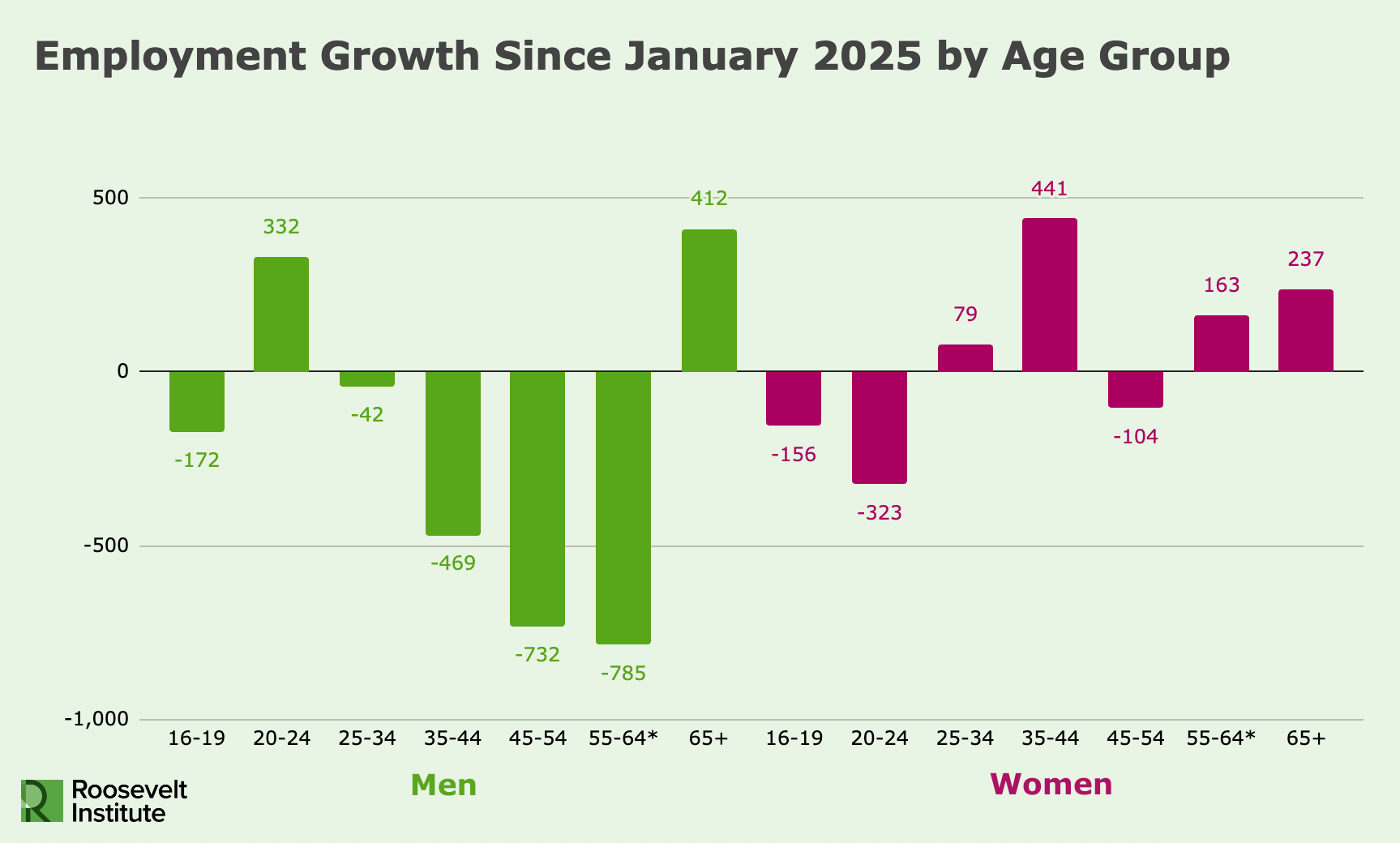
Note: The 55–64 category is author-calculated by subtracting the 65+ series from 55+ series. This category should not be treated as definitive on its own as only the 55+ series is published with seasonal adjustment.
Changes in employment count data like this from the household survey can be problematic, as the population counts for each age group are revised annually, but revisions are not carried backward. This means that employment rates are a better measure, but these are only published in whole percentage points. We can calculate a more precise employment rate for each period and compare those over time from the monthly employment and population levels. The above trends for men are consistent with these calculated employment rates. If men are struggling, it’s not the youngest men but older men.
Still, the story is about more than just one gender.
Despite popular narratives, the most compelling story of employment is revealed when comparing data across age groups, not across gender.
The story for women does change—both relative to the pre-2025 narrative of male job loss and to the counts data above. The picture is positive for women 35–44, but that’s the only bright spot. As shown in Figure 2, women ages 20–24 saw a 3.16 percentage point drop in employment rates from January 2025 through August 2026, compared to a 1.95 percentage point increase for the same age group of men.
But across age groups, the household survey does not paint a sterling picture of employment rates for women. (This is in some tension with firms reporting almost all net hiring growth is among women, but there are reasonable explanations for this difference—self-employment and holding multiple jobs among them). Not only are young men not struggling as much as older men, it appears that younger men are not struggling as much as younger women.
Figure 2
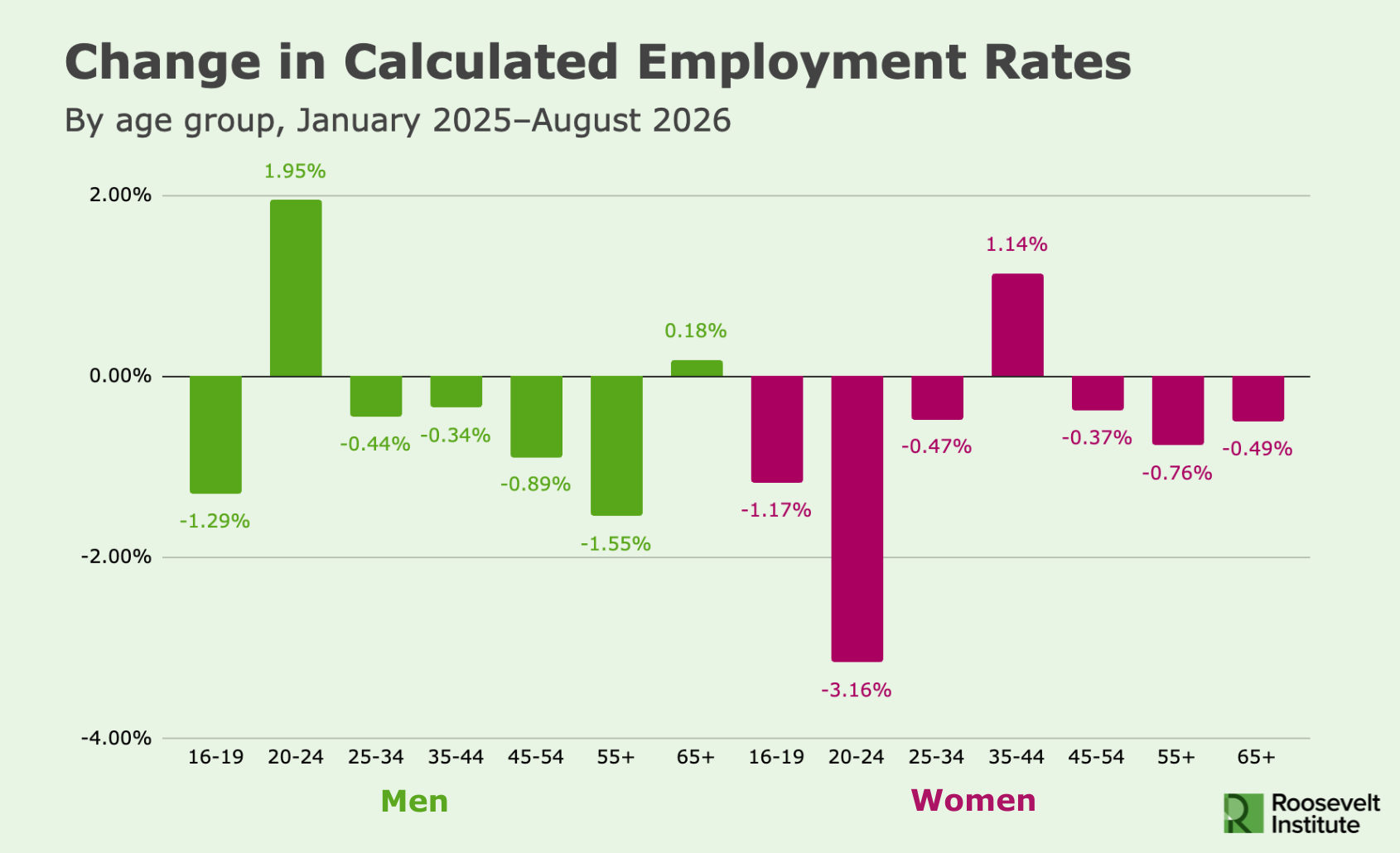
This comparison is more useful for distinguishing between age groups than among genders and overall job growth, in part because payroll measures of job growth don’t look as bad—the job market as a whole has been improving over the last year, and now looks pretty solid over the summer after a good topline last month. But the household data on employment rates over the last year and a half are not great for anyone, and don’t tell a clean aging story.
This should call for an update of the conventional wisdom about who’s really struggling in the post-2024 economy. Perhaps this mystery of discontent among older workers is less mysterious than it seems.
RELATED RESOURCES
Roosevelt’s principal economist, Michael Madowitz, writes every month about the labor market and broader economy.
Author