
What’s Going On With the Treasury Market, Explained
September 3, 2026
Plus, what happens when childcare and work schedules clash.
The Roosevelt Rundown features our top stories of the week.
Without trust, the financial system is fragile
“When the Treasury market ends up on the front page of newspapers and the evening news, it’s rarely a good thing,” Roosevelt Senior Fellow Graham Steele wrote this week.
But that’s what’s happening now: In mid-August, Treasury yields hit their highest level since 2007, during the onset of the global financial crisis—and working families across the country are taking the hit.
Thanks to factors like the Iran war and ensuing inflation, the Trump administration’s chaotic economic policies, and the massive amount of private money going toward the AI build-out, the US government bond market is shaky.
This means interest rates have gone up across the economy, making borrowing funds to buy a car, finance a small business, or take out a mortgage on a home more expensive.
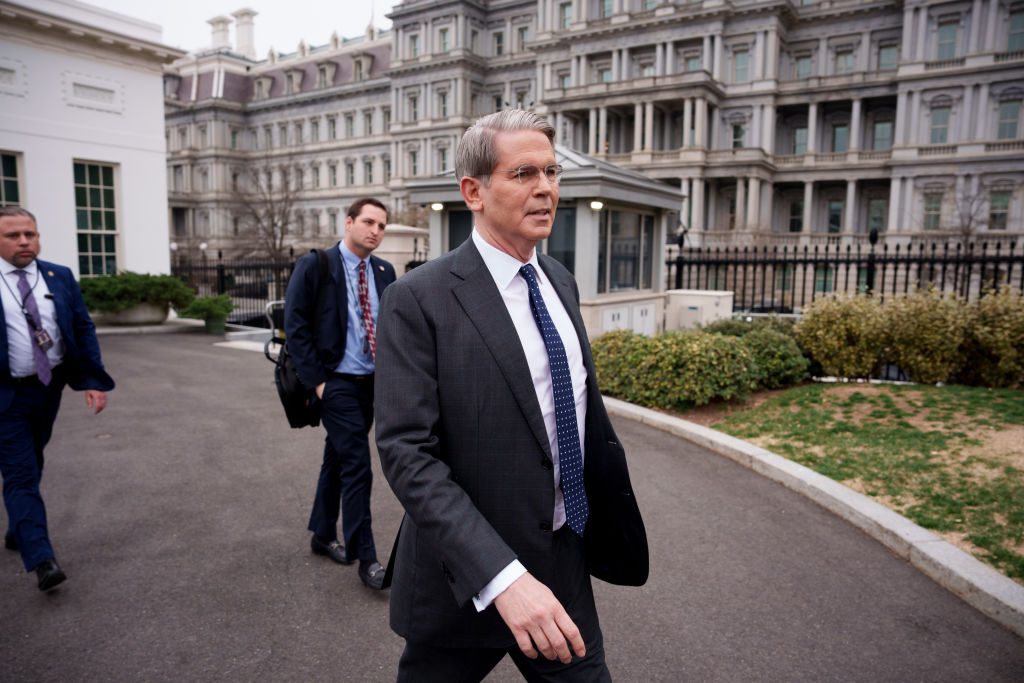
Steele, who formerly served as assistant secretary for financial institutions at the US Treasury, explains why Secretary Scott Bessent’s recent move to increase buybacks of Treasury bonds failed to calm the market. “At its most fundamental level, the financial system operates on a foundation of trust,” he writes.
“Curing what ails the Treasury market, and lowering the costs it drives on Main Street, ultimately requires an administration committed to responsible and effective financial stewardship.”
Read the blog post: Why Are Treasury Yields Rising, and What Does It Mean for the Economy?
How a lack of universal childcare robs parents of their time
As kids head back to school, parents around the country are breathing a sigh of relief that the constant scramble to find childcare throughout the week will become—hopefully—a little bit easier.
A new Roosevelt brief by Sarah Jane Glynn explores the consequences of childcare disruptions resulting from our patchwork system. According to Glynn’s analysis, 16 percent of parents with children under 15 report working less, working part time, not working, or otherwise having their paid work limited by caregiving.
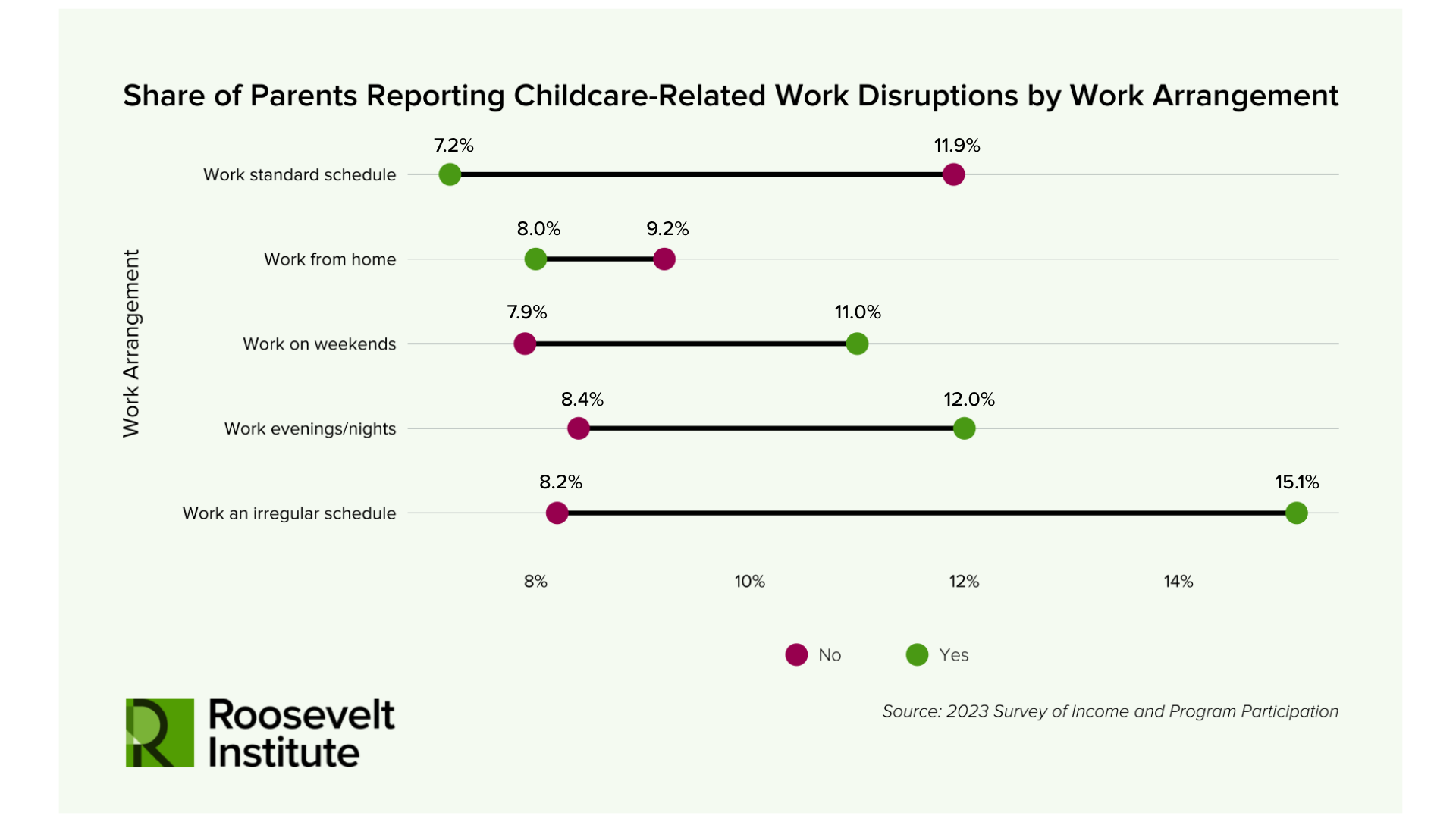
Parents with standard schedules, only working daytime hours on weekdays, were significantly less likely to experience childcare-related work disruptions compared to those working any other type of schedule.
“Childcare only supports working families when it is reliably available,” Glynn writes, “and, even when families have childcare arrangements in place, issues always arise.”
Read the brief: Parents Need Childcare They Can Count On: New Evidence on Childcare-Related Work Disruptions and Mothers’ Employment
What else we’re up to
- The “narrowing window” to rein in prediction markets. Prediction market platforms like Kalshi and Polymarket are quickly embedding themselves across industries like sports, media, and even finance. In a new brief, Roosevelt’s Shahrzad Shams argues for swift action from regulators—before political will and the practicality of doing so dwindle.
- “The more adoption and infrastructure accumulate,” Shams writes, “the more the question shifts from whether to regulate to how much damage regulation can still undo.”
- Read the brief: Prediction Markets Across Sports, Media, and Finance: Institutional Entrenchment and the Risk of Path Dependence
- And read the rest of Roosevelt’s series on prediction markets: The Hidden House: Prediction Markets and How They’re Shaping Society
- What the next administration can learn from Trump. Roosevelt’s Todd N. Tucker joined the Volts podcast to talk about how the president is using—and abusing—“new tools of state economic power.” Tucker discusses how a future administration could use these same policy tools to instead serve the public—a question also explored in the recent Roosevelt report, Building Up in 2029: How to Make Green Statecraft Durable.
- How public grocery stores could improve public health. Roosevelt’s chief economist Joseph Stiglitz explains in TIME magazine how, even at narrow profit margins, “grocery stores often have to engage in exploitative activities that encourage the consumption of high-margin and often less-nutritious foods at the expense of lower-margin foods that would be better for everyone’s health.”
- About the Mamdani administration’s plan for public grocery stores in New York City, Stiglitz writes: “It behooves us not to write off fresh ideas based on stale definitions of what a healthy economy looks like.”
What we’re talking about