

It’s Time to Finally Raise the Minimum Wage
May 29, 2026
We need wages tailored to the cost of living in different geographies.
The Roosevelt Rundown features our top stories of the week.
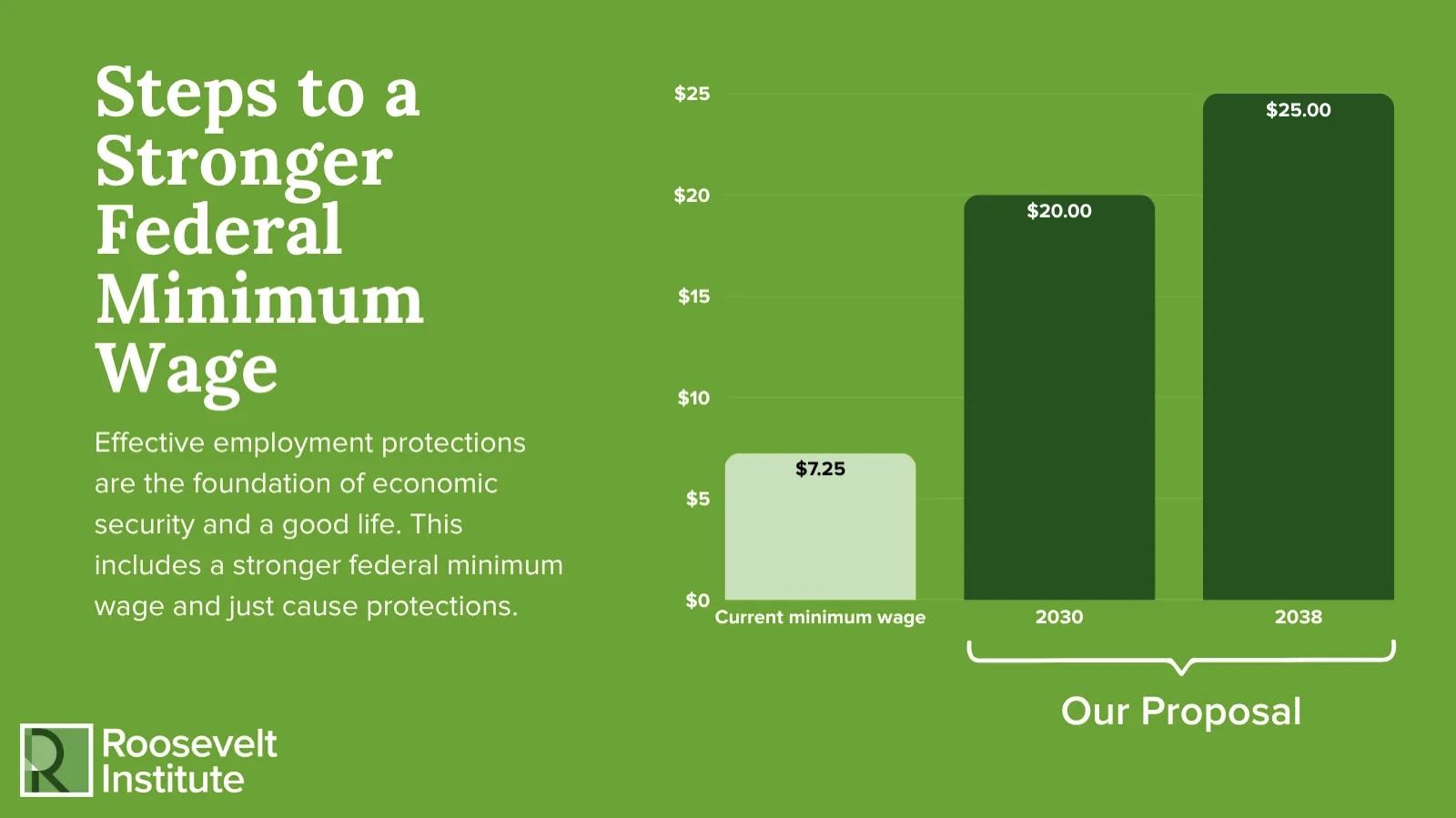
Getting to $25 per hour by 2038
The federal minimum wage, which has been left stagnant at $7.25 an hour for nearly two decades, has failed to put workers within reach of a living wage. A new brief from Roosevelt’s Patrick Oakford, along with a report from the Economic Policy Institute’s Ben Zipperer, urges policymakers to go back to the basics of meaningful employment standards—starting with the minimum wage:
- Expand wage theft protections to ensure the Department of Labor can return workers’ full earnings when employers shirk their legal obligation to pay workers fairly.
- Raise the minimum wage to two-thirds of median hourly wages, the authors argue, and index it annually to median wage growth. This would mean a $25 per hour wage by 2038, and as research shows, it would have little to no effect on employment.
- Pass just-cause protections for all employees, providing workers with a reasonable degree of job security.
Roosevelt and EPI also joined the Oklahoma Policy Institute last week for a virtual conversation about this new way to think about the federal minimum wage.
What else we’re up to
- Abundance won’t get anywhere without workers: Kate Andrias and Alexander Hertel-Fernandez joined the Pitchfork Economics podcast to discuss their recent Roosevelt report, which highlights the importance of organized labor to an abundance agenda.
- Calling all housing policy wonks: You still have until June 8 to apply to be a Good Life Resident on Housing and join a cohort exploring industrial strategy for housing construction, and how to design it.