

Federal Employment Standards as the Foundation of Economic Security: Revisiting Minimum Wage, Just Cause, and Tools to Combat Wage Theft
May 21, 2026
By Patrick Oakford

Key Takeaways
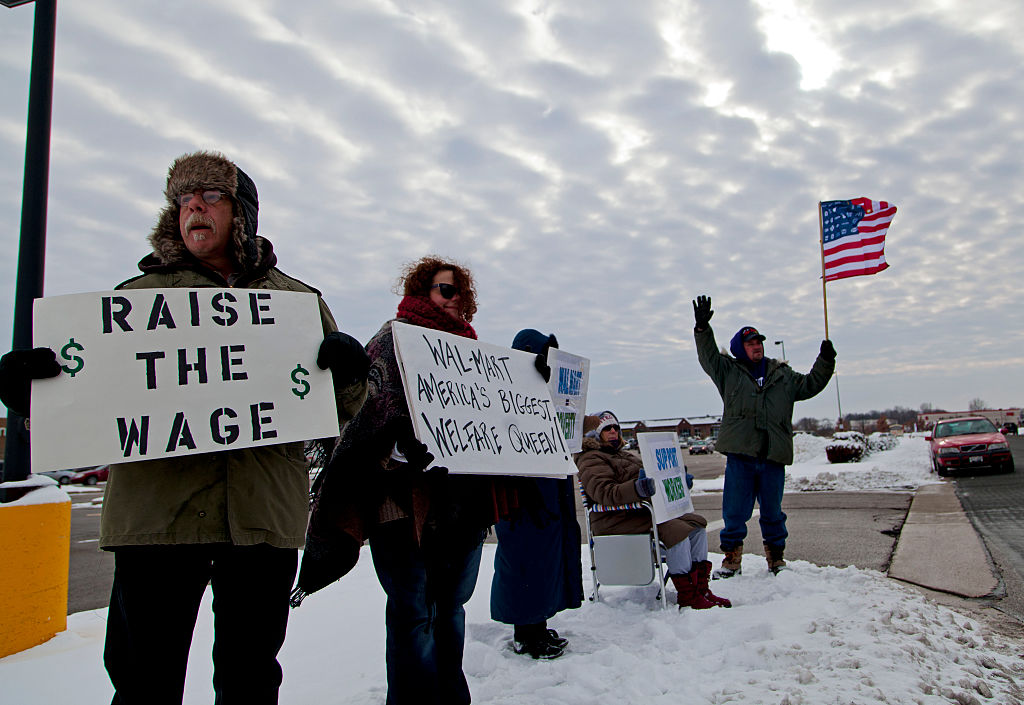
- The federal minimum wage was last raised in 2009 to $7.25 an hour—meaning it no longer achieves Congress’s original objective of serving as a wage floor to guarantee economic well-being for the lowest-paid workers.
- Policymakers should restore the minimum wage to a level that puts workers within reach of a living wage. Specifically, the federal minimum wage should be raised to two-thirds of median hourly wages and indexed annually to median wage growth. This would mean increasing from $7.25 per hour to $20 per hour by 2030 or $25 per hour by 2038.
- An increase to the federal minimum wage alone is not a sufficient foundation for families to build economic security. Private-sector employees need just-cause protections to ensure workers are not fired without reason or without sufficient notice and severance pay.
- In an economy rife with wage theft, the Department of Labor needs the ability to meaningfully enforce wage protections and ensure workers receive the earnings they are due.
Introduction
Families across the United States are struggling financially. Today, about 50 percent of full-time workers don’t earn enough to cover the cost of living for a family of four in their community.1 Over the last year, more workers have been borrowing from their retirement accounts, and many more struggle to set money aside for their future, be that a down payment for a house or retirement.2 Workers’ financial precarity isn’t new. It’s been decades in the making as workers’ bargaining power has eroded and corporations have increasingly managed down labor costs, suppressing wages.
At a moment when our economy requires bold policies to address persistent income inequality and concentrated corporate power, we must not overlook basic employment standards. While workplace protections alone are not going to provide complete relief for everyone, or even the lowest-paid workers, they are necessary building blocks for families’ economic security. This brief outlines a path forward for updating and expanding core employment standards, including raising the federal minimum wage, pairing it with just cause protections for all employees, and ensuring that agencies charged with enforcing wage standards can adequately combat wage theft.
The purpose of the federal minimum wage is to ensure a basic level of economic security for workers nationwide and eliminate substandard wages as a method of competition between businesses. When Congress created the federal minimum wage and overtime protections, it aimed to “correct and as rapidly as practicable to eliminate” the labor conditions that are “detrimental to the maintenance of the minimum standard of living necessary for health, efficiency, and general well-being of workers.” Furthermore, Congress viewed substandard wages as an “unfair method of competition” and believed they interfered with the “fair marketing of goods.”3 Yet today, the federal minimum wage has been rendered ineffective. After 17 years without increase, a mere 1 percent of hourly workers earn at (or below) the federal minimum wage. In other words, the federal minimum wage today does not set a strong national wage floor or push up the earnings of low-wage workers.4
To achieve Congress’s original objective in the Fair Labor Standards Act (FLSA), policymakers should restore the minimum wage to a level that puts workers within reach of a living wage. Specifically, the federal minimum wage should be raised to two-thirds of median hourly wages and indexed annually to median wage growth. This would mean increasing from $7.25 per hour to $20 per hour by 2030 or $25 per hour by 2038. A more robust minimum wage on its own, however, is not sufficient to achieve the FLSA’s aim of eliminating employment conditions that undermine workers’ economic security. That’s why minimum wage policies should be paired with additional standards for workers across the income distribution to protect them against business practices that suppress earnings and cause economic distress.
The federal minimum wage should be raised to two-thirds of median hourly wages and indexed annually to median wage growth. This would mean increasing from $7.25 per hour to $20 per hour by 2030 or $25 per hour by 2038.
In the US, the vast majority of workers are employed at the will of their employer and can be fired for any reason—or no reason at all. Unless a federal or state employment law, such as antidiscrimination protections, is relevant to a termination, an employee can be fired without notice (and without even a legitimate business reason) and have no recourse. The economic consequences of losing a job are profound for families anywhere on the income distribution, often leading to increased debt and lower earnings even after reemployment. Therefore, Congress should pass just cause projections for all employees, establishing a common sense standard to provide workers with a reasonable degree of job security. A just cause standard would help ensure that workers are not fired arbitrarily, without a legitimate business reason or disciplinary due processes. And in the event that they are terminated, the just cause standard would provide workers with adequate notice and severance.
As with any law, the ultimate effectiveness is often only as good as the government’s ability to meaningfully enforce it. Across the US, millions of workers’ paychecks too often do not reflect what they are actually due. In some instances, businesses pay workers less than the minimum wage they are entitled to. Other employers may push employees to work additional hours before clocking in or after clocking out, or deny workers the breaks and overtime pay they are due. Based on one estimate, in 2017 employers’ theft of workers’ wages was $15 billion, which is more than $20 billion today.5 Despite this systemic problem, the US Department of Labor (DOL) enforcement capacity has been severely limited as funding for the Wage and Hour Division (WHD) has been woefully insufficient, leaving only 1 investigator for every 270,000 workers.6
But the inability to adequately enforce wage protections goes far deeper than not enough staff. The Wage and Hour Division of the DOL is only able to enforce the federal minimum wage—$7.25 per hour. This means that when investigators find a worker hasn’t been paid the state minimum wage in any of the 30 states and Washington, DC, with higher minimum wages, the WHD can recover only up to $7.25 per hour if the worker was paid less than that amount. If, however, employer practices, like a restaurant deducting the cost of cleaning uniforms from workers’ wages, resulted in employees earning less than the state’s minimum wage but still above $7.25, the WHD would have no avenue to recover the wages these workers are due.
At a time when both the WHD and many state departments of labor have been underfunded and workers face rampant wage theft, the limited resources should be used to their maximum potential. This means ensuring the US DOL, in coordination with state agencies, is able to recover workers’ full wages when violations are found. This should include expanding WHD’s authority to recover wages up to state minimum wages, as well as wages promised to workers, and increasing the amount of damages the DOL can impose on employers.
As calls for higher minimum wages are renewed, policymakers should take stock of the purpose of the national wage floor and then aim for a policy design that would most effectively meet the objectives of the FLSA. This brief details why current leading proposals to raise the minimum wage to $17 per hour over five years fall short of putting workers on the economic footing needed to then obtain a living wage. Since a more robust minimum wage alone will not solve the financial precarity many families face, it should be paired with common sense policies that reinforce and help realize the objectives of a federal minimum wage. This includes, first and foremost, establishing just cause protections for all employees and ensuring the DOL is able to return workers’ full earnings when wage theft occurs. This brief details why and how updating and expanding these employment protections is vital to workers’ economic well-being.
This brief details why current leading proposals to raise the minimum wage to $17 per hour over five years fall short of putting workers on the economic footing needed to then obtain a living wage. Since a more robust minimum wage alone will not solve the financial precarity many families face, it should be paired with common sense policies that reinforce and help realize the objectives of a federal minimum wage.
Federal Minimum Wage
The federal minimum wage today is $7.25 an hour, and effectively far lower for workers in tipped occupations.7 Advocates, workers, and unions have pushed to raise the federal minimum wage for more than a decade. Leading proposals over this time would have returned the federal minimum wage to levels that were in line with its historical high-water mark: In 1968 the federal minimum wage was $1.60 per hour, which represented about 61 percent of the national median wage.8 Since then, however, the purchasing power of the federal minimum wage has eroded, along with its value relative to median wages. While Congress has increased the minimum wage from time to time, it has never returned to its peak in 1968. For example, after Congress last updated the minimum wage, it reached $7.25 per hour in 2009 and was about 46 percent of median hourly wages overall.9
By 2025, the federal minimum wage had fallen to just 28 percent of median hourly earnings.10 With only 1 percent of hourly workers earning at (or below) the federal minimum wage, it no longer functions as a meaningful wage floor.11 The federal minimum wage does very little to push up the bottom end of the wage distribution or eliminate a race-to-the bottom culture of business competition. As a result, employers often set wages that are far short of what workers need to maintain a minimum standard of living. This is evident in the fact that the wages of many workers across the US are not high enough to cover the cost of living in their communities. At the 30th percentile of earners in the US, hourly wages were less than $20 in 2025, and at the 10th percentile they were barely above $14.50.12 For full-time workers, this comes out to $41,600 and $30,160 annually, respectively. As a point of comparison, the budget needed to support a family with two adults and one child is, on average, about $84,800.13
Living Wages
The International Labor Organization (ILO) defines a living wage as “the wage level that is necessary to afford a decent standard of living for workers and their families.”14 The ILO explains that estimates of living wage levels should be “based on an identification and assessment of a basket of goods, using local prices of the costs of at least the following components: food, housing, health and education, and other necessary goods and services, in accordance with national circumstances.” In the United States, a few research organizations have estimated the cost of living and corresponding living wage levels for various family sizes by county. In particular, the Economic Policy Institute has estimated a range of living wage thresholds based on the cost for various family sizes to cover basic necessities, including housing, food, healthcare, childcare, transportation, taxes, and other household items such as clothing and personal care.
In public discourse, a living wage is often understood as the amount a worker needs to earn to support their family. But a family’s total wages can sometimes be less than their total cost of basic necessities because a family may secure some of their income through non-wage sources, such as social programs or investments. Relatedly, some government policies and employer practices, like universal childcare or providing health insurance, may lower the cost to families of core necessities. This, in turn, lowers the wage level necessary to cover all basic costs. Whether or not an individual family earns enough to cover the cost of basic necessities depends on a range of factors, including family size, local cost of living, the number of wage earners in the family, and the number of hours worked.
There is, therefore, a range of living wage levels in the US, from $14.11 for a single adult without children in the lowest-cost county in the country to $53.18 for a family of 4 with 1.5 workers in the highest-cost county.15 And even within a given county there is a range of living wage levels. For example, in a county where the living wage for a single adult without children is $18.45, the living wage level for a family of 4 with 1.5 workers is $25.26. Ultimately, there is no realistic one-size-fits-all wage standard that would ensure that all workers can earn a wage that sufficiently covers their cost of living.
But a national wage floor can shape the labor market to make it possible for workers to realize their respective living-wage levels. By setting the federal minimum wage near the typical living-wage level of a single adult without children, the national wage floor would eliminate unfair competition based on wages that are grossly insufficient for even a single worker to support themselves. This would put all workers on a stronger footing. For this reason, throughout this brief we frequently compare the federal minimum wage to typical living-wage thresholds across states for a single adult without children.
It is clear that businesses today are not paying a large segment of the workforce nearly enough. While a much stronger federal minimum wage alone cannot solve this problem, it would go a long way toward establishing an effective wage floor that puts workers within reach of a living wage.
The Federal Minimum Wage as a Realistic Stepping Stone to Living Wages
Proponents of raising the minimum wage often call for a federal minimum wage that would provide a living wage. But the reality is that the federal minimum wage alone will never be able to guarantee that everyone in the US earns the living wage they deserve. The variation in labor markets and cost of living across regions in the US is a real dynamic that Congress grappled with when the Fair Labor Standards Act was enacted.16 But a federal minimum wage is supposed to function as a uniform wage floor that meaningfully eliminates subpar labor conditions that are “detrimental to the maintenance of the minimum standard of living.”17 For this reason, Congress should set a national wage floor that gets far closer to a living wage for the typical single worker without children—making the final steps from a federal minimum wage to a living wage less of a leap and ultimately more achievable for state legislators, workers, and unions across the US. Indeed, when the difference between the federal minimum wage and living wage thresholds is so large, it is exceedingly difficult for other entities to close those gaps.
According to the Economic Policy Institute, the average living wage threshold for a single adult without children across all US counties is between $18.45 and $22.77.18 The lower estimate accounts for an individual receiving some of their income from non-wage sources, such as the social safety net or interest on investments, whereas the higher estimate assumes that all of the worker’s income comes from their earnings. It is clear that the current federal minimum wage is far below even the lower measurement of an average living wage in the US ($18.45). And even in the least costly counties in the US, the federal minimum wage today provides a single worker without children only about half of what they need to cover their cost of living.
The current leading minimum wage proposals in Congress would raise the federal minimum wage to $17 per hour over five years and phase out the tipped minimum wage credit.19 If passed today, the proposal would reach $17 in 2031 and represent a projected 55 percent of median earnings in 2031.20 This proposal would increase the earnings of tens of millions of workers and provide real economic benefits to families across the country. But it would still leave a glaring gap between the federal wage floor and average living wage thresholds, even for a single adult without children. As a result, businesses would continue to set wages far below what many workers actually need. Since it’s often difficult to conceive of the future value of wages, consider how this would play out today: If the federal minimum wage were 55 percent of median hourly wages today, it would be $14.21.21 This would be about 77 percent of the average living wage threshold across all counties in the US ($18.45).
Recognizing, however, that more people live in high-cost-of-living counties than low-cost-of-living counties, one can also compare the minimum wage to a typical living wage threshold for a state that takes into account where people actually live. For example, we know that more people live in Chicago’s Cook County than rural counties in Illinois. When we compare the current federal minimum wage proposal to the living wage threshold for the typical person in each state,22 the gap between the minimum wage and workers’ needs widens. Again, consider how this plays out today. If the federal minimum wage were 55 percent of median hourly earnings (or $14.21), that would, on average, get a single adult without children to about 70 percent of their state’s typical living wage threshold.23 Of course, in some states this share would be higher, as much as 85 percent, whereas in other states it would be far lower, down to 47 percent.24
Instead, a minimum wage that reached two-thirds of the median hourly wages would strike a better balance of establishing a uniform national wage floor that provides meaningful protections to workers, without overly burdening lower-cost states and regions of the US. Consider again how this would play out today. If the federal minimum wage were set at two-thirds median wage in 2025, it would have been $17.11 per hour.25 This would bring the federal minimum wage within reach of the typical living wage thresholds for more states and cities. Specifically, it would put the federal minimum wage at 90 to 99 percent of the median living wage for a single adult without children in 16 states, and between 80 and 89 percent for an additional 10 states (see following table). Recent analysis by Ben Zipperer of a two-thirds median hourly wages minimum wage policy similarly highlights that “a single adult working full-time at the 2030 minimum of $20 would cover modest but adequate expenses in half of U.S. counties.” 26
Evaluating how close a federal minimum wage is to a living wage is one way to consider the effectiveness of a national wage floor. Another analytical lens is to consider how far above poverty thresholds a minimum wage level would be if implemented. Proponents of raising the federal minimum wage often, and understandably, frame the long-overdue increase as necessary to ensure workers aren’t receiving poverty wages.27 In 2025, the federal minimum wage dipped below even the lowest poverty threshold—that for a single adult.28
It is important to be clear-eyed, though, about how far out of poverty workers would be with a federal minimum wage at 55 percent of median earnings—the current leading congressional proposal.
Research has found that raising the minimum wage to $17 per hour over five years would benefit more than 1 in 7 workers. It would directly raise the wages of more than 10 million workers and indirectly benefit another nearly 12 million workers, as some businesses would also raise wages for workers who earn right above the new minimum wage. Raising the minimum wage to $17 per hour (or 55 percent of median wages) would have a significant impact on those currently living in or near poverty: Among those who would be directly affected, nearly half are currently under 200 percent of the federal poverty line (FPL). And more than 85 percent of all workers who currently earn less than 200 percent of the FPL experience a pay raise.29 But that minimum wage proposal wouldn’t completely eliminate poverty wages for all full-time working families.
Consider, for example, the experience of the more than 1 million single adults with children who would be directly affected by this minimum wage proposal. In 2025, if these workers were earning the proposal’s 55 percent of the median hourly wage, that would be $14.12 per hour. For a full-time, year-round worker, that would be roughly 140 percent of the poverty line for a two-person family (e.g., one parent, one child)—putting the family slightly out of reach of SNAP benefits.30
Yet we know that, for many low-wage workers, securing the hours they want to work is difficult and often fluctuates week to week. The average weekly hours of all employees in retail trade is about 30 hours per week; for those in leisure and hospitality, it’s 25.5 hours.31 If a minimum-wage worker earning $14.12 in 2025 ended up working on average 30 hours a week year-round, they would be essentially at the poverty line for a family with one adult and one child.32 In other words, if the current leading minimum wage proposal were implemented, it would, in practice, probably be barely enough to ensure that some minimum-wage workers (including single adults with a child) could keep their heads safely above the poverty line. A stronger minimum wage set at two-thirds median hourly earnings would be a stronger guard against families falling into poverty when they aren’t able to secure adequate hours of work. For example, if in 2025 a minimum-wage worker was earning two-thirds median hourly earnings ($17.11) and worked on average 30 hours per week, they would be at almost 130 percent of the poverty line for a family of two. (Such a worker working full-time would reach more than 160 percent of the poverty line.)
If policymakers want the federal minimum wage to fully pull workers out of poverty and allow them to earn a living wage, then they need to establish a stronger national wage floor. Without a strong federal minimum wage, many low-wage workers will be unlikely to close the large gap that remains between the national wage floor and the wages they need to support a family. The current federal minimum wage does not achieve this objective, and crucially, neither does the leading proposal in Congress.
Instead, Congress should increase the minimum wage to two-thirds of the median hourly earnings, gradually bringing the US’s minimum wage in line with levels in other countries today, including the United Kingdom.33 Based on current median hourly earnings and Congressional Budget Office projections, the US could reach this two-thirds level through an accelerated phase-in to $20 per hour by 2030 or, more gradually, to $25 per hour by 2038.34 As with other current proposals, moving forward, the minimum wage should be indexed annually based on median hourly wage growth to guard against its erosion. Recent research by Zipperer estimates that raising the federal minimum wage to this two-thirds level by 2030 would raise the wages of nearly 40 million workers, with wage gains disproportionately benefiting Black and Hispanic workers as well as women who are overrepresented in low-wage jobs.35
If policymakers want the federal minimum wage to fully pull workers out of poverty and allow them to earn a living wage, then they need to establish a stronger national wage floor. Without a strong federal minimum wage, many low-wage workers will be unlikely to close the large gap that remains between the national wage floor and the wages they need to support a family. The current federal minimum wage does not achieve this objective, and crucially, neither does the leading proposal in Congress.
A Stronger Federal Minimum Wage and Fears of Job Loss
At the heart of many minimum-wage debates is often a concern of cost impacts on businesses and ultimately about job loss. The neoclassical economic theory of the case goes like this: In a perfectly competitive market where firms don’t set wages but rather accept prevailing market wages, when a federal (or state) minimum wage is introduced, firms are limited in their ability to absorb the cost of higher wages by lowering profits, so they raise prices instead. This in turn reduces consumer demand and subsequently reduces production and employment. This neoclassical theory was the leading belief for more than a century.36 Today, many people intuitively understand that markets aren’t perfectly competitive and, importantly, many firms don’t accept market wages but rather use their outsized leverage to set below-market wages to extract greater profits.
Beginning in the 1990s, novel research methods were used to empirically study the employment effects of state minimum wage increases. These findings began to call the neoclassical theory into question.37 Since then, more than three decades’ worth of innovative research designs and methods have been used to study in detail the labor market effects of minimum wages, including not only employment effects but how firms respond to and offset the increase in labor costs. Today, this rich body of research collectively shows:
- The minimum wage does not cause significant job loss.
- The precise magnitude of the job loss is relatively small, though it varies across certain subgroups of workers.
- A larger phased-in minimum wage increase (for example, an increase of $7 versus $5) is not associated with any greater employment effects.
- Minimum wage levels that are closer to median hourly wages do not have noticeably greater employment effects than minimum wage levels that are far lower than median hourly wages.
This last point is crucial to today’s current minimum wage proposals, including the one outlined in this brief, which aims to push the federal minimum wage beyond its historical high point in the US. Put simply, there is no evidence to suggest that going beyond a minimum wage that is 55 percent of median wages would result in significantly larger job losses. And in fact, most recent studies that consider the employment effects between the 60 percent and two-thirds level similarly do not find a noticeable increase in job loss. Because this is such a contested topic, the following discussion of this research aims to provide an accessible summary of this work and a straightforward explanation of the policy implications.
There is a large body of research on employment effects of the minimum wage.38 One common approach researchers use to evaluate the effects of minimum wage increases on employment is considering the own-wage elasticity (OWE). The OWE captures the percentage change in employment for a group of workers induced by the percentage change in wages paid to them. One way to conceptualize OWE’s value is in terms of how much of the expected wage gain is offset by employment losses.39 Interpreting the employment effects as what share of expected wage gains are realized allows us to evaluate the degree to which a minimum wage policy’s objective of increasing the earnings of low-wage workers is realized.
In a recent review of three decades’ worth of research that includes more than 70 published studies, Arindrajit Dube and Attila S. Lindner compared OWE estimates across these studies to identify a central tendency of the research. In other words, taking stock of all of the research today, they ask: What is the typical employment effect of raising the minimum wage? Dube and Lindner find that the median OWE estimate from 72 studies is -0.13. As they write, “This estimate implies that the total earnings of low-wage workers rise by 87% of what one would expect if there were no job losses due to the [minimum wage] policy. Put differently, employment reduction offset only about 13% of the potential earnings gains.” When they restricted their analysis to 57 studies of minimum wages in the US, the median OWE fell to -0.11. The authors characterize any median OWE levels between -0.4 and 0.0 as small and go on to explain that a “large negative” effect would be an OWE that is more negative than -0.8.40
Employment Effects For Different Groups of Workers
While research shows minimal job losses from raising the minimum wage, economic theory might expect these effects to vary across occupations, industries, or demographic groups. Firms in the retail sector, for example, may have a greater portion of workers who are earning the minimum wage and therefore would be more acutely affected by the policy change. Similarly, when the cost of labor becomes more expensive for certain groups, like teens, firms may respond by hiring different groups of labor that may be perceived as more productive at the same cost (such as older, more experienced workers). This is often referred to as labor-to-labor substitution.
Dube and Lindner’s review of research that considers the employment effects across subgroups of workers is broadly summarized in the following table. As a point of comparison, Dube and Lindner first present the typical OWE for all affected workers, rather than specific subgroups. As indicated in the table, the median OWE from 21 studies that examine the employment effects of raising the minimum wage across the fully affected population is 0.02, meaning when the minimum wage increases, there are positive employment effects. While the median OWEs differ across groups, the impact is minimal on even the most negatively impacted group. Raising the minimum wage still delivers 83 percent of the potential earnings gains to teenagers.41
Employment Effects of Higher Minimum Wages
Perhaps most relevant to today’s minimum wage debate are concerns about whether a higher minimum wage relative to the median (often referred to as the Kaitz Index) would lead to greater employment losses. In other words, some critics might claim that while existing research finds small employment effects, those studies don’t give enough confidence about higher minimum wages because they mainly considered minimum wage increases where the Kaitz Index was below 55 percent. New research, however, sheds light on this question and suggests that a higher Kaitz Index does not lead to more job losses.
To ground one’s understanding of the relationship between employment effects and the Kaitz Index, it’s helpful to draw upon Cengiz et. al (2019).42 In an analysis that considers 138 instances of state minimum wage increases in the US from 1979 to 2016, the authors considered (among other things) whether the employment effects rose as the Kaitz Index increased. Specifically, the authors consider the change in employment across the wage distribution. As the minimum wage increases, one would expect to see the count of jobs below the new minimum wage “disappear” as employers come into compliance with the new wage level. Conversely, however, the authors observe “excess jobs”—that is, more jobs than before the minimum wage increase—at and around the new minimum wage rate.
The authors estimate the overall employment effects of raising the minimum wage by assessing the difference between these losses and gains. When the Kaitz Index is higher, there are both more missing jobs below the minimum wage and more excess jobs at and above the new rate. But on net, the effect on employment per capita isn’t greater. As Cengiz and coauthors write, “The employment effect is virtually unchanged . . . as we consider minimum wages that range between 37% and 59% [on the Kaitz Index].”43 In other words, a minimum wage proposal that raises the minimum wage to 40 percent of median wages is not likely to have less of an employment effect than one that raises the minimum wage to 55 percent of median earnings. The question then becomes whether this relationship changes as minimum wages reach even higher on the Kaitz Index.
In 2016, the United Kingdom began implementing a new National Living Wage (NLW), which is essentially a minimum wage for individuals 21 and older.44 The aim of the policy was to incrementally increase the NLW to 60 percent of median wages by 2020 and then to two-thirds of median wages by 2024.45 In one recent study that considers the employment effects of the UK’s NLW policies between 2016 and 2019, the authors estimate an OWE of -0.20, which is in line with the broader body of research reviewed by Dube and Lindner (2024) and is considered a small employment effect.46
In 2019, Dube authored a report to inform the UK’s continued phase-in of its NLW, particularly as it sought to reach its higher target of two-thirds median wages.47 In an assessment of relevant research, Dube concluded that the employment effects of a minimum wage at a higher Kaitz Index level is not likely to be a cliff. In other words, if minimum wages at the 60 percent level lead to small to negligible job losses, it is not likely that incremental movement up the Kaitz Index will lead to massive job loss. Dube writes, “Some additional increase in the ‘frontier’ of minimum wage is unlikely to lead to much larger reductions in employment.”48 Additionally, research that has considered the employment effects of minimum wage increases at the county level has found no evidence of greater job loss when considering increases that range from 59 to 86 on the Kaitz Index.49 Most recently, Zipperer argues that “the most direct evidence” that the federal minimum wage could be raised to a two-thirds level on the Kaitz Index comes from the experience of California’s $20 minimum wage for fast-food workers. Zipperer discusses how raising the wages of these workers to $20 in 2024 was about 74 percent of median hourly wages in the state, yet has had “little-to-no employment effect.” Taking stock of the full body of research, Zipperer concludes that “ambitious minimum-wage targets work as intended, with little-to-no employment downsides.”50
The Size of the Minimum Wage Increase Does Not Impact Employment Effects
When considering the impact of minimum wage increases on employment, policymakers may wonder whether a larger increase in absolute dollars will lead to larger employment effects than a smaller increase—in other words, whether a minimum wage increase of $10 per hour has a greater effect on employment than a $7 per hour increase. Here too, the research has found no meaningful difference in changes in employment rates between large and small increases.51 Ultimately, the experience of the UK increasing its minimum wage to two-thirds median wages from 2016 to 2024 is a reminder that the minimum wage can successfully be phased in at different paces over time.
In the US, the current leading proposal of $17 per hour would increase the minimum wage by $2.25 in the first three months of implementation, and then by $1.50 in each subsequent year until it reaches $17 in 2031.52 Policymakers could, for example, simply extend this phase-in period and continue increasing the minimum wage by around $1.20 each year until reaching $25 per hour in 2038. In this way, the phase-in to a minimum wage that is higher on the Kaitz Index does not require any one-year increase that is larger than existing proposals.
Alternatively, however, policymakers could lean in to the conclusions of recent minimum wage research and accelerate the phase-in period by, for example, bumping up the initial increase to $2.75 and pushing the annual increases to $2.50 in subsequent years until the minimum wage reaches $20 per hour by 2030. In a recent analysis of increasing the federal minimum wage to two-thirds median hourly wages, Zipperer considers an even higher initial increase that would reach $12 in 2026 and $20 by 2030.53 This type of approach would deliver the raises workers need sooner.
In short, updating the current leading minimum wage proposal in the US, which would increase wages to $17 in five years, to one that would reach $20 in 2030 or $25 in 2038 is supported by existing economic literature. It is unlikely to have noticeably different employment effects.
Do Minimum Wage Increases Lead to an Increase in Prices?
Another common area of focus in minimum wage policy debates is the impact of wage increases on consumer prices. As explained above, the long-held theory is that businesses will partially absorb rising labor costs by increasing their prices. The extensive body of research on the price effects of minimum wage increases generally finds that minimum wage increases are indeed passed through to prices. But the bottom-line effect on sticker prices is relatively small when spread over all goods. While the range of increases varies by sector, one recent study of retail prices found that a 10 percent increase in the minimum wage would result in a 0.36 percent increase in grocery prices.54 That means that a product that had cost $20.00 would cost $20.07 after this minimum-wage increase.
Given the post-pandemic recovery spike in inflation and its continued elevation, policymakers may be particularly concerned about how the minimum wage may affect the cost of everyday necessities like groceries. However, the impact on prices should not be viewed in isolation but rather in the context of the broader wage gains low-wage families would see. The authors of the study described above do just that and conclude that “the price increases in grocery stores offset only a relatively small part of the gains of minimum wage hikes.” If the objective of the federal minimum wage is to create a national wage floor that ensures the lowest-paid workers in our economy can maintain a minimal standard of living, then the achievement of this objective shouldn’t be abandoned simply because it may also result in modest price increases.
Importantly, while research has shown that companies often respond to minimum wage increases by increasing prices, it does not necessarily need to be that way. Many companies, even industries that would be most directly affected by a minimum wage increase, could reduce profits to help offset rising labor costs. Research shows that during the pandemic recovery, especially the early part, rising corporate profits were an outsize driver of rising prices, accounting for more than half the growth in prices between early 2020 and the end of 2021.55 Corporate profits today (after taxes) account for 14 percent of the price per unit of real gross value added, compared to an average of 12 percent during the pre-pandemic expansion and less than 9 percent in the business cycle before the Great Recession.56
Even in lower-wage industries where profit margins are commonly assumed to be thin, recent data shows that corporate profits (after taxes) remain a large proportion of total income. In the retail trade sector, for example, corporate profits were recently 20 percent of total income. Corporate profits were above 10 percent in both the warehousing and transportation sector as well as the arts, accommodation, and food services sector.57 This all follows a simultaneously long-run decline in labor’s share of income across the economy. By one measure, labor’s share of value-added output was about 54 percent in 2025 compared to 64 percent in 2001 and even higher in 1960.58 It is clear that while some individual businesses may face thin profit margins and pass along minimum wage increases to consumers through higher prices, many other companies—particularly large corporations—are well positioned to absorb minimum wage hikes in part by reducing oversize profits.
Just Cause Protections
When Congress passed the FLSA, it declared as policy an aim to eliminate labor conditions that are detrimental to the “maintenance of a minimum standard of living necessary for health, efficiency, and general well-being of workers.”59 While the FLSA sought to do this by establishing minimum wage and overtime protections, subsequent employment laws, such as antidiscrimination protections as well as health and safety standards, have furthered the actualization of this broader objective too. Yet a large hole remains in the US’s patchwork of employment protections that significantly limits workers’ ability to maintain a minimum standard of living: Workers can be fired at the whim of their employers without just cause.
The US is an outlier among high-income democracies when it comes to setting rules about the circumstances under which a business can fire an employee.60 The US generally operates under what’s called “employment-at-will.” As the old explanation goes, an employer can fire a worker for a good reason, a bad reason, or no reason at all. The employee then bears the burden of showing that their employer’s actions are unlawful under other laws (e.g., discrimination or retaliation for exerting other workplace rights, such as voicing concern about a safety issue). To make matters worse, with the rise of mandatory arbitration agreements, many workers face additional barriers to challenging unlawful terminations.61
If the federal minimum wage is the foundational economic protection against detrimental labor conditions, it’s hard to imagine another policy more crucial to a worker’s ability to maintain a minimal standard of living than ensuring they aren’t fired unless the employer has a legitimate reason. How much financial stability can a worker build, if they have no certainty that they can keep their job even if they are performing well and following the rules of their workplace?
The income shock of a job loss is obvious. A broad body of research has detailed the short- and long-term impacts of job loss on individuals. The financial insecurity of many families in the US—fueled in part by a lack of good-paying jobs—means that many families don’t have adequate savings to tide them over during spells of unemployment. One study by William T. Dickens et al. considered the experience of workers who were fired or laid off from their jobs from the late 1990s through the Great Recession. The findings are striking: Since 2007, the median worker has been able to cover only three weeks of lost wages through their readily accessible funds or assets. Unemployed workers at the 25th percentile and below of gross financial wealth could not cover even one week of lost earnings.62
While some workers are able to secure partial income support through unemployment insurance (UI) or other social benefits when they lose a job, others have written extensively about the barriers workers face in accessing these benefits, and the inadequacy of the level and duration of benefits in many states. Today fewer than 3 in 10 unemployed workers are receiving UI benefits. And in recent years weekly benefits replaced only half of average wages.63 In a recent survey of unemployed workers, one-third of workers receiving UI benefits reported experiencing hunger, and nearly 30 percent reported having difficulty paying their rent or mortgage.64 It is not surprising, then, that unemployed workers’ debt increases and remains elevated even a year after reemployment.65 Crucially, even if UI is reformed and substantially improved, it is not a substitute for just cause protections. Other high-income countries, such as the UK, recognize this and have both just cause protections and unemployment benefits.
In the US, where employees often rely on employers to access benefits, including health insurance, retirement, paid leave, and more, the loss of a job results in economic loss beyond wages. The value of employer-provided benefits (excluding legally required contributions such as Social Security or Medicare) accounts for nearly 20 percent of the average private-sector worker’s total compensation.66 To put this value into context, consider how losing a job may mean losing access to a retirement plan before employer contributions have fully vested or the business has even started contributing. Similarly, losing a job could mean losing employer-provided paid parental leave benefits a worker was planning on using in the near future and having to restart their eligibility clock upon reemployment with a new employer. These losses are also not guaranteed to be fully recovered upon reemployment, as the scope and value of benefits often varies across employers, particularly for low- and middle-income workers.
The financial hardship of an involuntary separation from a job does not end when someone finds a new job. Dickens and his coauthors find that workers who were laid off or terminated face significant declines in earnings in their subsequent jobs. For example, the median unemployed worker saw at least a 24 percent decline in earnings from their previous job relative to the initial earnings of the new job across all time periods studied, including during recessions and economic expansions. While earnings losses decreased with tenure in the new job, the impact is still stark. Unemployed workers at the 25th percentile still observed a 40 percent decline in average earnings of their new job relative to the one they lost even after being in their new job for a while.67
While the experience of unemployed workers described here was not exclusively focused on workers who were fired without a legitimate business reason, it still shows the state of workers’ readiness to withstand the unexpected loss of their livelihood. Similarly, while not all involuntary separations are without cause, research shows that a significant share of workers are likely fired without a legitimate business justification. For example, one survey from 2020 found that 47 percent of workers said they had been fired for no reason or a bad reason.68
Others have also written about the need for the US to end its at-will employment system and adopt robust just cause protections and enforcement schemes.69 The path to implementation, however, is likely not an easy one in the US, particularly given large businesses’ and industry groups’ outsize lobbying efforts and influence. But the unlikelihood of Congress establishing just cause protections in the near term should not stop those who seek to build an employment system that delivers economic security for workers to advance this issue. Those who support raising the minimum wage, reforming our labor laws, and reigning in corporate power would more fully meet their policy objectives by also advancing just cause protections.
As Kate Andrias and Alexander Hertel-Fernandez have discussed in prior research with the Roosevelt Institute, the US’s lack of employment protections are mutually reinforcing. Without protections against arbitrary and unjust firings, workers may be less likely to speak up about unsafe working conditions or other violations, as they may fear that doing so would lead to retaliation. Analysis by the National Employment Law Project has found that workers regularly tolerated illegal or abusive behavior to avoid discipline or discharge. For example, nearly 60 percent of workers reported having skipped their breaks at times; 66 percent reported working while sick. And perhaps most alarmingly, 33 percent accepted less pay than they were owed.70 It’s clear that in the absence of just cause protection, workers are unable to fully realize the rights they have, and employers are able to leverage their power to further deteriorate job quality and worsen workplace conditions.
Ultimately, the current employment-at-will doctrine tips almost exclusively in the favor of the employer. It should more fully be called “employment-at-the-will-of-businesses.” In theory employees too can end their employment without notice or reason. But in practice, this is only possible if a worker has readily available alternative employment options that meet their economic needs. Yet, all too often, workers face limited alternative job opportunities, particularly in markets and industries that have higher degrees of employer concentration and monopsony. Additionally, employers’ increased use of noncompete agreements and stay-or-pay practices further limits employees’ outside options and realistic ability to leave bad jobs. As a result, the current employment-at-will doctrine is one-sided, exacerbating employers’ power over workers while minimizing and eroding their economic security.
Unions have been vital in providing employees with just cause protections and grievance processes. However, due to employers’ systematic attacks on workers’ right to join a union and outdated labor laws, less than 6 percent of private-sector workers are members of a union today.71 Unions should not be workers’ only avenue of protection from unjust firings. Instead, a federal just cause standard for all employees would provide a strong baseline level of protection that unions would continue to build upon, using collective bargaining agreements to secure even greater protections such as more streamlined grievance processes and stronger severance. Just as unions secure higher wages well beyond federal and state minimum wages, so too could they build up from a federal just cause standard.
Moreover, universal just cause protection would create a layer of protection against unlawful union-busting tactics. As Andrias and Hertel-Fernandez have discussed, workers attempting to engage in union organizing often face retaliation from their employers and are often terminated in an effort to squash organizing activities. While these actions are clearly unlawful under the National Labor Relations Act, employers receive at best minimal penalties after an often long and drawn-out adjudication process. These processes do little toward making the individual employees whole and, more importantly, do not deter employers from engaging in these actions.
Local Just Cause Protections in the US
In recent years there have been a few notable advancements at the municipal level to extend just cause protections to workers in specific occupations. These have included parking attendants in Philadelphia, fast food workers in New York City, rideshare drivers in Washington, and, more recently, rideshare drivers in New York City. Federal policymakers should take note of the feasibility of extending these rights to these workers. They should also identify how to improve policy design, based on how these laws have played out in practice for workers.
In addition to these laws on the books, bills have been introduced in states and cities to extend just cause protections to all employees, including in New York, Illinois, and New York City.
Establishing just cause protections is first and foremost an issue of economic security. A robust employment-based economic agenda must include just cause protections alongside minimum wage proposals that provide workers with a real stepping-stone to a living wage. Numerous policy choices can and should be considered; other researchers have already carefully highlighted the nuances of these policy considerations, including in previous work at the Roosevelt Institute, the National Employment Law Project, and the Center for Labor and a Just Economy.72 This work collectively includes recommendations on how to define permitted reasons for termination and progressive discipline; issues related to administrative enforcement, severance, and remedies; and much more.
Just as proposed bills in Congress have been refined and improved over the years, including for paid sick leave, paid family leave, and even minimum wage proposals’ approach to annual indexing, so too can policymakers begin developing a meaningful and workable just cause protection for all private-sector workers today. It begins, however, by recognizing these protections as equally vital to workers’ economic security as minimum wage and that the two must go hand in hand.
Enhanced Enforcement Against Wage Theft
The effectiveness of any employment protection ultimately depends on whether it can be adequately enforced and realized by the workers it seeks to reach. Today in the US, workers across the income distribution face wage theft—which can take the form of employers not paying minimum wage, failing to pay workers time and a half for covered overtime, and telling employees to work off the clock before and after their shift, among other violations. Researchers estimated in 2017 that minimum wage violations alone amounted to $15 billion annually. Today that would be more than $20 billion, adjusting for inflation alone and not accounting for the fact that states have raised their minimum wages considerably over the last decade. Importantly, researchers found that the prevalence of minimum wage violations was higher in states with higher minimum wages, reaching at times 25 percent among the lowest-paid workers.73 Despite significant wage theft across the US, the enforcement authority and mechanism established in the FLSA are no longer adequate to fully address this systemic problem.
When the FLSA was passed, it established a national minimum wage and charged the US Department of Labor (DOL) with enforcing these standards. The statute gives the department the ability to recover unpaid wages to employees, but only up to the federal minimum wage. Additionally, the department can seek liquidated damages in the amount equal to the unpaid minimum wages. And it can impose civil monetary penalties for instances of willful or repeated violations.74
At the time of FLSA’s passage, and indeed up until even 2010, this authority might have made sense, given that the vast majority of states didn’t have a higher minimum wage and that Congress somewhat regularly updated the minimum wage. Today, however, the Department of Labor is only able to recover unpaid wages up to $7.25, even for workers whose relevant minimum wage is higher through state laws. In other words, when the Department of Labor investigates a workplace in any one of the 30 states or Washington, DC, with a higher minimum wage, they are unable to collect the full wages that are owed to minimum-wage workers. To make matters worse, the overall enforcement capacity of the Department of Labor has significantly declined. In 2025 there were a little more than 600 wage and hour investigators—roughly 1 investigator for every 270,000 workers covered by the laws they enforce. In 1978, by comparison, the wage and hour division employed 1 investigator to every 46,700 workers.75
Raising the federal minimum wage would, of course, be an important step toward restoring the department’s ability to engage in enforcement actions that not only help make workers whole but deter other employers from engaging in unlawful actions. However, in light of the prevalence of wage theft in the US today and the large number of states that have higher minimum wages, it does not make sense to limit the DOL to enforcing only up to the federal minimum wage. More than 60 percent of employed workers today live in a state or district with a higher minimum wage than the federal minimum wage. The Department of Labor should be able to recover, in coordination with state agencies, all unpaid wages for employees who are covered by the FLSA and for whom a higher state minimum wage is applicable.
For many workers who accept a job at a higher rate than the minimum wage but are subject to illegal practices, like being asked to work off the clock before or after a shift, the Department of Labor would still only be able to recover their wages up to the minimum wage. For these workers and families who have budgeted for the wages they expect to earn, they are still coming up short even if long enforcement processes bear out in their favor. Congress should solve this problem by authorizing the WHD to enforce not only the federal minimum wage but also all the wages that the employer promised.
Advocates and federal policymakers have rightly been laser-focused on pushing to increase the federal minimum wage beyond its paltry $7.25 an hour. However, to restructure our policies and government capacities to meet the full needs of families, we must closely examine how to most effectively enforce workers’ rights. This should begin by updating the basic authorities of the Department of Labor to better ensure that when they see employers stealing wages and underpaying workers, they are able to fully recover what workers are actually due.
Conclusion
Over the last few months, there has been renewed focus on the federal minimum wage as several proponents have called for a $25 per hour minimum wage—a bold effort to catch up to the progress we’ve seen over the last decade at state and local levels. This year, many new state and municipal efforts have aimed to increase the minimum wage, including a bill in New York City to raise the minimum wage to $30 an hour.
As federal policymakers reengage and consider updating existing proposals to raise the minimum wage, they should remember the purpose and aim of these policies. Congress created the federal minimum wage and overtime protections in 1938 for the express purpose of eliminating labor conditions that undermined workers’ ability to obtain and maintain economic well-being. The federal minimum wage has not been raised for 17 years, and it has been rendered ineffective at creating a national wage floor that ensures a basic standard of economic dignity and security. Congress should therefore set a national wage floor that would put workers within realistic reach of a living wage. This can be achieved by setting the federal minimum wage at two-thirds of the median earnings and increasing it annually thereafter. This would mean reaching $20 per hour in 2030 or $25 per hour by 2038.
Importantly, Congress should recognize that a federal minimum wage alone is not a sufficient foundation for families to build economic security. At a moment when employers have outsize power over workers and are able to terminate them without cause or notice, Congress should consider universal just cause protections for private-sector employees, ensuring greater job protection and guarding workers against the economic shocks of job loss. Moreover, Congress should equip the Department of Labor with the authority it needs to meaningfully enforce wage protections and ensure workers receive the earnings they are due.
Employment protections such as the minimum wage and just cause protections alone will never fully deliver the economic security that families deserve. But at a moment when policymakers are thinking boldly about how to rebalance an economy that delivers for families, Congress should not lose sight of the core employment protections that are necessary to achieve this larger aim.
Footnotes
- Dayforce, Earning Enough: Living Wage Access in America 2026,April 24, 2026, https://dayforce.com/Ceridian/media/documents/resources/Report-Earning-Enough-2026.pdf. ↩︎
- Anne Tergesen, “Record Numbers of Workers Are Raiding Their 401(K) Savings,” Wall Street Journal, March 4, 2026, https://wsj.com/personal-finance/retirement/record-numbers-of-workers-are-raiding-their-401-k-savings-bc89d5c3. ↩︎
- 29 US Code § 202. ↩︎
- US Bureau of Labor Statistics, “Wage and Salary Workers Paid Hourly Rates with Earnings at or Below the Prevailing Federal Minimum Wage by Selected Characteristics,” Labor Force Statistics from the Current Population Survey, last updated February 20, 2026, https://bls.gov/cps/cpsaat44.htm. ↩︎
- Research estimated that wage theft due to minimum wage violations was about $15 billion in 2017. Adjusting for inflation using the Consumer Price Index, this figure would be more than $20 billion today. David Cooper and Teresa Kroeger, Employers Steal Billions from Workers’ Paychecks Each Year (Economic Policy Institute, 2017), https://epi.org/publication/employers-steal-billions-from-workers-paychecks-each-year. ↩︎
- Jack Barnes et al., To Help U.S. Workers, We Need Labor Standards Enforcement, Not Mass Deportation (Workplace Justice Lab, May 2025), https://smlr.rutgers.edu/sites/default/files/Documents/Centers/WJL/WJL_immigration_databrief_May2025.pdf. ↩︎
- US Department of Labor, “Fact Sheet 15: Tipped Employees Under the Fair Labor Standards Act,” Wage and Hour Division, last updated November 2024, https://dol.gov/agencies/whd/fact-sheets/15-tipped-employees-flsa. ↩︎
- Ben Zipperer, “Setting High Standards for a National Minimum Wage: Two-Thirds of the National Median” (Economic Policy Institute, 2026). ↩︎
- Economic Policy Institute, “Hourly Wage, Median – Median Nominal Hourly Wage,” State of Working America Data Library, 2026, https://data.epi.org/wages/hourly_wage_median/line/year/national/nominal_wage_median/overall. ↩︎
- Economic Policy Institute, “Hourly Wage, Median.” ↩︎
- US Bureau of Labor Statistics, “Wage and Salary Workers Paid Hourly Rates with Earnings at or Below the Prevailing Federal Minimum Wage by Selected Characteristics,” Labor Force Statistics from the Current Population Survey, last updated Feb 20, 2026. https://bls.gov/cps/cpsaat44.htm. ↩︎
- Economic Policy Institute, “Hourly Wage Percentiles – Real Hourly Wage (2025$),” State of Working America Data Library, accessed April 24, 2026, https://data.epi.org/wages/hourly_wage_percentiles/line/year/national/real_wage_2025/wage_percentile. ↩︎
- This figure is the average of county-level family budget estimates for a two-adult, one-child family. Data are in 2025 dollars. Economic Policy Institute, “Family Budget Calculator,” March 2026, https://epi.org/resources/budget. ↩︎
- International Labour Organization, “Meeting of Experts on Wage Policies, Including Living Wages,” February 23, 2024, https://ilo.org/sites/default/files/wcmsp5/groups/public/%40ed_norm/%40relconf/documents/meetingdocument/wcms_918126.pdf. ↩︎
- Economic Policy Institute, “Family Budget Calculator.” Note: The living wage levels presented here are at the thresholds that assume that 81 percent of income is from wages. ↩︎
- Jonathan Grossman, “Fair Labor Standards Act of 1938: Maximum Struggle for a Minimum Wage,” US Department of Labor, History. Accessed May 14, 2026. https://dol.gov/general/aboutdol/history/flsa1938; John S. Forsythe, “Legislative History of the Fair Labor Standards Act,” Law and Contemporary Problems 6 (Summer 1939): 464–490. https://scholarship.law.duke.edu/lcp/vol6/iss3/14. ↩︎
- 29 US Code § 202. ↩︎
- Economic Policy Institute, Living Wage Data. March 2026 available at https://files.epi.org/uploads/fbc_livingwage_data_2026.xlsx. ↩︎
- US Congress, Senate Committee on Health, Education, Labor, and Pensions, “Raise the Wage Act of 2025,” 119th Congress, 1st Session, 2025, https://congress.gov/bill/119th-congress/senate-bill/1332. ↩︎
- Median hourly wages in 2025 were $25.67. Applying Congressional Budget Office projected growth in the Employment Cost Index to this figure results in a projected median hourly wage in 2031 of $30.89. See: Economic Policy Institute, “Hourly Wage, Median”; Congressional Budget Office, The Budget and Economic Outlook: 2026 to 2036, February 2026, https://cbo.gov/data/budget-economic-data#4. ↩︎
- Economic Policy Institute, “Hourly Wage, Median.” ↩︎
- Economic Policy Institute reports state median living wage thresholds by family size. These median state living wage levels represent the wage standards for the median county in the state, weighted by population, for each family type. In other words, the median county living wage threshold in Illinois for a single adult without children accounts for the fact that more individuals in Illinois live in Cook County than in other counties in the state. ↩︎
- Author’s analysis using Economic Policy Institute Living Wage Data. ↩︎
- Economic Policy Institute, Living Wage Data. ↩︎
- Median hourly wages were $25.67 in 2025. Economic Policy Institute, “Hourly Wage, Median.” ↩︎
- Zipperer, “Setting High Standards for a National Minimum Wage.” ↩︎
- See, for example, Representative Bobby Scott, “Labor Leaders Introduce Bill to Raise Minimum Wage,” Press release, April 8, 2025, https://bobbyscott.house.gov/media-center/press-releases/labor-leaders-introduce-bill-raise-minimum-wage-1. ↩︎
- US Department of Health and Human Services, “2025 Poverty Guidelines: 48 Contiguous States (all states except Alaska and Hawaii),” Office of the Assistant Secretary for Planning and Evaluation, accessed April 24, 2026, https://aspe.hhs.gov/sites/default/files/documents/dd73d4f00d8a819d10b2fdb70d254f7b/detailed-guidelines-2025.pdf. ↩︎
- Ben Zipperer, The Impact of the Raise the Wage Act of 2025 (Economic Policy Institute, 2025), https://epi.org/publication/rtwa-2025-impact-fact-sheet. ↩︎
- In 2025, the poverty threshold for a family of two was $21,150. US Department of Health and Human Services, “2025 Poverty Guidelines”; Center on Budget and Policy Priorities, “A Quick Guide to SNAP Eligibility and Benefits,” updated October 3, 2025, https://cbpp.org/research/food-assistance/a-quick-guide-to-snap-eligibility-and-benefits. ↩︎
- US Bureau of Labor Statistics, “Table B-2. Average Weekly Hours and Overtime of All Employees on Private Nonfarm Payrolls by Industry Sector, Seasonally Adjusted,” Current Employment Statistics, September 15, 2015. https://bls.gov/webapps/legacy/cesbtab2.htm. ↩︎
- US Department of Health and Human Services, “2025 Poverty Guidelines.” ↩︎
- The minimum wage for workers 21 and older in the UK has reached two-thirds of median hourly earnings. Low Pay Commission, “The National Minimum Wage in 2026,” Research and Analysis, April 1, 2026, https://gov.uk/government/publications/the-national-minimum-wage-in-2026/the-national-minimum-wage-in-2026. ↩︎
- Economic Policy Institute, “Hourly Wage, Median”; Congressional Budget Office, The Budget and Economic Outlook. ↩︎
- Zipperer, “Setting High Standards for a National Minimum Wage.” ↩︎
- For a longer discussion of the neoclassical theory of minimum wage effects and history of minimum wage research, see Arindrajit Dube and Attila S. Lindner, “Minimum Wages in the 21st Century,” NBER Working Paper 32878, August 2024, revised October 2024, https://doi.org/10.3386/w32878. ↩︎
- Dube and Lindner, “Minimum Wages in the 21st Century.” ↩︎
- See, for example, Dube and Lindner, “Minimum Wages in the 21st Century”; Arindrajit Dube and Ben Zipperer, “Own-Wage Elasticity: Quantifying the Impact of Minimum Wages on Employment,” NBER Working Paper 32925, September 2024, https://doi.org/10.3386/w32925. ↩︎
- Dube and Lindner, “Minimum Wages in the 21st Century.” ↩︎
- Dube and Lindner, “Minimum Wages in the 21st Century.” ↩︎
- Dube and Lindner, “Minimum Wages in the 21st Century.” ↩︎
- Doruk Cengiz et al., “The Effect of Minimum Wages on Low-Wage Jobs: Evidence from the United States Using a Bunching Estimator,” NBER Working Paper 25434, January 2019, https://doi.org/10.3386/w25434. ↩︎
- Cengiz et al., “The Effect of Minimum Wages,” 1446. ↩︎
- Before April 1, 2021, the National Living Wage was applicable to workers 25 years of age and older. See: Gov.uk, “National Minimum Wage and National Living Wage rates,” accessed April 14, 2026. https://gov.uk/national-minimum-wage-rates. ↩︎
- Low Pay Commission, National Minimum Wage Report 2024, February 2025, https://assets.publishing.service.gov.uk/media/679ce5e8a9ee53687470a34e/Low_Pay_Commission_2024_report.pdf. ↩︎
- Giulia Giupponi at al., “The Employment and Distributional Impact of Nationwide Minimum Wage Changes,” Journal of Labor Economics 42, no. S1 (April 2024): S293-S333, https://ifs.org.uk/journals/employment-and-distributional-impacts-nationwide-minimum-wage-changes. ↩︎
- Arindrajit Dube, “Impacts of Minimum Wages: Review of the International Evidence,” Independent Report, UK Government Publication 268, 2019: 304, https://gov.uk/government/publications/impacts-of-minimum-wages-review-of-the-international-evidence. ↩︎
- Dube, “Impacts of Minimum Wages,” 52. ↩︎
- Anna Godoey and Michael Reich, “Are Minimum Wage Effects Greater in Low-Wage Areas?” Industrial Relations 60, no. 1 (2021): 36–83, https://doi.org/10.1111/irel.12267. ↩︎
- Zipperer, “Setting High Standards for a National Minimum Wage.” ↩︎
- Dube and Lindner, “Minimum Wages in the 21st Century”: 110 (Figure A7). ↩︎
- US Congress, “Raise the Wage Act of 2025.” ↩︎
- Zipperer, “Setting High Standards for a National Minimum Wage.” ↩︎
- Tobias Renkin, Claire Montialoux, and Michael Siegenthaler, “The Pass-Through of Minimum Wages into US Retail Prices: Evidence from Supermarket Scanner Data,” Review of Economics and Statistics, September 25, 2020, https://gspp.berkeley.edu/archived/files/research/pdf/The_Pass-Through_of_Minimum_Wages_into_US_Retail_Price.pdf. ↩︎
- Josh Bivens, “Corporate Profits have Contributed Disproportionately to Inflation. How Should Policymakers Resond?”Economic Policy Institute, April 21, 2022, https://epi.org/blog/corporate-profits-have-contributed-disproportionately-to-inflation-how-should-policymakers-respond. ↩︎
- US Bureau of Economic Analysis. “Table 1.15. Price, Costs, and Profit Per Unit of Real Gross Value Added of Nonfinancial Domestic Corporate Business,” last revised April 30, 2026, https://apps.bea.gov/iTable/?reqid=19&step=3&isuri=1&nipa_table_list=56&categories=survey#eyJhcHBpZCI6MTksInN0ZXBzIjpbMSwyLDNdLCJkYXRhIjpbWyJuaXBhX3RhYmxlX2xpc3QiLCI1NiJdLFsiY2F0ZWdvcmllcyIsIlN1cnZleSJdXX0=. ↩︎
- US Bureau of Economic Analysis. Table 6.1D and Table 6.19D. 2026. ↩︎
- Ben Holland, “Labor’s Share of US GDP Drops to Record Low in Data Back to 1947,” Bloomberg Law, January 9, 2026, https://news.bloomberglaw.com/daily-labor-report/labors-share-of-us-gdp-drops-to-record-low-in-data-back-to-1947. ↩︎
- 29 US Code § 202. ↩︎
- Kate Andrias and Alexander Hertel-Fernandez, Ending At-Will Employment: A Guide for Just Cause Reform (Roosevelt Institute, 2021), https://rooseveltinstitute.org/publications/ending-at-will-employment-a-guide-for-just-cause-reform. ↩︎
- Alexander J.S. Colvin, “The Metastasization of Mandatory Arbitration,” Chicago-Kent Law Review 94, no. 3 (2019), https://scholarship.kentlaw.iit.edu/cklawreview/vol94/iss1/2. ↩︎
- William T. Dickens, Robert K. Triest, and Rachel B. Sederber, “The Changing Consequences of Unemployment for Household Finances,”RSF: The Russell Sage Foundation Journal of the Social Sciences 3, no. 3 (2017):202–21, https://doi.org/10.7758/rsf.2017.3.3.09. ↩︎
- Josh Bivens et al., Reforming Unemployment Insurance: Stabilizing a System in Crisis and Laying the Foundation for Equity (Center for American Progress, Center for Popular Democracy, Economic Policy Institute, Groundwork Collaborative, National Employment Law Project, National Women’s Law Center, and Washington Center for Equitable Growth, June 2021), https://epi.org/publication/unemployment-insurance-reform. ↩︎
- Amy Traub, Alexander Hertel-Fernandez, and Sanjay Pinto, The Unemployed Worker Study (National Employment Law Project, 2025), https://nelp.org/app/uploads/2025/04/Unemployed-Worker-Study-2025.pdf. ↩︎
- J Michael Collins, Kathryn Edwards, and Maximilian Schmeiser, “The Role of Credit Cards for Unemployed Households in the Great Recession,” FDIC 5th Annual Consumer Research Symposium, 2015, https://fdic.gov/system/files/2024-09/2015-edwards.pdf. ↩︎
- US Bureau of Labor Statistics, “Employer Costs for Employee Compensation – December 2025,” News release, March 20, 2026, https://bls.gov/news.release/pdf/ecec.pdf. ↩︎
- Dickens, Triest, and Sederber, “Changing Consequences.” ↩︎
- Andrias and Hertel-Fernandez, Ending At-Will Employment. ↩︎
- See, for example, Andrias and Hertel-Fernandez, Ending At-Will Employment; Irene Tung and Paul Sonn, Fired with No Reason, No Warning, No Severance: The Case for Replacing At-Will Employment with a Just Cause Standard (National Employment Law Project, 2022), https://nelp.org/app/uploads/2022/12/2022-Just-Cause-Survey-Report-FINAL3.pdf. ↩︎
- Tung and Sonn, Fired with No Reason. ↩︎
- US Bureau of Labor Statistics, “Union Members – 2025,” News release, February 18, 2026, https://bls.gov/news.release/pdf/union2.pdf. ↩︎
- Andrias and Hertel-Fernandez, Ending At-Will Employment; Tung and Sonn, Fired with No Reason; Benjamin I. Sachs and Sharon Block, Clean Slate for Worker Power: Building a Just Economy and Democracy (Center for Labor and a Just Economy, 2020), https://clje.law.harvard.edu/clean-slate-for-worker-power-building-a-just-economy-and-democracy. ↩︎
- Cooper and Kroeger, Employers Steal Billions. ↩︎
- 29 US Code §216. ↩︎
- Barnes et al., To Help U.S. Workers, We Need Labor Standards Enforcement. ↩︎
Acknowledgments
The author would like to thank Mike Madowitz, Ijeoma Ogbonna, Julie Hersh, and Katherine De Chant for their feedback, insights, and contributions to this paper. Any errors, omissions, or other inaccuracies are the author’s alone.
Suggested Citation
Oakford, Patrick. 2026. “Federal Employment Standards as the Foundation of Economic Security: Revisiting Minimum Wage, Just Cause, and Tools to Combat Wage Theft.” Roosevelt Institute, May 21, 2026.
RELATED RESOURCES
Author

Patrick Oakford
Director, Worker Power and Economic SecurityPatrick Oakford is the director of worker power and economic security.