

The Blueprint for a New Kind of Government Starts Now
October 23, 2026
Redesigning institutions to actually serve the people
Over the last two years, the Trump administration has warped the federal government. It’s dismantled the best of it, breaking down public services, and weaponized the worst, attacking political enemies while enriching its cronies. Transforming government, then, will require making it both more effective and more democratic.
Roosevelt President and CEO Elizabeth Wilkins spoke with Zack Beauchamp for Vox about this theory of governance, and how NYC Mayor Zohran Mamdani might be one of its biggest models: “He’s got this idea that if you want the state to have a major role in public life, you should be most laser-focused on making government work.”
Roosevelt is thinking deeply about how to do just that. Our 2025 report Building a More Effective, Responsive Government draws on interviews of more than 40 former government officials to recommend 161 practical ideas for reform.
Also last week, David Wallace-Wells wrote for the New York Times about the big ideas that might shape a progressive future—including Roosevelt’s recent essay collection about the governing and planning tools policymakers should use for the clean energy transition: Building Up in 2029: How to Make Green Statecraft Durable
What else we’re up to
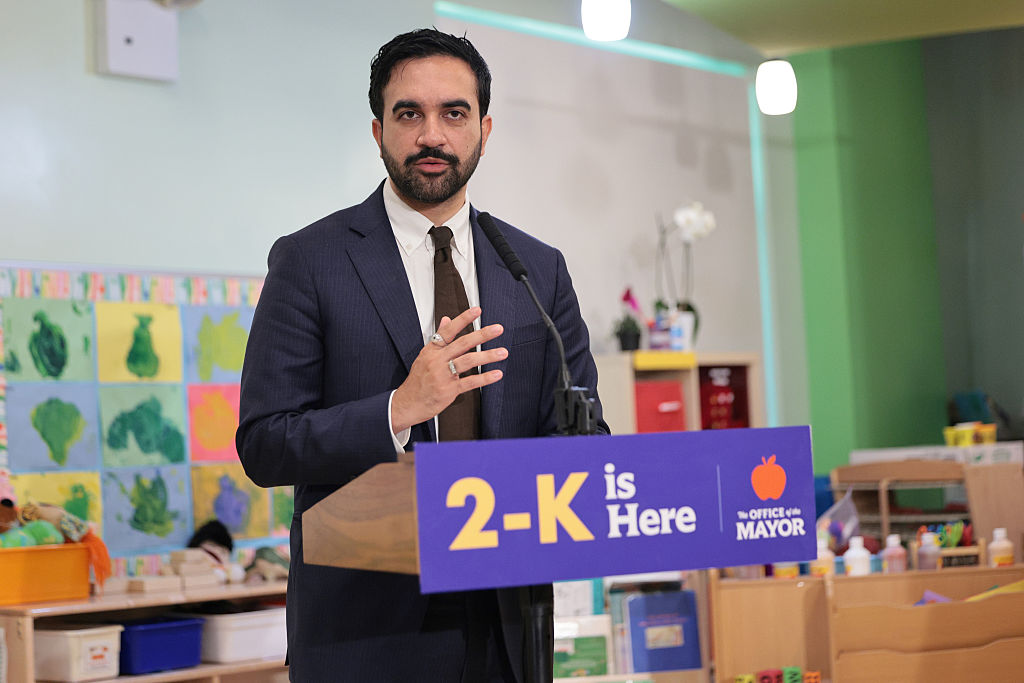
- NYC’s 2K expansion announcement this week confirms: The winds are blowing in favor of public, universal childcare. Roosevelt’s Lena Bilik spoke with Vox about how, among childcare researchers and advocates, the window is shifting on universality over means-testing: “We’re finally having conversations about whether implementing something halfway will cause more problems than solutions,” Bilik says, “so I think the field has moved really far towards being open to a true public program.”
- This month, Bilik spoke with Steffanie Clothier of Gary Community Ventures about How Colorado Tailored Its Childcare Plan to Serve Its Families, the latest conversation in Roosevelt’s series about childcare program implementation.
- Americans are questioning whether going to college is even worth it. “Investing in college is riskier when schools are capturing the gains,” Roosevelt’s Michael Madowitz said to CNBC.
- As the average amount of student loan debt grows and entry-level job openings decline, young adults are finding that “the security a degree typically provides is really not showing up in that first job,” Madowitz says.
- The changing job application process adds insult to injury: “The number of rejections you face in a world where AI screens workers, and many applicants are mass applying via AI, would spin the heads of someone who graduated five years ago.”
- Yet in the middle of this economic crisis, the Trump administration is reportedly preparing to hire private debt collectors to go after the nearly 10 million Americans in default on their federal student loans, the Washington Sun reported this week.
- *Taps the sign* We can fund Social Security without benefit cuts. Elizabeth Wilkins joined the You Earned This podcast to chat about Franklin D. Roosevelt’s legacy—and to explain why policymakers and financial elites who claim Social Security will go bankrupt unless we slash benefits are wrong.
- Your power bill is financing the AI boom no one asked for. “The AI boom might be the future,” Roosevelt Fellow Chastity Murphy writes for Forbes. “But right now it is a $10 trillion bet placed with borrowed money, and the people holding the ticket are households, towns, and pension funds.”