

What Is “Financialization” and What Is It Doing to Our Country?
April 22, 2026
By Brad Lipton
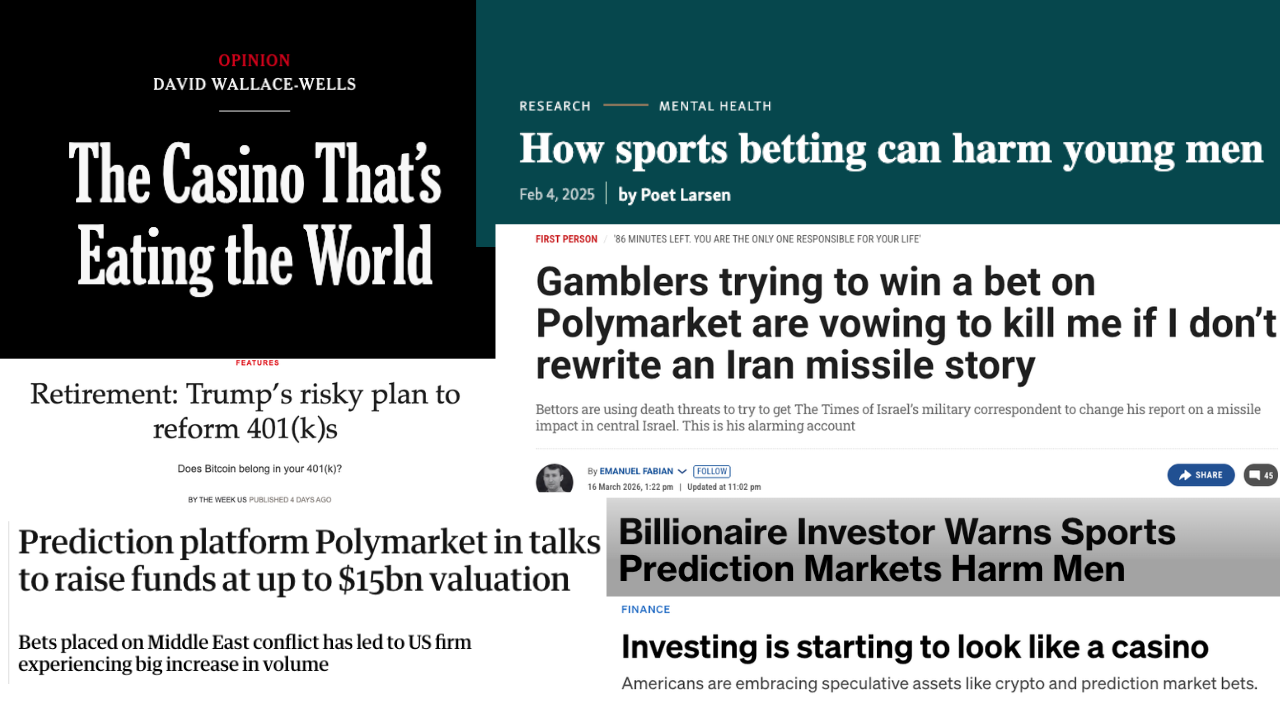
Silicon Valley wants to monetize anything it can—including our thoughts.
“The long-term vision is to financialize everything,” Tarek Mansour, cofounder of the prediction market Kalshi, told a business forum last year, “and create a tradeable asset out of any difference in opinion.”
Technology is always changing, but the “financialization” of our economy, politics, and culture has been building for decades. The Roosevelt Institute has been focused for some time on financialization, a word that is used to describe a cluster of trends and concepts relating to the growth of the financial sector and its increased power over the real economy.
Financialization: a cluster of trends and concepts relating to the growth of the financial sector and its increased power over the real economy
Financialization began as a trend involving Wall Street, moved to Main Street and nonfinancial businesses, and is now increasingly present in Americans’ everyday lives. The growth of the financial sector as a segment of the economy led to increased inequality as wealth concentrated at the top. Over time, the demands of the financial sector to focus on short-term profit maximization have transformed businesses of all kinds, and have contributed to “enshittification”—the degradation of products and services, especially involving technology, at the expense of customers and employees. At the same time, Americans are increasingly pushed toward financial products and services to support essential needs, making everything from retirement to education costlier as well as riskier for working people. And now, financialization may be changing basic features of everyday life—including how people spend their time, what our society values, and what our economy is ultimately for.
Enshittification: the degradation of products and services, especially involving technology, as a result of profit maximization and at the expense of customers and employees
The Growing Influence of Financial Services: How Profit Maximization May Diminish Working Conditions and Consumer Satisfaction
Financialization has long referred to the growth of the financial sector as a share of the economy. From the 1950s to the 2008 recession, finance grew to be a much larger portion of our country’s economic output and fueled inequality. Today, more billionaires come from finance than from any other industry, and financial workers, especially at the biggest firms, make significantly more money than workers in other industries (even after controlling for education).
The financial system’s relentless focus on corporate profit maximization has affected businesses across the economy.
The financial system’s relentless focus on corporate profit maximization has affected businesses across the economy. This influence is felt in a variety of ways. Financialization has driven business leaders to exclusively focus on shareholder profits, especially in the short term. The dominance of shareholder primacy has channeled corporate resources toward stock buybacks or dividends benefiting shareholders and away from long-term investment, such as in research, projects that require significant amounts of upfront capital, or workforce development. Shareholders have benefited more and more from economic activity than other corporate stakeholders, and corporate leaders have increasingly been lavishly rewarded when they increase stock prices, further increasing inequality.
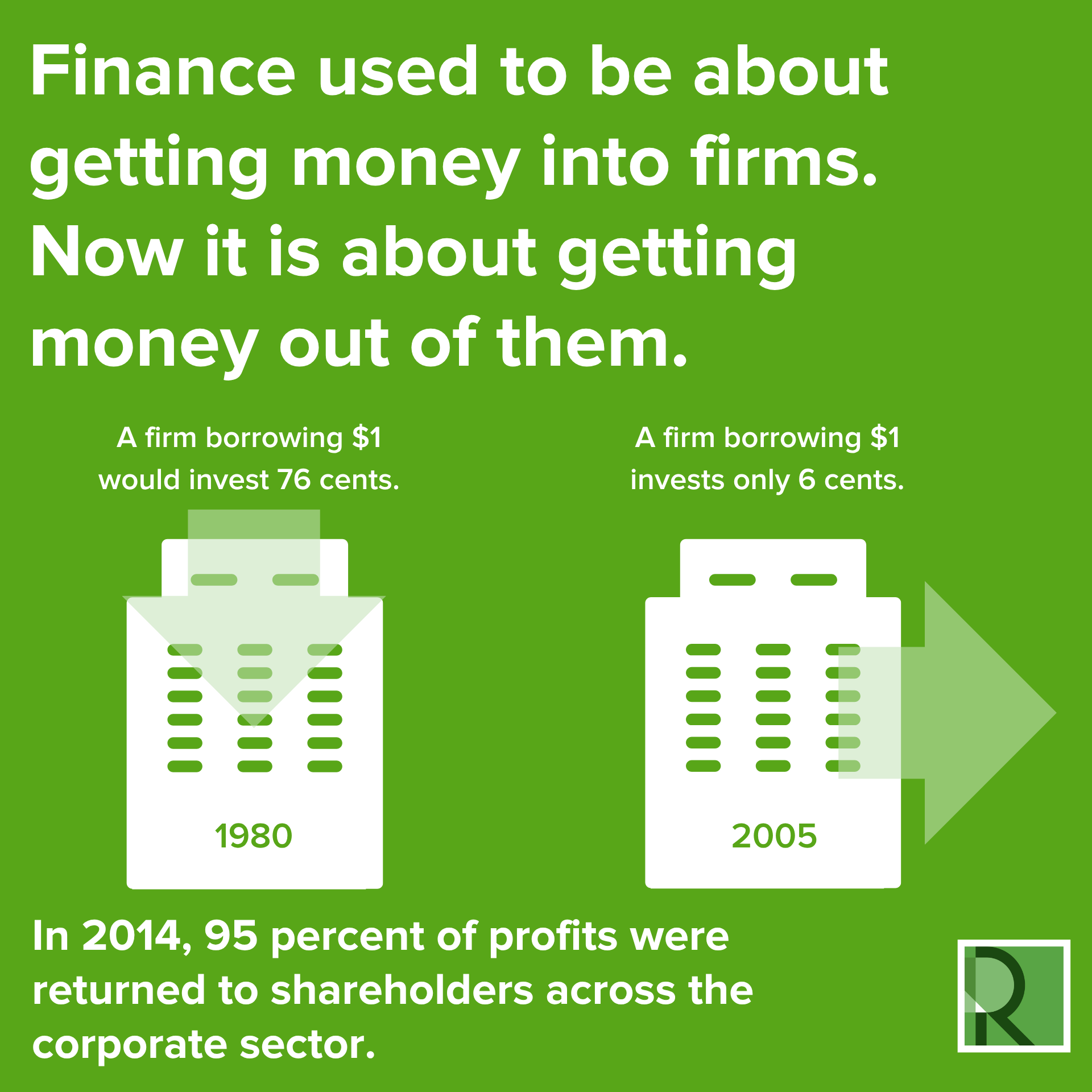
Finance also affects nonfinancial firms by buying or investing directly in them, such as when private equity purchases childcare or health-care providers. When this happens, the business’s focus often shifts even more toward short-term profits, which can degrade working conditions or other outcomes, such as patient health.
The push to extract as much profit as possible at all times has also led to another dimension of financialization: nonfinancial corporations engaging in financial activities, as opposed to investing in the sale of goods and services, because finance can be more profitable. When Roosevelt first described this trend a decade ago, we focused on nonfinancial firms lending money, such as General Electric’s famous pivot toward “GE Capital.” More recently, the push to maximize profits from existing business models has led nonfinancial companies to offer more and more financial products to consumers and even employees. (This is sometimes also called “embedded finance” or “bankification.”) For example, grocery stores partner with financial institutions to offer Buy Now, Pay Later lending products. Uber and Lyft offer their drivers the opportunity to get paid more quickly in exchange for a fee—essentially, a form of credit. This change seems to have further shifted corporate focus from producing better products and services to exploiting existing relationships, extracting value from (and pushing debt onto) consumers and workers.
Financialization Is Shaping Everyday Life
The way that financialization drives companies to pursue short-term profits at the expense of everything else has also contributed to the trend of “enshittification” and the growing “annoyance economy.” Most directly, private equity typically works on a relatively short 5–7 year timetable for producing returns to investors, so it notoriously cuts costs and tacks on fees when it acquires businesses to juice profitability. And across the economy, consumers and workers feel the effects of decreased quality, higher prices, and worse working conditions and wages. These changes are seeping into every aspect of life—even how we spend our free time. As one example, Bowlero, a publicly traded company and the nation’s largest operator of bowling centers, has dramatically increased the price of bowling while cutting costs on upkeep and staff, making the customer experience for those able to afford it demonstrably worse. Among other things, these changes may eliminate affordable recreation and community-building activities for working people.
Our society has also become increasingly reliant on financial products and services to support the essentials of life, which in turn demands that everyone must learn how to navigate complex financial systems. The rising cost of higher education has meant that more people take out more money in student loans, and parents save and invest for their children’s education in financial accounts such as 529 plans. Companies are also less likely to offer pensions to their workers, who instead are expected to save and invest in the stock market via 401ks. (The Trump administration is trying to allow private equity and other riskier forms of investments, like cryptocurrency, into retirement accounts.) These changes have pushed costs and risks that were once shared by society onto individuals. And we all feel the effects of corporations’ focus on short-term profits at the expense of investment as employees, consumers, and citizens.
Today, as resources flow to whatever business model produces the most immediate profits, people are increasingly pushed to participate in speculative financial markets to make money, rather than starting or working for a business that sells goods and services. The cultural fixation on finance to the exclusion of everything else has been described as the “casino that’s eating the world.” The legalization of sports gambling has been linked to lower credit scores and increased bankruptcies, especially among younger men. There is a very real risk that financial incentives will have a novel impact on real-world events, including journalism or even government policy. Roosevelt has also long expressed concern about the amount of societal talent and skilled labor drained by financial services away from more productive fields, a trend that seems to have become ever more exaggerated. Luana Lopes Lara, an MIT graduate, recently became the youngest self-made female billionaire by cofounding Kalshi. Prediction markets and speculation may be replacing innovation in productive activities that actually benefit society.
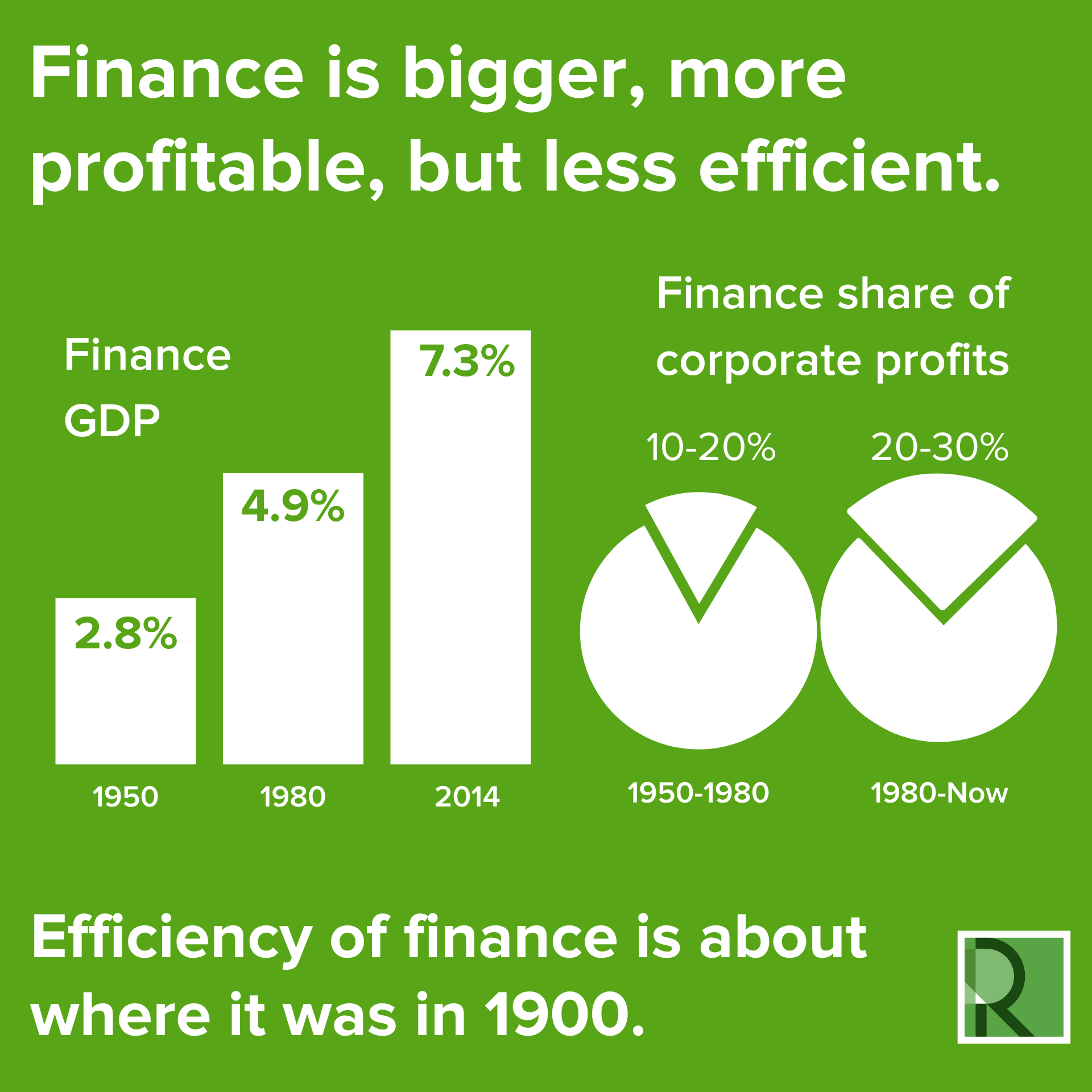
In short, “financialization” has been used in different ways to describe an ongoing shift in what the economy is for. Instead of fostering long-term investment, productive work, and better goods and services that can provide all of us with better lives, a financialized economy rewards extraction, speculation, and short-term gains.
Our challenge going forward is not just to understand financialization, but to decide whether the ways in which it’s shaping our economy, politics, and culture is what we want—and if not, what policy choices we should make to build a different world.
Author

Brad Lipton
Director, Corporate Power and Financial RegulationAs director of the corporate power and financial regulation program at the Roosevelt Institute, Brad Lipton leads Roosevelt's work on the rules governing financial institutions and other corporations to produce a more equitable economy.