
“The US Effectively Penalizes Aging.”
April 10, 2026
Plus, what to make of OpenAI’s industrial policy plan.
The Roosevelt Rundown features our top stories of the week.

The Costs of Eldercare Are Draining Middle-Class Wealth
At some point as they age, more than half of older Americans will need eldercare to assist with daily life. But eldercare is expensive, whether it’s the lost wages of an unpaid family caregiver or the exorbitant annual costs of nursing home care. In a new Roosevelt brief, Jessica Forden digs into the data on an overlooked consequence of this precarity: intergenerational wealth inequality.
Medicare doesn’t cover eldercare. That means middle-class Americans who neither qualify for Medicaid nor have a generous amount of savings for retirement are likely to spend down their assets paying for long-term care. In fact, lower-income and middle-class individuals who develop long-term care needs face permanent reductions to just 11 percent and 42 percent of their original levels of wealth.
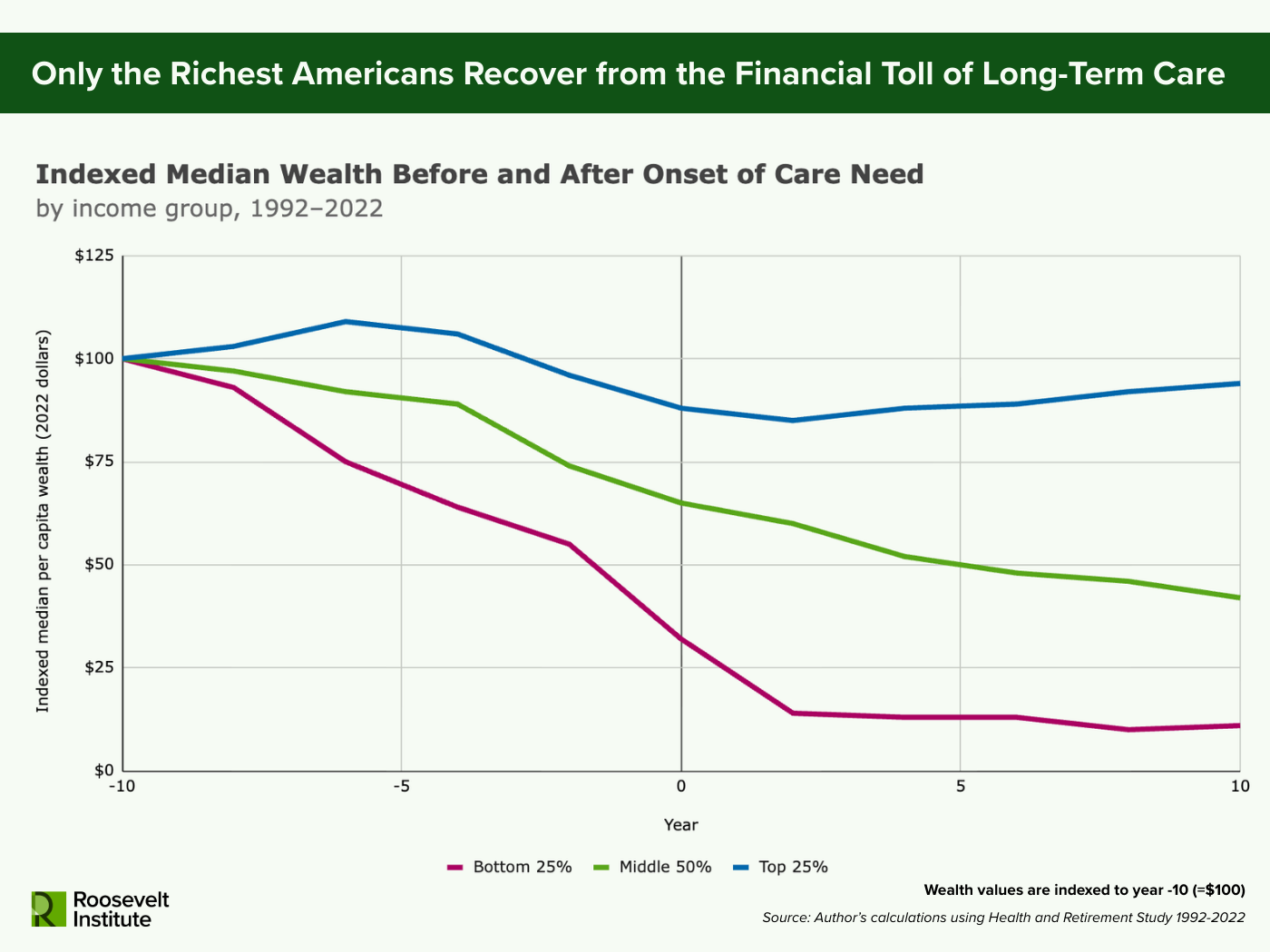
“Long-term care is not just an individual health issue, but a structural driver of wealth inequality,” Forden writes. “By maintaining a system that depends on unpaid family caregiving, provides public support only after families have nearly exhausted their savings, and allows private, profit-driven companies to capture rising care costs, the US effectively penalizes aging.”
Read the brief: How Long-Term Care Costs Drain the Middle Class and Deepen Intergenerational Wealth Inequality
What Else We’re Up To
- “Power doesn’t yield on its own,” Roosevelt President and CEO Elizabeth Wilkins wrote, reacting to the release of OpenAI’s industrial policy agenda this week. What will be key, she emphasized, is turning anxieties around AI into organized power: These companies will only “come to the table for a real ‘democratic process’ if and when they know they have to, because organized people find pressure points to press on.”
- There’s an exciting under-the-radar provision in the ROAD to Housing Act. In a new blog post, Roosevelt Fellow Ned Resnikoff explores how preapproved building designs could speed up housing development.
What We’re Talking About