
What the Data Says on Pro-Labor Industrial Strategy
April 17, 2026

Inclusive Industrial Policy Is Possible
A key feature of the Biden admin’s clean energy industrial policy was its focus on labor and community benefits. Critics often argue these slowed down implementation, but a new report by Roosevelt Senior Fellow Betony Jones and Fellow Joe Peck argues that this holistic pro-labor strategy helped make development projects more successful.
Take, for example, one of the more commonly cited challenges faced by funding recipients: steep learning curves and a shortage of expertise.
Workforce development incentives helped address these gaps. As one interviewee, a private-sector actor involved with a hydrogen hub, put it:
“[Unions] can guarantee the safety and the operationability of a high-stakes industry that requires multiyear training. So, having [our company] integrated into the union apprenticeship programs is what we needed . . . that’s where we were getting the skilled labor from.”
And in an accompanying blog post, Roosevelt’s Todd N. Tucker comments on the much-discussed recent World Bank paper embracing industrial policy—which the International Monetary Fund previously referred to as “the policy that shall not be named”—and places Biden-era clean energy policy in the historical context of the prevailing-wage law, the Davis-Bacon Act.
Roosevelt Fellows Explain Why Taxes Matter
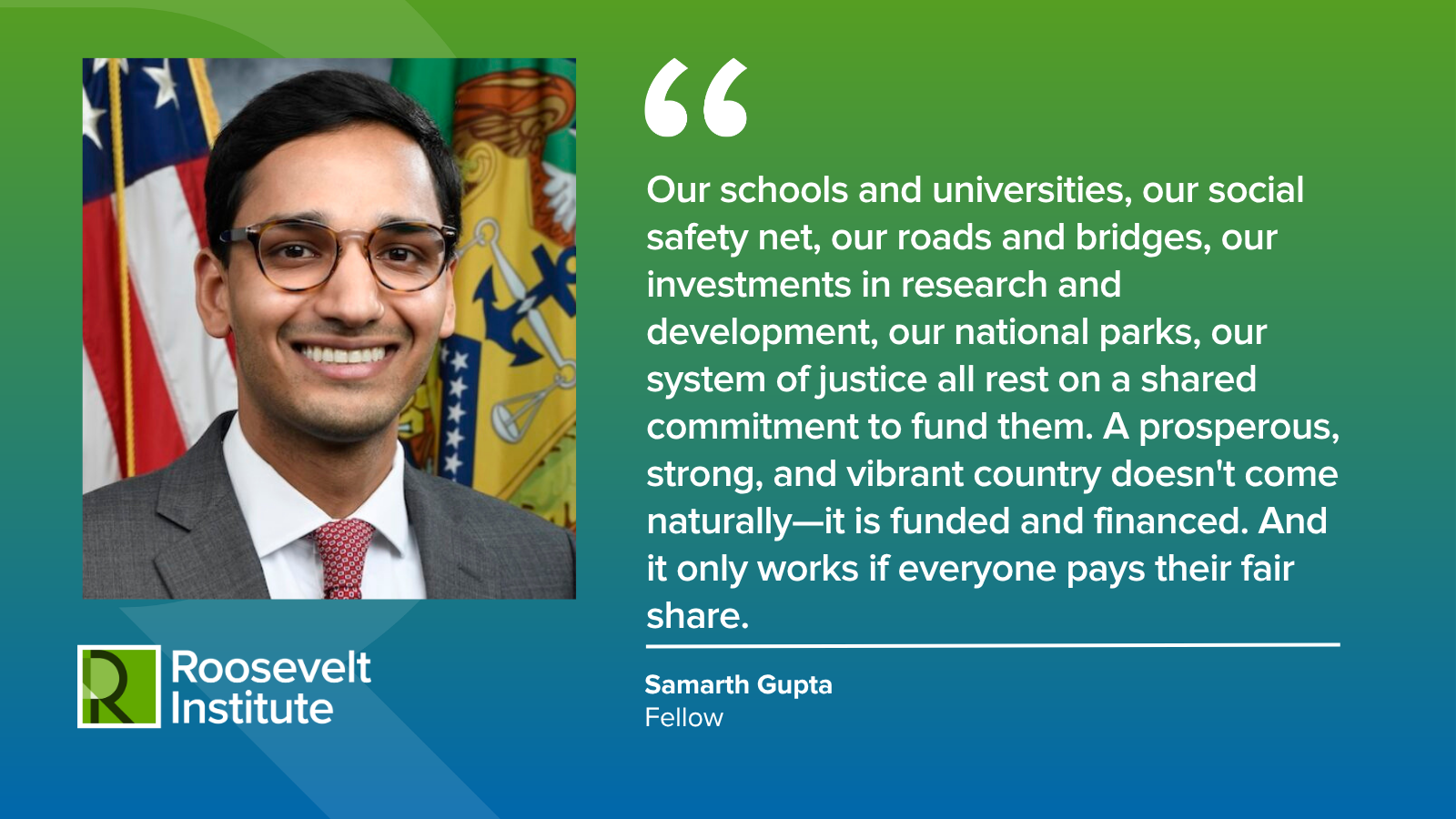
This week, millions of Americans filed their taxes. For MS NOW, Roosevelt Fellow Samarth Gupta explained how more targeted income tax brackets could help make taxes fairer, combat inequality, and stabilize our economy. Gupta joined Roosevelt Senior Fellow Beverly Moran and fellows Indivar Dutta-Gupta and Portia Allen-Kyle in sharing their thoughts on taxes on Bluesky and Twitter.
What Else We’re Up To
- Introducing Roosevelt’s first set of Good Life residents: Ethan Struby, Christian Flores, and Erin Lockwood will research how the Federal Reserve can fulfil both sides of its dual mandate. Jonathan Schwabish, Tyler Bond, and Lena Simet will explore new ways to reliably fund, strengthen, and expand Social Security.
- Caregiving is financially devastating to most families, Marketwatch reports, covering a Roosevelt brief released last week looking at the link between intergenerational wealth inequality and costly eldercare.
- “There will be older adults who go without care,” author Jessica Forden says. “What does that say about the country as a whole?”
What We’re Talking About