

“People Need to Believe That Their Government Has Their Back.”
April 3, 2026
How Sam Levine fights for working people in NYC.
The Roosevelt Rundown features our top stories of the week.
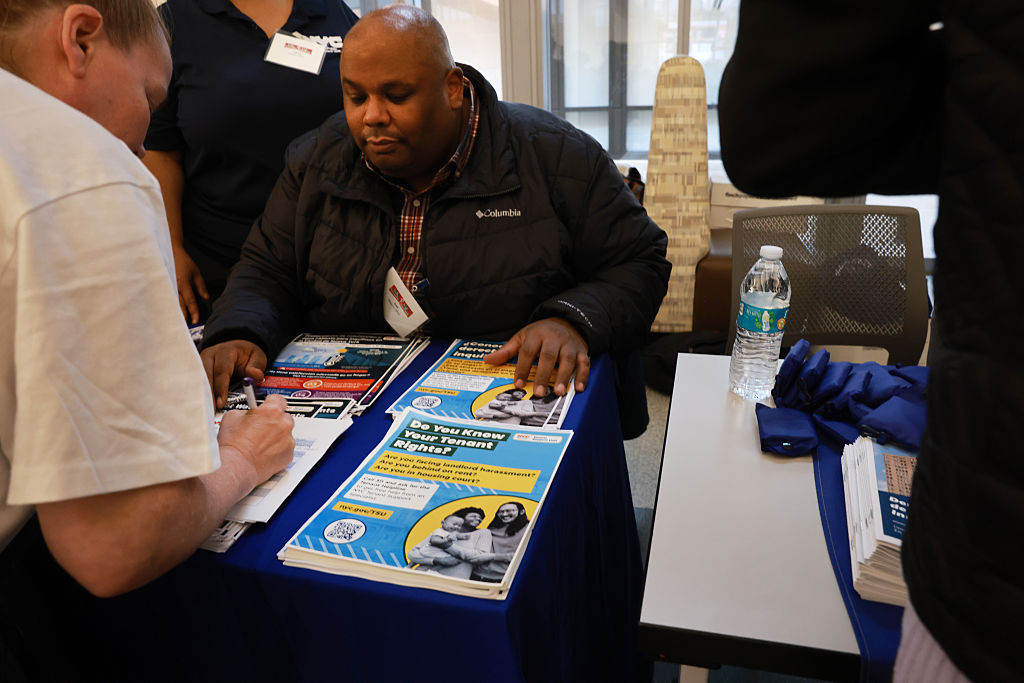
NYC Public Officials Are Actually Listening
The scene: New York City tenants, sitting across the table from high-level public officials, talking about the ways their landlords are ripping them off.
This is what the Mamdani administration’s “Rental Ripoff” hearings are like, according to Sam Levine, the new commissioner of NYC’s Department of Consumer and Worker Protection. On the blog this week, he spoke with Roosevelt President and CEO Elizabeth Wilkins about how the city government is defending workers from corporate abuse and becoming more responsive to the people.
“When you’re in government, you hear all the time from lobbyists in very nice suits. . . . You don’t hear often from ordinary people—the people you’re actually supposed to serve,” Levine said. “What are we here for, what are we being paid for, if not to solve big problems? . . . every public official should be feeling that pressure.”
Read the Q&A: How NYC Policymakers Are Becoming More Responsive to the People (with Sam Levine)
What Else We’re Up To
- The same old tools won’t build a democratic economy. Traditional market-based policy fixes like tax credits and vouchers have failed to fix market failures, serve the common good, provide accountability, or ensure access to life’s essentials.
- In a new report, Roosevelt’s Suzanne Kahn argues that to solve today’s challenges, policymakers should embrace public options in their many forms, from direct provisioning and public financing to utility-style regulation and government equity stakes.
- Delivering abundance requires a coherent theory of power. “Our work cannot simply be about rewiring bureaucracy or delivering policies from above,” Roosevelt President and CEO Elizabeth Wilkins writes in an article for IPPR Progressive Review. “It demands deliberate strategies to rebalance power, embed public legitimacy, and create structures that allow people to participate not just as recipients, but as cocreators.”
- There’s a new home for scholarship on how law structures the economy. Former Roosevelt Fellow Lev Menand and former FTC chair Lina Khan announced the launch of Columbia Law School’s Center for Law and the Economy. “The Center will focus on pressing questions of economic governance and help train the next generation of scholars and policy leaders,” Khan shared on social media.
April Is National Social Security Month
Caption: President Franklin D. Roosevelt signs the Social Security Act in August 1935. (Photo by FPG/Getty Images)
Earlier this year, Roosevelt’s Stephen Nuñez wrote about why Congress can and must act to not only protect but strengthen Social Security for generations to come: “Will Social Security Run Out?” Is the Wrong Question: How Lawmakers Can Protect Beneficiaries and Strengthen OASI
Read more of our Social Security research.
What We’re Talking About
Join the Team
We’re looking for creative and passionate Roosevelters eager to reimagine the economy with us. Help us find two senior-level positions: