
Unions Can Drive an Abundance Agenda
May 6, 2026

The false choice between organized labor and abundance
Can the core philosophy of “abundance”—that the government must ensure there’s enough of what people need, including by limiting unnecessary delays—be achieved as part of an anti-oligarchy agenda? In a new report, Kate Andrias and Alexander Hertel-Fernandez argue yes—and in fact, labor can play an essential role.
Here’s how: Unions can supply skilled labor, build popular support, and increase both the legitimacy and effectiveness of new projects. An inclusive abundance agenda should in turn create good jobs and facilitate labor organizing, protecting and empowering more workers with collective bargaining agreements.
“Ensuring that new infrastructure construction supports worker power and organizing not only benefits abundance itself,” Andrias and Hertel-Fernandez write, “but can also rebalance economic and political power in favor of a more responsive democracy, especially at a moment of authoritarian threat in the United States.”
Read the report and coverage from The New Republic’s Monica Potts.
What else we’re up to
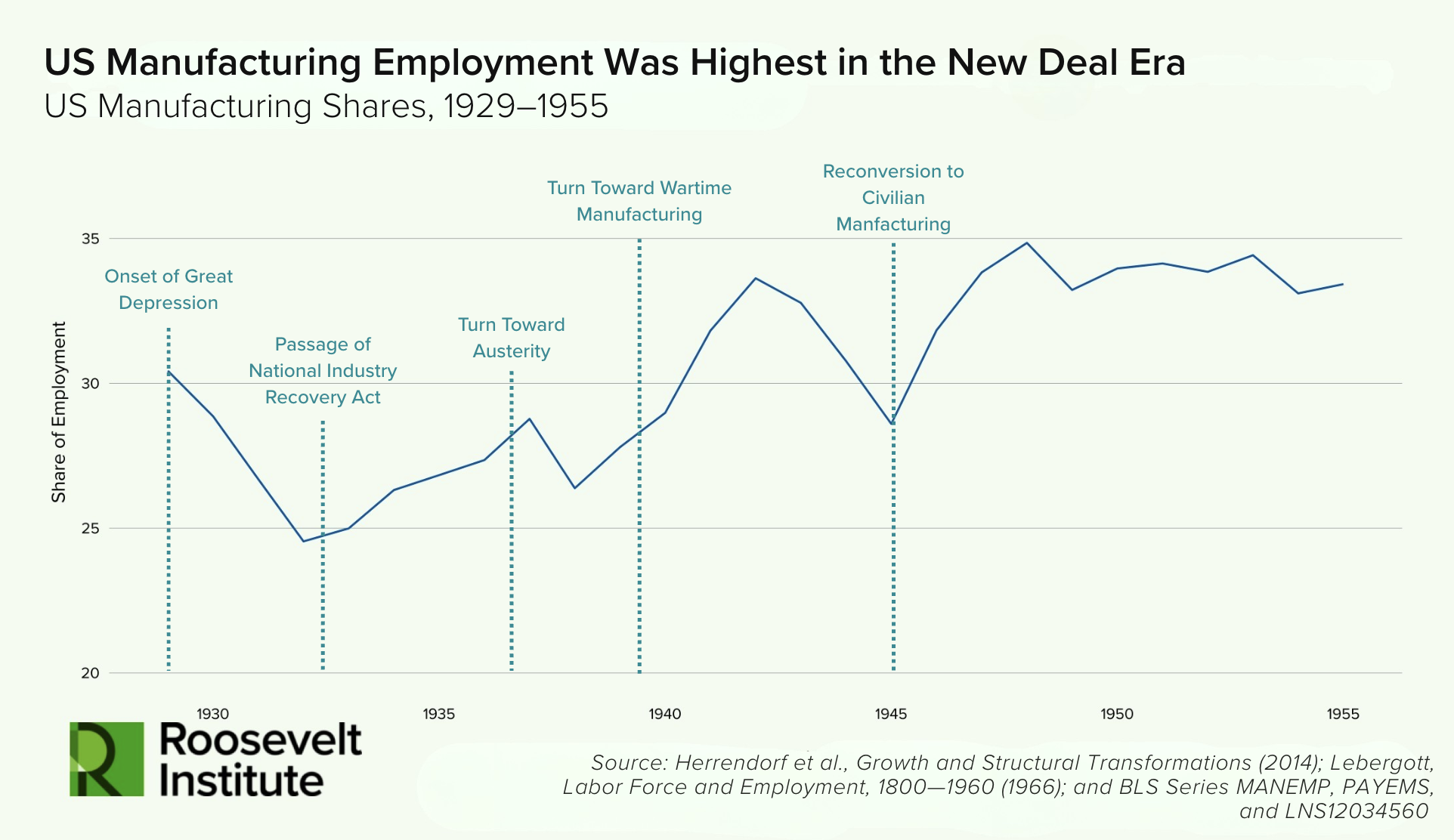
- What “manufacturing doomers” are missing about the sector: Services may be the largest part of the US economy, but making stuff still matters. In a new report, Roosevelt’s Todd N. Tucker and Oskar Dye-Furstenberg explain the continued importance of the manufacturing sector to growth and innovation, and its multiplier effects on other parts of the economy.
- “The manufacturing sector will be just as (if not more) important in the future, as the economy shifts from extracting energy to producing it in factories and as geopolitical tensions reduce the dependability of some trade partners we rely on to produce goods.”
- The Trump admin’s continuing SNAP disinformation campaign: In The Guardian, Roosevelt’s Stephen Nuñez countered Agriculture Secretary Brooke Rollins’s baseless claims against SNAP beneficiaries:
- “It’s possible they believe that all these people are fraud, but I think they just really want to dismantle these programs, and I think they’re using fraud as an excuse, to be quite honest.”
- Upstream solutions to prevent downstream costs: In a new blog post, Steven K. Vogel and Sunny Malhotra follow up on their December 2025 Roosevelt brief about the rebalancing power of predistribution:
- “The predistribution agenda does not accept labor exploitation and value extraction and then compensate for it—rather, it strives to give workers fair wages and consumers fair value in the first place.”
- Aging and the forgotten middle class: Jessica Forden spoke with Aging in America News about her recent Roosevelt brief on the disparate impacts of long-term care costs:
- “Part of this broader issue is asking individuals to self-insure, as opposed to treating this as a socially insurable risk that we need to think about at a more national or federal level.”
What we’re talking about