

How the Workforce Will Look in 2034
May 15, 2026
Digging into data on childcare and the labor force.
The Roosevelt Rundown features our top stories of the week.

Care work and food services to see the most growth by 2034
Who makes up the workforce? In a new brief, Roosevelt’s Oskar Dye-Furstenberg takes stock of what today’s sectors and occupations look like, how they pay, and how they’ll change over the next decade.
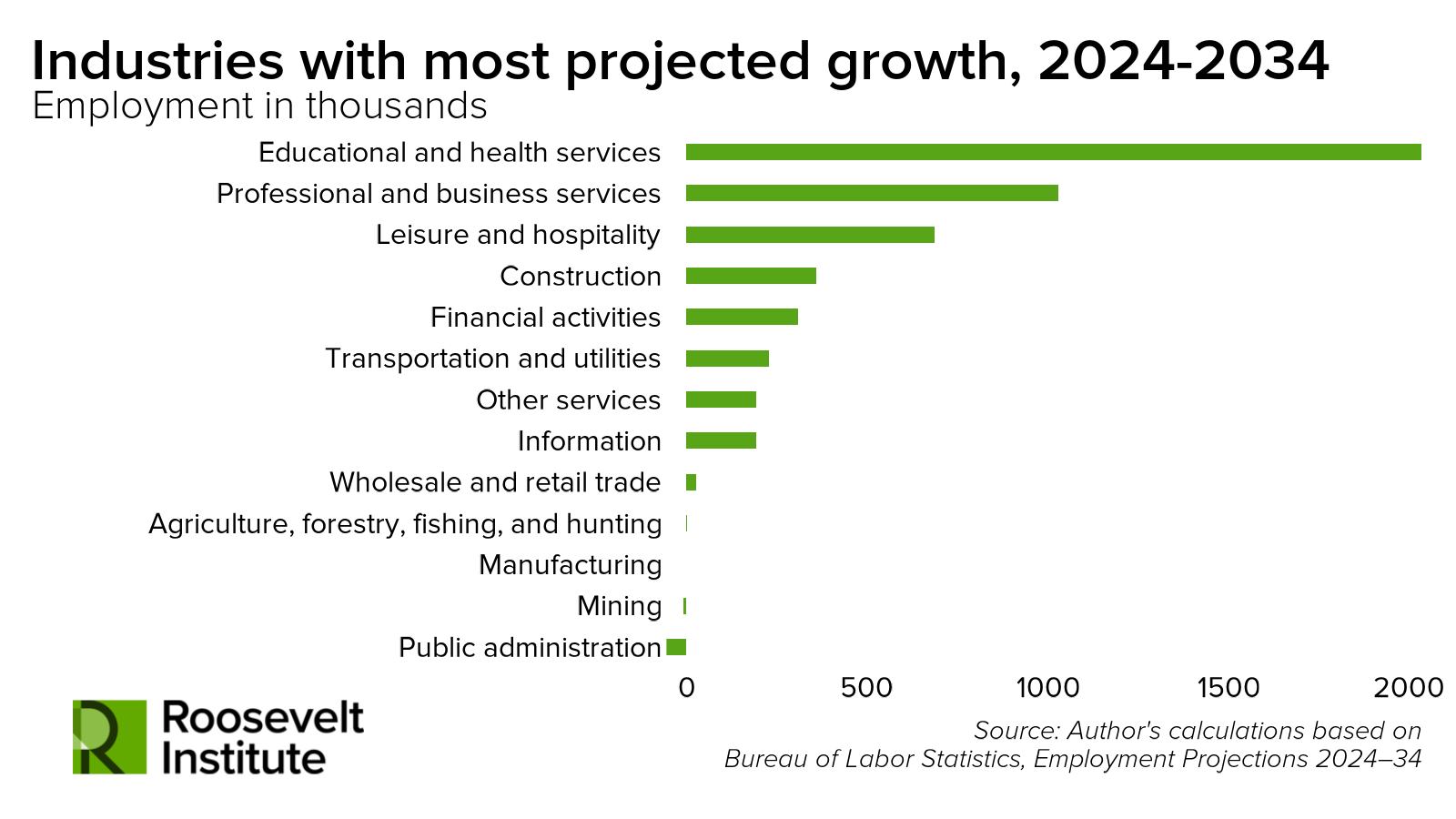
Driven by an aging population, the health services industry is projected to grow the most, followed by professional and business services and then leisure and hospitality. For workers without a college degree, the top two jobs that will see the biggest gains are home health and personal care aides and fast-food and counter workers.
Both of these occupations are disproportionately non-white and predominantly female. They’re also very low-paying—but they don’t have to stay that way: “Educational and health services are the backbone of our economy and society, and leisure and hospitality jobs must not be sidelined and devalued as they have been for so long,” Dye-Furstenberg writes. Raising wages, building worker bargaining power, and strengthening the safety net would protect marginalized workers and lift all boats.
Read the brief: Who Makes Up the Labor Force?: Projecting Workforce Growth over the Next Decade
The continuous quest to find childcare
On Monday, childcare workers went on a one-day strike, calling for better wages and asking what it would look like to have a day without childcare.
Getting by every day requires families with young children to rely on a patchwork of childcare arrangements, from informal care from relatives to formal care at daycare centers or home-based services. A new brief from Sarah Jane Glynn pulls together the data to answer the question: Who’s minding the kids?
“Nearly any parent with young children can enumerate the ways that our current system is broken,” Glynn writes. “Many are hanging on by the skin of their teeth, spending money they don’t have on care arrangements they cannot afford.”
Childcare is essential work that helps sustain the economy. A universal public option could create an integrated system that both offers full-coverage care for parents and thriving wages for workers.
Read the brief: Who’s Minding the Kids These Days?: An Analysis of Children’s Care Arrangements
What else we’re up to
- Click-to-cancel could save New Yorkers at least 600,000 hours a year, analysis finds: Roosevelt’s Brad Lipton and Noa Rosinplotz crunched the numbers and submitted a comment in support of the NYC Department of Consumer and Worker Protection’s proposed rule that would require companies to make canceling subscriptions easier, faster, and less deceptive and confusing.
- Join us in designing an industrial policy for housing: Roosevelt is looking for emerging policy leaders to apply to the Good Life Residents for Housing program, which will explore questions around how public support can make construction feasible even in difficult macroeconomic conditions.
- The tax debate continues: Roosevelt President and CEO Elizabeth Wilkins joined Liberal Currents’s Neon Liberalism podcast to discuss today’s debate over taxes and why we need a broad tax base to support essential public investments.