
Skip to content
  • DONATE
  • (Opens in a new window) Bluesky social media link
  • (Opens in a new window) Facebook social media link
  • (Opens in a new window) LinkedIn social media link
  • (Opens in a new window) Twitter social media link
  • (Opens in a new window) YouTube social media link
The logo of the Roosevelt Institute features a large stylized R in white on a green square, next to the words Roosevelt Institute in bold black letters on a light gray background. Roosevelt Institute Roosevelt Institute
  • About
    • Our People
    • Join Our Team
    • Contact
  • Publications
  • Think Tank
    • Climate and Economic Transformation
    • Corporate Power
    • Macroeconomic Analysis
    • Race and Democracy
    • Worker Power and Economic Security
    • US Tax Policy
  • Roosevelt Network
    • Undergraduate Fellowships
    • Network Alumni
    • Network Advisory Board
    • About Us
  • Roosevelt Society
    • Programs
    • Trainings and Events
  • FDR Library
  • The Latest
    • Blog
    • Podcast
    • Press Releases
    • Publications
    • Roosevelt Rundown
  • Events
    • Upcoming Events
    • Past Events
    • Distinguished Public Service Awards
    • Four Freedoms Awards
Site Menu Close Menu

Mobile Menu Overlay

  • HomeOpens in a new window
  • AboutOpens in a new window
  • PublicationsOpens in a new window
  • Think TankOpens in a new window
  • Roosevelt NetworkOpens in a new window
  • FDR LibraryOpens in a new window
  • The LatestOpens in a new window
  • EventsOpens in a new window
  • DONATEOpens in a new window
  • (Opens in a new window) Bluesky social media link
  • (Opens in a new window) Facebook social media link
  • (Opens in a new window) LinkedIn social media link
  • (Opens in a new window) Twitter social media link
  • (Opens in a new window) YouTube social media link

Share

  • Share this page on Facebook
  • Share this page on Twitter
  • Share this page on Bluesky
  • Share this page via Email Mail Icon Rectangle in the shape of an envelope
Roosevelt Rundown

What the Hormuz Closure Tells Us About Inflation

August 21, 2026

And why tax reform is democracy reform.

The Roosevelt Rundown features our top stories of the week.


Two people sit on wooden benches facing the sea, watching several cargo ships in the distance under a clear sky. The scene appears calm and contemplative.
(Photo by Ali Saeedi/Getty Images)

We need more tools to manage supply shocks

Next week marks six months since the Iran war began. And since March, the closure of the Strait of Hormuz has disrupted oil, fertilizer, and aluminum supply chains, creating shortages that push prices upward throughout the global economy. In a new brief, Roosevelt Principal Economist Michael Madowitz explains why addressing this requires policymakers go beyond traditional inflation-management approaches and instead build up strategic capacity.

We’ve been here before, in this very decade—with the COVID-19 pandemic and Russian invasion of Ukraine—and each time, adjusting interest rates hasn’t been enough to deal with the resulting supply-driven inflation. Instead, policymakers should proactively stabilize the economy through industrial policy tools like buffer stocks and strategic reserves.

“Given the politically destabilizing risk inflation has posed to democratically elected governments this decade,” Madowitz writes, “progressive policymakers must develop more proactive approaches than the limited, reactive tool kit central bankers have at their disposal to prevent inflation shocks.”

Read the brief: We Don’t Have to Import Inflation: Policy Lessons from the Strait of Hormuz and Ukraine Supply Crises

What else we’re up to

  • The tax code is a tool of democracy. As our democratic institutions face continued attack, advocates have proposed important and vital solutions like abolishing the filibuster and reforming the Supreme Court. These are necessary steps, but what they don’t address is one of the most important accelerants of authoritarianism: ever-growing economic inequality.
    • Join us on September 16 at 2:00 pm ET for a discussion with Roosevelt tax experts Brian Galle and Samarth Gupta, and political scientist Nate Kelly, moderated by Roosevelt’s Suzanne Kahn, about the role of tax code reform. Register here.
  • Strengthening Social Security means strengthening the economy. “The strongest Social Security reforms may not look like Social Security policy at all,” USA Today’s Medora Lee writes. As economist Kathryn Edwards explains, “Who is working, how much they earn, how healthy they are, and how much they save matter more than the head count.”
    • Read more in Edwards’s brief,1983 v. 2032: The Economics of the Last and Next Social Security Reform,and watch the discussion among Edwards and other experts about how to update Social Security to serve today’s economy.

What we’re talking about
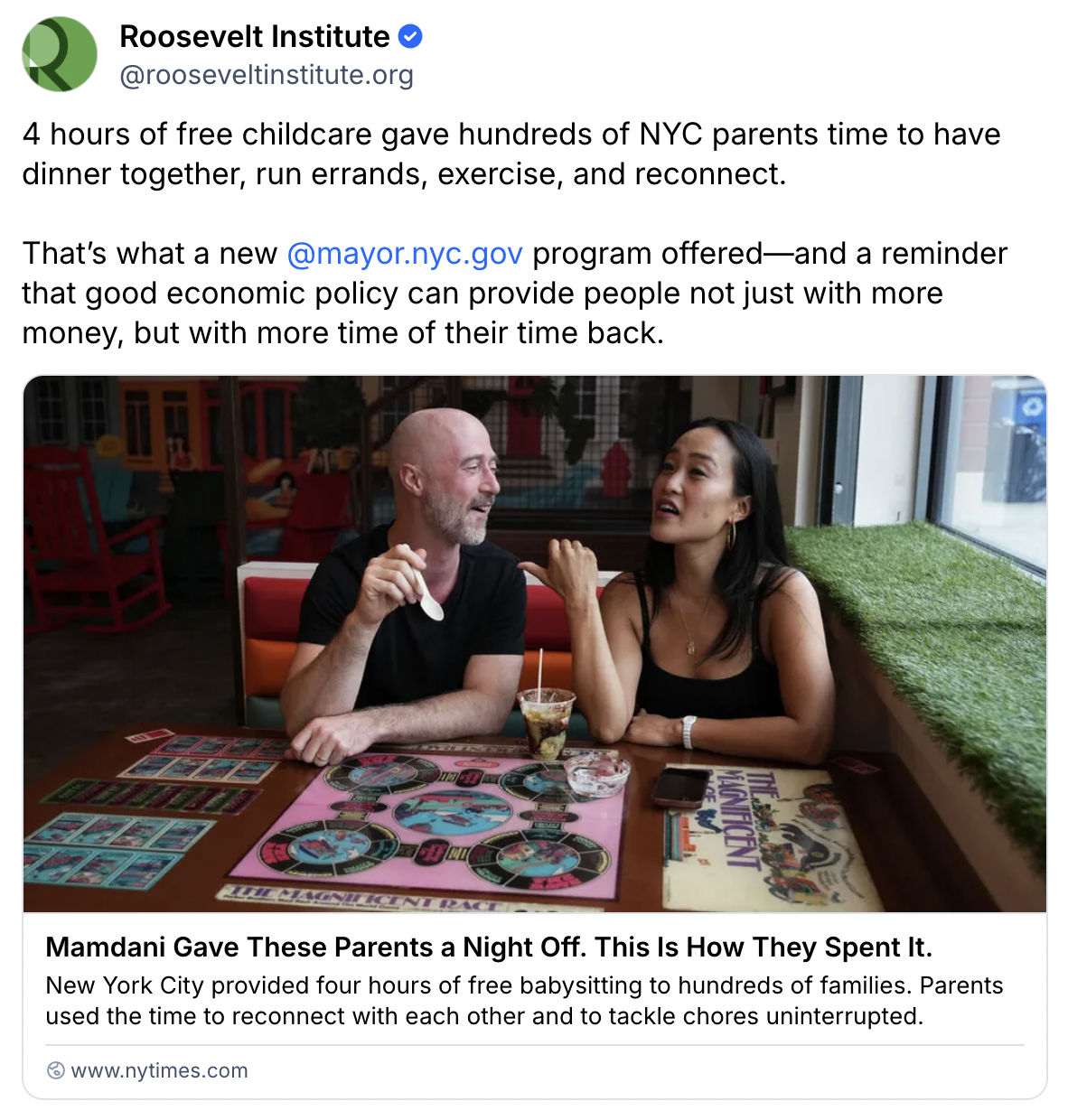
Two parents sit at a colorful table, smiling and talking, enjoying a meal together at a restaurant. Board games and plates are on the table, suggesting a relaxed, joyful night out.
Share on Bluesky
Previous Post

91 Years In, What Should Social Security look Like?

Next Post

Where Climate and Clean Energy Policy Should Go Next

Roosevelt Institute

Sitemap

  • ABOUT
    • PUBLICATIONS
    • THINK TANK
    • ROOSEVELT NETWORK
    • ROOSEVELT SOCIETY
    • ARTIFICIAL INTELLIGENCE NOTICE
  • THE LATEST
    • FDR LIBRARY
    • EVENTS
    • PRIVACY POLICY
    • COOKIES POLICY
    • STATE CHARITABLE DISCLOSURES
  • DONATE

Subscribe to the Roosevelt Institute

First Name Last Name First Name

© Roosevelt Institute 2026
Made by Wide Eye
  • (Opens in a new window) Bluesky social media link
  • (Opens in a new window) Facebook social media link
  • (Opens in a new window) LinkedIn social media link
  • (Opens in a new window) Twitter social media link
  • (Opens in a new window) YouTube social media link

Get the Roosevelt Rundown straight to your inbox

Our flagship newsletter with fresh research, our latest events, news you can use, and analysis.