

Is There a Best Way to Tax the Rich?
November 20, 2026
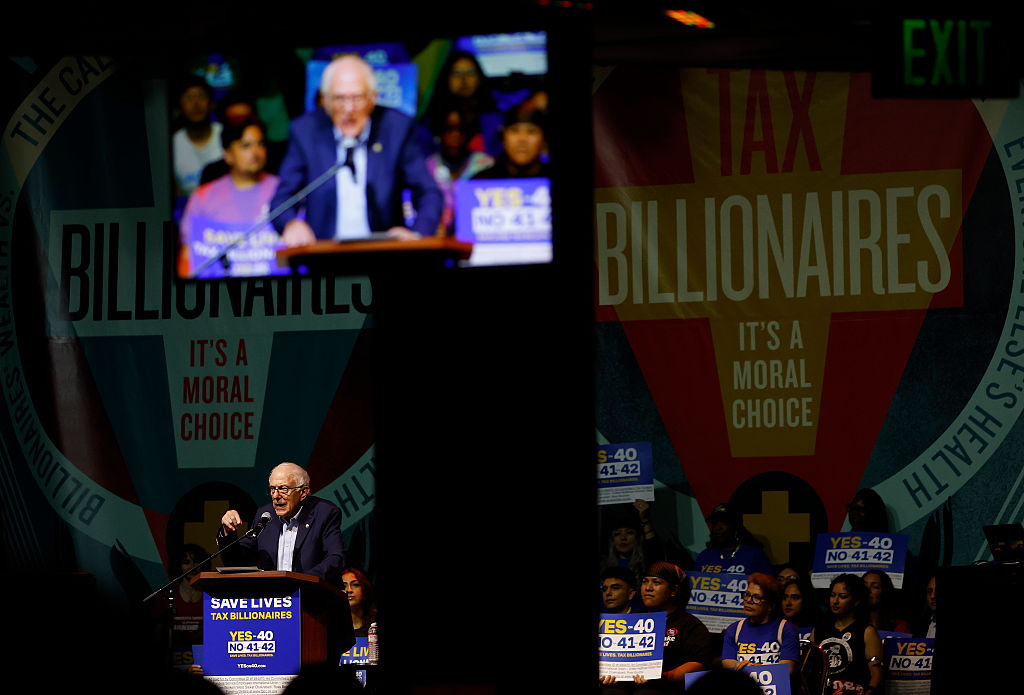
How do we tax the rich? Let us count the ways
California’s billionaire wealth tax may have failed to pass, but the fight to tax the rich is far from over. In a new brief, Roosevelt’s Noa Rosinplotz explains five different ways to make this happen, from alternative minimum taxes to closing loopholes.
While there’s no one best approach, taxing wealth along with income is a necessary piece of the puzzle, Rosinplotz told Politico’s Weekly Tax newsletter. “Higher income taxes would best target top earners: surgeons with million-dollar paychecks, not start-up founders with billions of dollars in the bank or in the markets,” she said.
Until we fix the tax code, democracy can’t flourish. Taxes have to curb wealth concentration—and with it, the ultra-wealthy’s ability to buy elections and entire media empires—and prove to the working class that the system isn’t rigged against them.
What else we’re up to
- “We’re broke, we’re in debt, and we’re hungry.” Roosevelt Network undergraduate students and recent alumni gathered in August to learn from senior leaders and discuss how to reimagine governance. From guaranteeing healthcare and housing to getting more engaged youth into public service, it’s clear that Gen Z’s aspirations for government are high.
- Income inequality is a huge factor in Social Security’s funding shortfall. A new study from AARP’s research institute explains the consequences of high-wage workers’ growing earnings, the upper end of which escapes the taxable maximum of payroll contributions to Social Security.
- Roosevelt’s Stephen Nuñez spoke to AARP about how policymakers in the 1980s anticipated the needs of future retirees in their analyses, but couldn’t foresee skyrocketing inequality and the 2008 recession. These macroeconomic factors are why the trust fund reserves are expected to dwindle far earlier than expected.
- Read Nuñez’s analysis from earlier this year: “Will Social Security Run Out?” Is the Wrong Question: How Lawmakers Can Protect Beneficiaries and Strengthen OASI
- The Senate Banking Committee’s focus turns to affordability and corruption. As Sen. Elizabeth Warren (D-MA) takes the helm of the upper chamber’s corporate watchdog, Roosevelt’s Brad Lipton suggests private equity may find itself a target.
- “Everyone has become aware how private equity is having this . . . effect on the real economy,” Lipton told The Hill. “They’re buying up businesses, daycares, veterinarians, and it’s really showing up in everyday people’s lives.”
- Read Roosevelt’s latest work on private equity: The New Private Equity: Corporate Raider, Main Street Invader, Monopoly Builder, Shadow Owner
- How high should the minimum wage be? Roosevelt’s Patrick Oakford spoke with Vox about his research arguing for a federal minimum wage set at two-thirds of national median income, or $20 by 2030.
- “Any rational person who looks fairly at this body of research can really only come to one conclusion,” he said, “which is that raising the minimum wage does not lead to significant job loss.”