
How to Keep Big Tech from Deciding Our AI Futures
July 31, 2026
Plus, the state of the clean energy transition one year after the OBBB.
The Roosevelt Rundown features our top stories of the week.
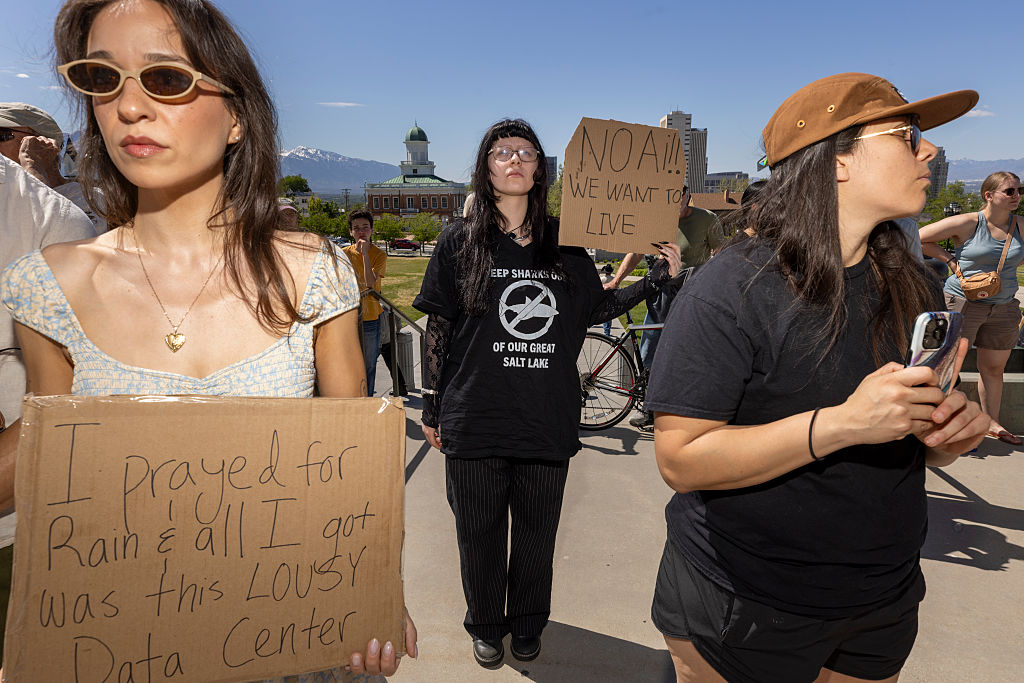
As technologies like AI boom, will the public get any meaningful say in how a handful of companies remake the American workplace, public discourse, and much of our common world?
—Elizabeth Wilkins and Todd N. Tucker
Equity stakes in AI could strengthen our democracy
Proposals for public equity stakes in AI companies, like those recently floated by Senator Bernie Sanders, California Governor Gavin Newsom, and even OpenAI’s Sam Altman, could move resources toward supporting workers displaced by new technology and addressing the climate crisis AI buildout threatens to exacerbate. But these proposals are about more than just the money.
As Roosevelt President and CEO Elizabeth Wilkins and Director of Industrial Policy and Trade Todd N. Tucker argue in The Nation, they’re about asserting democratic decision-making over the direction the US economy takes.
“In our current political economy, voters do not get to elect OpenAI’s board,” Wilkins and Tucker write. “They aren’t able to weigh in on a ballot measure determining whether Anthropic’s or Google’s models are programmed to privilege user engagement over accuracy, or whether the next generation of data centers runs on gas or wind.”
Policies that empower government to protect the public interest, while enforcing guardrails on corruption, are common in other countries. In the US, they could help curb the outsize influence of Big Tech on our democracy.
Read the piece: How Public Equity Can Promote a Revived American Democracy
What else we’re up to
- One year after the OBBB, where does the clean energy transition stand? In a new blog post,Todd N. Tucker and Roosevelt Fellow Joe Peck find that while the so-called One Big Beautiful Bill didn’t do quite as much damage as it could have, its slashing of solar and wind tax credits—plus the Trump administration’s plans to increase fossil fuel production—has pushed previous emissions reduction goals further out of reach.
- One weird trick to drastically reduce deep poverty? Reform SSI. Roosevelt’s Stephen Nuñez joined the We Can Do Better podcast to explain the significant benefits the Supplemental Security Income (SSI) Restoration Act could have for 7 million disabled and elderly Americans.
- Nuñez and researcher Jack Landry dive deeper into the projected effects in their March brief: Estimating the Cost and Impacts of the SSI Restoration Act
- The cost of aging has generational consequences. The cost of elder care is shrinking the savings of older Americans, the Washington Post reports, leaving less for their kids and grandkids and putting intergenerational economic mobility further out of reach.
- “It’s going to be the folks at the very top end who are passing on inheritance,” labor economist Jessica Forden told the Post. “The rest of us are going to be spending our assets on retirement and probably on monthly care costs so we can get Medicaid eligibility.”
- Read Forden’s original analysis for the Roosevelt Institute: How Long-Term Care Costs Drain the Middle Class and Deepen Intergenerational Wealth Inequality
- Read Forden’s original analysis for the Roosevelt Institute: How Long-Term Care Costs Drain the Middle Class and Deepen Intergenerational Wealth Inequality
- “A rule only has teeth insofar as there are people willing to enforce it.” In a new profile from the Roosevelt Society, Roosevelt Network alum Jennifer Zhang shares insights from her experience at the Consumer Financial Protection Bureau, in the halls of Congress, and now at the advocacy group Protect Borrowers.
What we’re talking about